
Learning Objectives
- Learn how the treble clef works.
- Identify (and memorize) the pitches on the treble staff.
Clefs II: The Treble Clef
Treble Clef
 |
| The treble clef |
The treble clef is perhaps the most commonly used clef. It is used for high-pitched instruments such as the piccolo, flute, oboe, clarinet, violin, guitar, and trumpet, and for the right-hand part in keyboard music.
The treble clef fixes the note G above middle C onto the second line of the staff (click "Show Me" in the example below). Note how the treble clef circles around the second line from the bottom. From this G line, the names of all of the other lines and spaces can be determined in consecutive ascending or descending order.
Animation missing : "The treble clef and the G line"
The treble clef is also known as the "G Clef," since it has its origins in a stylized version of the letter G (as illustrated in the example below—be sure to click "Show Me"). Notice particularly how consecutive letter names occupy consecutive lines and spaces in the treble staff, ascending from E on the bottom line to F on the top line.
The Treble Clef
| The treble clef and the keyboard |
This example also demonstrates how the notes on the treble staff correspond to specific keys on the keyboard. Click on the keyboard or on the staff to see this correspondence between the keys of the keyboard and the notes on the staff.
Music Example
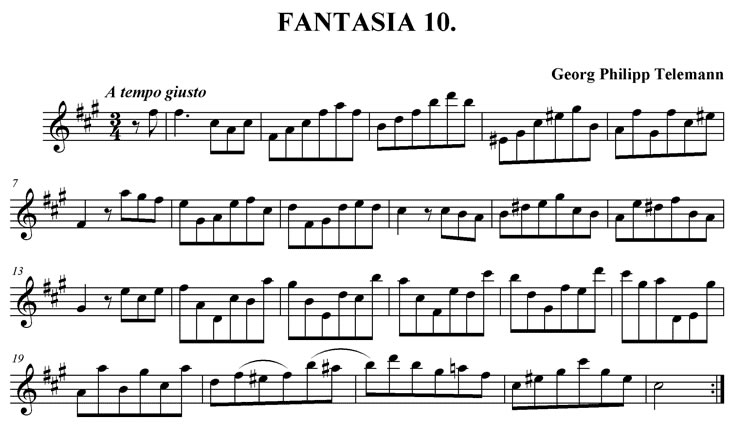
Georg Philipp Telemann's (1681-1767) Fantasia for Flute no. 10 in F-sharp minor illustrates the use of the treble clef. Click on the speaker to hear the music played.
Mnemonics
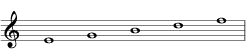
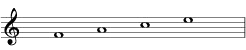
Mnemonics (from the Greek word meaning to remember) are catchy or humorous phrases used to remember a series of items. Mnemonics have often been used to help students learn the lines and spaces of the different clefs. For example, the mnemonics most commonly used for the treble clef are " Every Good Boy Does Fine" and FACE, representing the lines and spaces of the treble staff respectively.
| Remember |
|
The full range of pitches on the treble staff ranges from octave 3 through octave 4 and 5 to octave 6, as shown in the example below.

Take a minute to commit these pitches to memory. Use the mnemonic patterns above to help you get started. However, your ultimate goal should be to be able to read the pitches of the treble clef fluently. Be sure to learn the octave numbers as well as the pitch names.