Learning Objectives
- Analyze selected works of different styles and genres from a broadly representative geographical range to examine how Latin American concert music has been understood in the international musical community.
- Examine the music of select indigenous peoples of South America.
- Analyze the impact by European colonial powers to expunge South American indigenous languages, music, and religious practices.
- Examine the musical impact of African slaves on the music of South America, such as call and response, the use of percussion instruments, and capoeira (an elaborately choreographed martial art), to name a few.
- Identify indigenous composers who were trained by the missionaries, such as the early nineteenth-century composer Manuel Dias de Oliveira (1764-1837), who synthesized European musical styles in music such as the samba, samba-reggae, and bossa nova.
- Examine how Latin American vernacular music, such as the Brazilian bossa nova or the Colombian cumbia, has been used to mark holidays, enliven repetitive or physically demanding work, celebrate national identity, and express other aspects of the human condition.
- Analyze Latin American concert music, the impact of Hollywood on it, and how protest songs, corridos, and operas based on the tumultuous history of Latin America inspired both North and South American composers.
Colombian Music
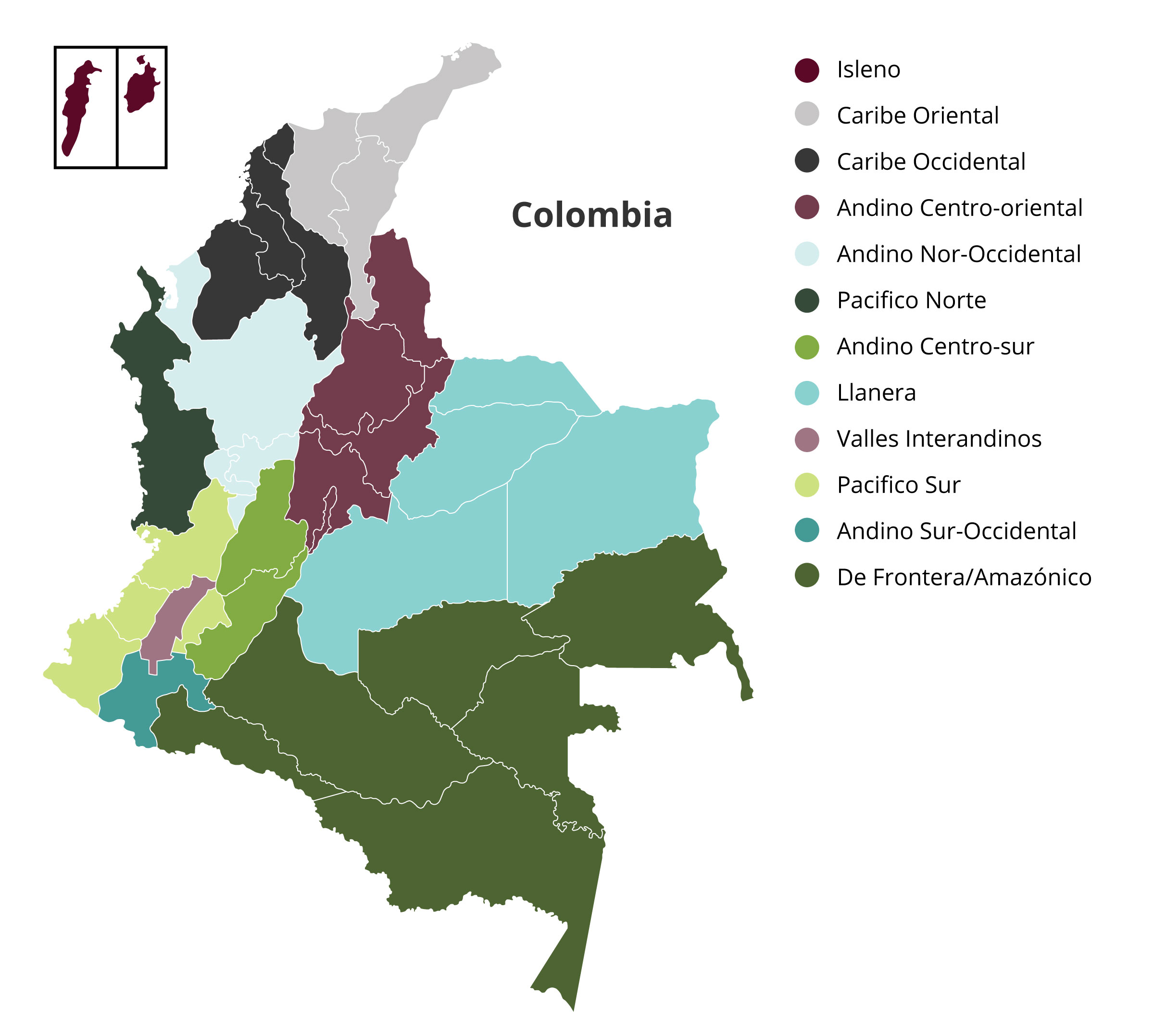
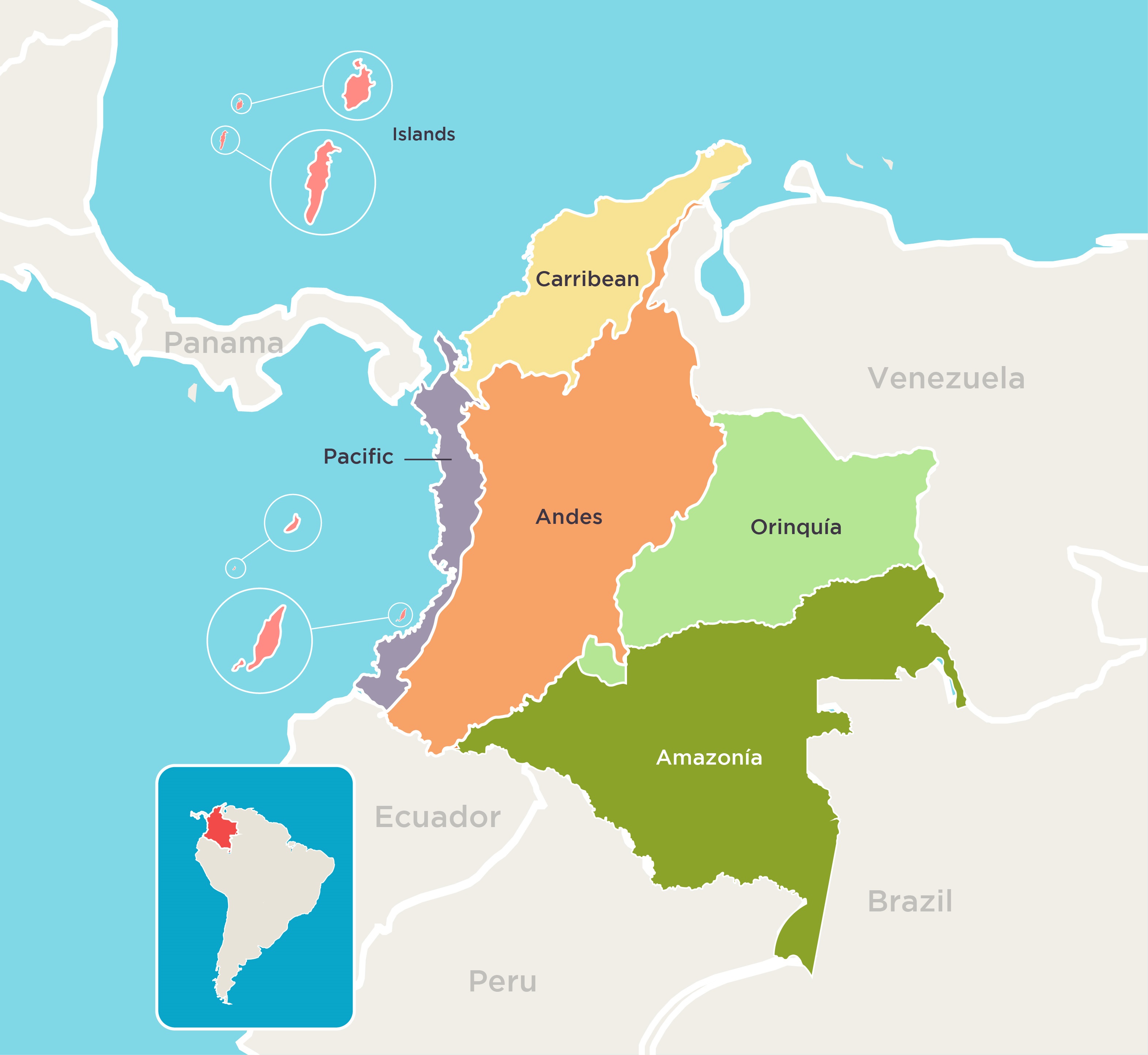
Colombian music reflects the diversity of its territory and cultures. The country is divided in six geographic regions: East Plains (Llanos orientales), Amazonian, Andean, Caribbean, Insular, and Pacific. Each region has its own musical genres and sub-genres, which are the result of a mixture of African, native Indigenous, and European (especially Spanish), as well as contemporary American and European music influences.
This spectrum of genres and styles ranges from classical and folk music to mainstream-influenced pop and includes a diversity of crossover genres—usually called fusion.
Music from the East Plains (Orinoquía)
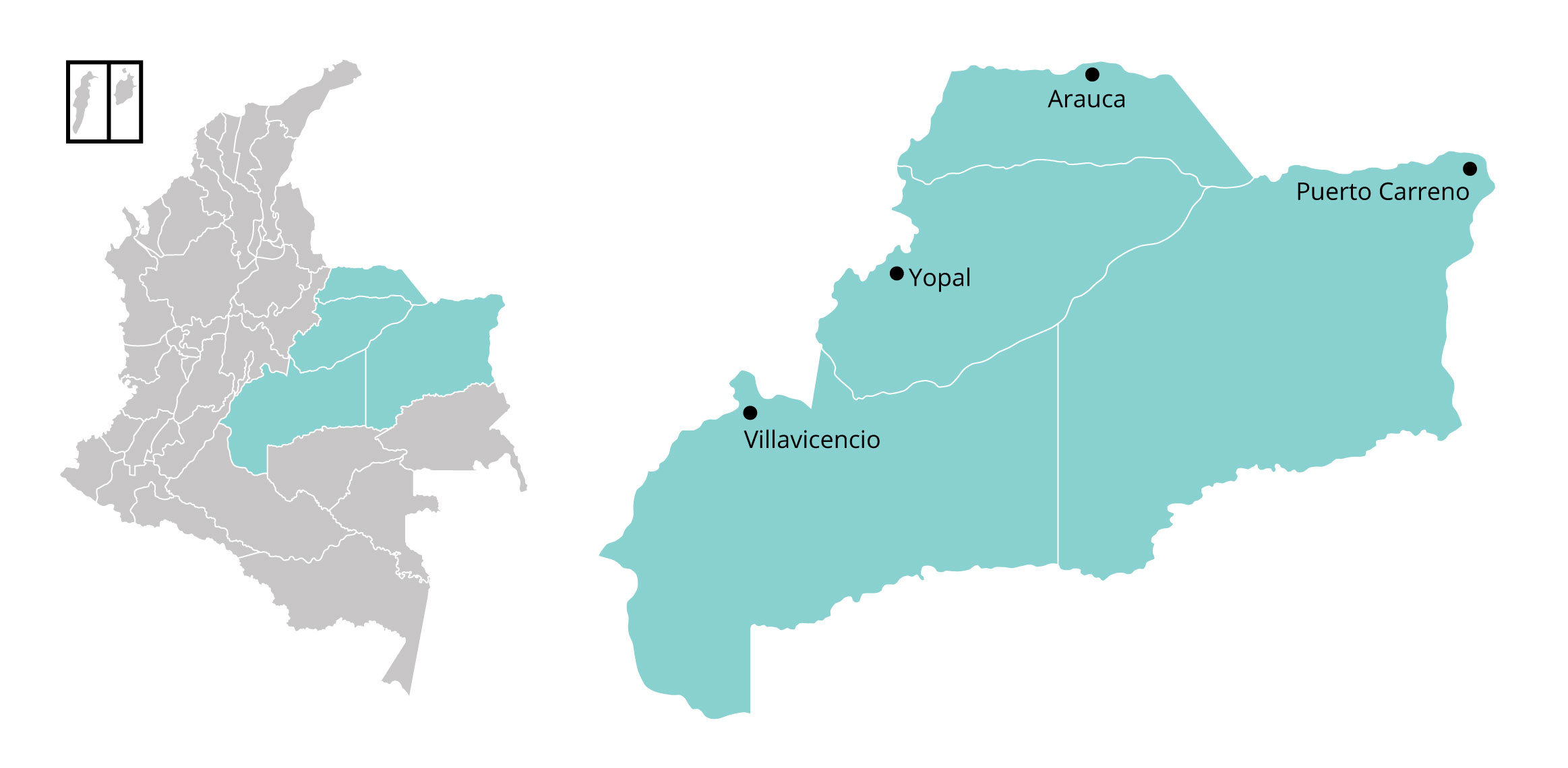
Música llanera (Music of the plains) is a cultural expression of the Colombo-Venezuelan plains (Los Llanos). The primary genre is the joropo, which is both a dance and rhythm with African, Native South American, and European influences (mainly the Iberian-African fandango). Joropo originated among the cattle-raising culture in "Los Llanos"—the plains—in what is now the eastern border region between Colombia and Venezuela, where it is arguably the most popular folk rhythm[1]. The well-known song "Alma Llanera," a joropo, is considered the unofficial national anthem of Venezuela.
Popular throughout the country, joropo is also known for its verbal jousting—improvisation contests called contrapunteo. Musically, joropo has several variants called golpes. In general, golpes are determined by fixed harmonic structures. The seis por derecho is an example of a golpe in major mode:
Composer: 0
-
"Cimarron - Sí, soy llanero"
The main instrument of música llanera is the small, wooden, 32-string harp used in Europe since the medieval times that was brought to America by the Spanish invaders in the 17th century.
The cuatro—literally “four” in Spanish—is a descendant of the Portuguese cavaquinho which has four strings. Modern cuatros come a variety of sizes and shapes, and number of strings. Cuatros can either have single-strings, like a guitar, or double- or triple-coursed strings like a mandolin and vary in size from a large mandolin or small guitar, to the size of a full-size guitar.
The traditional joropo instrumental ensemble includes the harp, the cuatro, maracas, and sometimes a bandola—local instruments; however, nowadays it is common to add an electric bass. This instrumental format is also the typical accompaniment for vocal music.
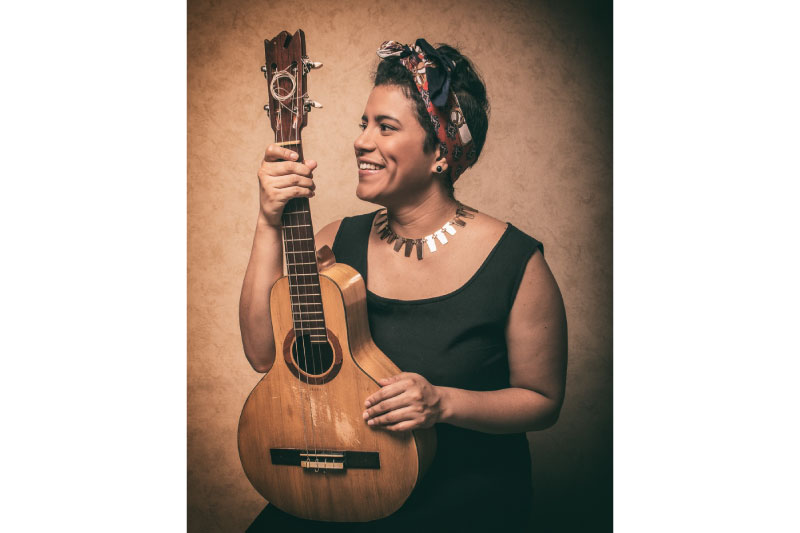
Cuatro
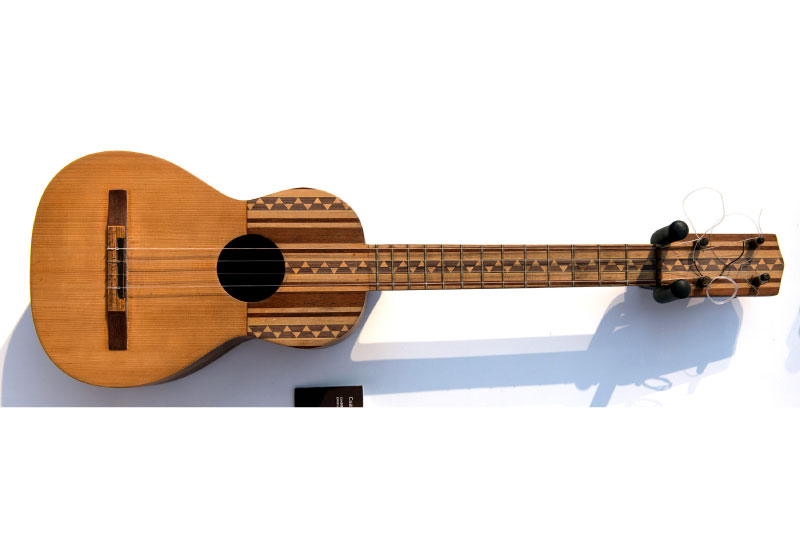
Bandola Llanera
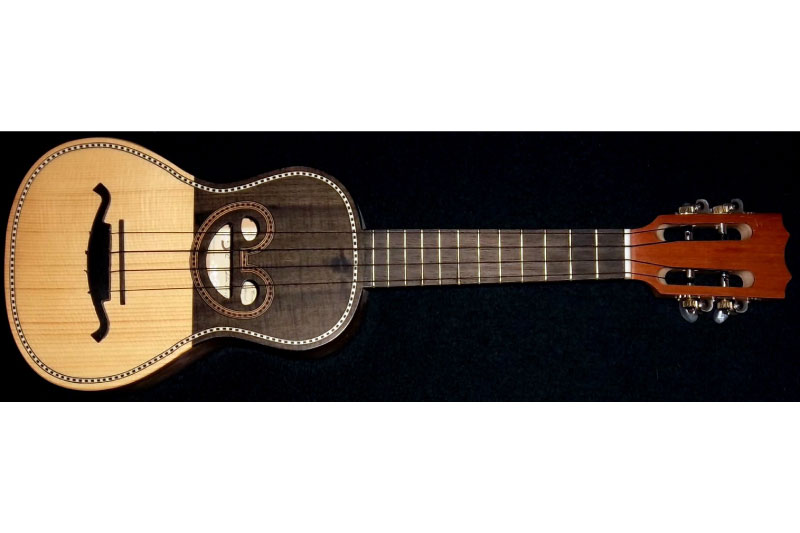
Portuguese cavalquinho
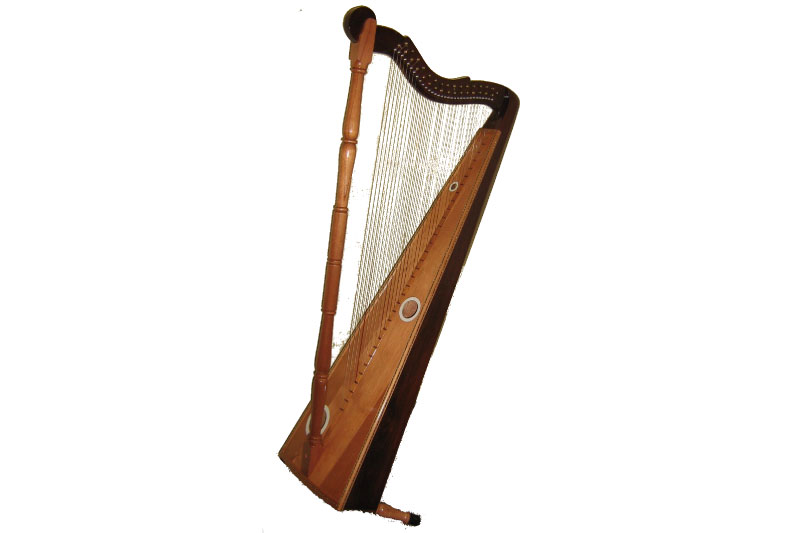
Harp (Arpa Llanera)
Music from the Amazon
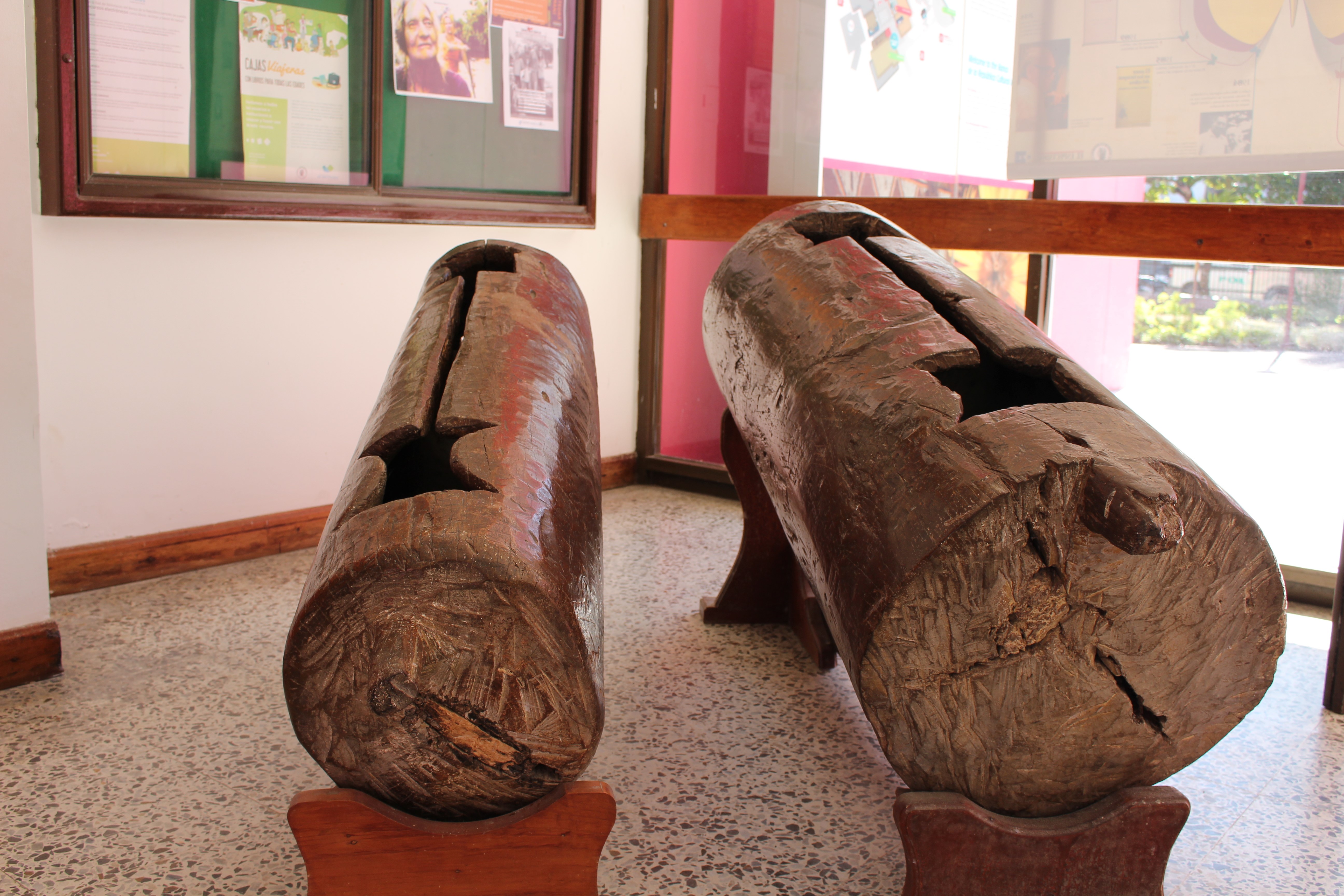
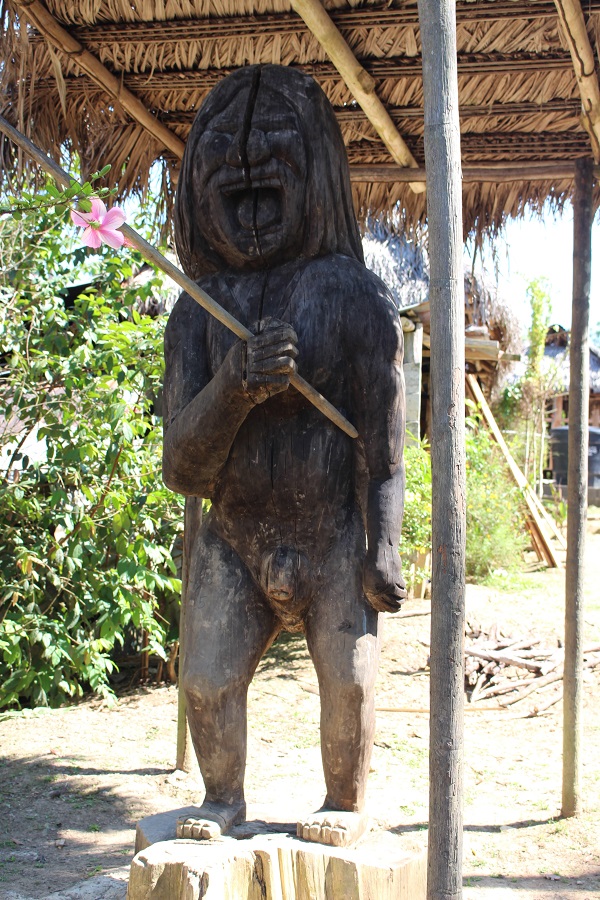
The music from the Colombian Amazon is primarily indigenous, but nevertheless displays certain European elements . The great majority of ethnicities practice the Catholic religion where beliefs are, however, mixed with their ancestral traditions in a syncretic relationship [Yoi: Tikuna Deity]. Music plays an essential role in their life. Chants and instruments (like the maguaré) [Amazonian Maguarés] have specific purposes in the context of the communities’ religious celebrations or everyday activities. Huitoto chant “Mui Numuru,” exemplifies this:
Composer: 0
-
"Recording by Julian Brijaldo - Chief Jitoma sings Mui Numuru"
In this rondo-like song, Nature asks a Huitoto chief what he has done with all the ‘things’ that She has provided to the community.