
Overview
In the evolution of jazz, the New Orleans and Chicago styles of the 1920s gave way to the emerging swing style of the 1930s. In this, and the next several sections, we will learn about some of the most influential jazz musicians of this era and how their musical contributions helped shape the jazz style known as swing.
Objectives
Upon completion of this lesson, you will be able to do the following:
- Identify selected swing musicians and their contributions to jazz
- Define charts
- Identify the significance of call-and-response in Fletcher Henderson's compositions, as well as in others‘
- Define antiphonal counterpoint
Django Reinhardt
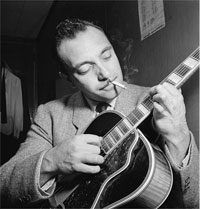
In Europe, interest in jazz was fueled by increasing numbers of visiting American jazz performers. The first notable European jazz originated in the 1930s with the music of the Quintette du Hot Club de France, led by French gypsy jazz guitarist Django Reinhardt.
Django Reinhardt (1910-1953) is considered the first great European jazz musician. At age 18, a fire left Reinhardt with portions of the ring finger and pinky from his left hand missing. However, as recordings made some six years later demonstrate, Reinhardt found his own guitar technique that more than compensated for the loss.
His playing drew international attention, and Reinhardt enjoyed recording opportunities with such well-known visiting American jazz musicians as Coleman Hawkins and Benny Carter7.
Let's listen to a recording of Dinah ♫ as performed by the Quintette du Hot Club de France. In addition to Reinhardt's brilliant and original guitar playing, we'll also hear the masterful solo work of the band's co-founder, French jazz violinist Stéphane Grappelli (1908-1997).



"Duke Ellington wrote over 1,000 compositions in his lifetime as a Jazz band-leader, composer and pianist, including Jazz standards, film scores and classical works."
