
Learning Objectives
- Relate how Romantic poets and artists abandoned traditional subjects, turning instead to the passionate and the fanciful.
- Relate how the Industrial Revolution impacted the technological development and affordability of musical instruments.
- Analyze how the orchestra grew in size and sound as new instruments were introduced and composers demanded greater levels of expression.
- Illustrate how Romantic composers explored nationalistic folklore and exotic subjects.
- Identify the form of romantic period songs, including strophic, through-composed, and the modified strophic forms.
- Examine the German art song (or Lied) as a favored romantic period genre.
- Discuss how the music of Franz Schubert impacted romantic period music.
- Discuss how the music of Frédéric Chopin impacted romantic period music.
- Trace the ascendance of program music in relation to absolute music.
- Summarize how political unrest throughout Europe stimulated the formation of schools of musical nationalism in Russia, Scandinavia, Spain, England, and Bohemia among other countries.
- Differentiate between the distinct national styles of romantic opera in France, Germany, and Italy.
- Discuss how the Italian nationalist composer Giuseppe Verdi impacted romantic period music.
- Trace how choral music became a popular artistic outlet for the middle classes.
- Discuss how the Russian composer Pyotr Ilyich Tchaikovsky impacted romantic period music.
Romantic Period (1820–1910)
Franz Schubert
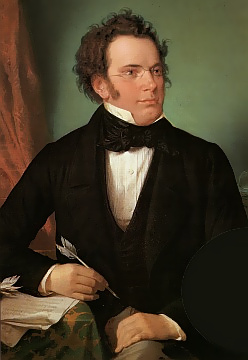
Based on Schubert's dates, one would logically place him in the Classical period. However, along with Beethoven, Schubert is considered one of the first Romantic composers. This is not only because he had such a short, tragic, and mysterious life, but also because of his original treatment of the sonata-allegro form, his use of harmony, and the longing, sweetness, drama, and emotion of his wonderful Lieder (art-songs). These songs remain, to this day, unmatched in their perfect combination of poetry and music. Despite the praise of close friends and colleagues, Schubert lived in awe of the music of Beethoven and Mozart and did not consider his work to be of the same caliber.
Schubert was an extremely prolific and gifted composer, but he spent most of his life in virtual anonymity. In his short 31 years, he managed to compose nine symphonies, more than 600 songs, 22 piano sonatas, several shorter piano pieces and duets, more than 20 string quartets, fifteen of which were published, several trios for various combinations of instruments, three piano trios, and a few quintets.
Composer: Franz Schubert
-
"Gretchen Am Spinnrade, D.118;"
Felix Mendelssohn
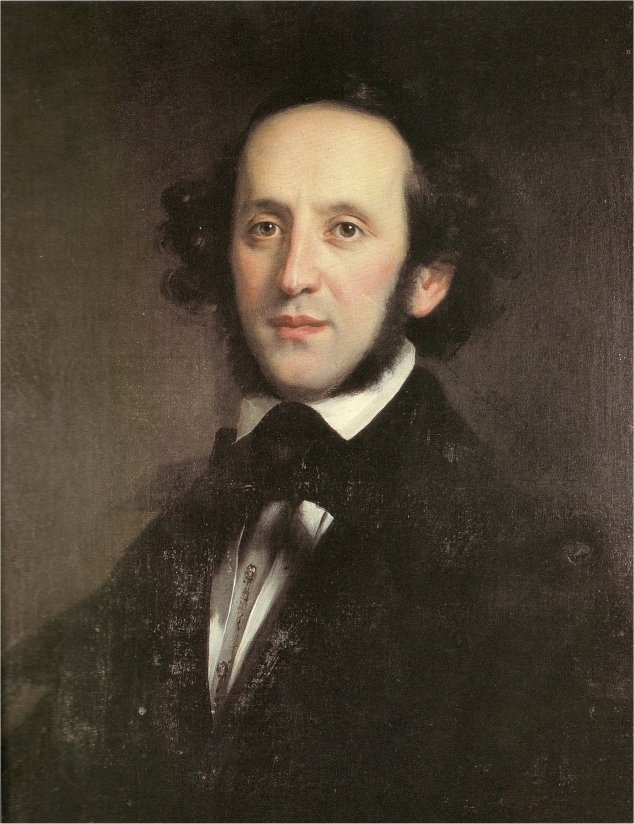
Mendelssohn was born and raised in a wealthy and extremely cultured home. His mother and father hosted dinner parties and salons for some of the most knowledgeable and influential people of the era. From a very early age, Mendelssohn was surrounded by philosophy, literature, and art. The writer Goethe, a close friend of the family, was a frequent guest.
Mendelssohn was an accomplished pianist and violinist. Aside from being a gifted performer, he was also an extremely productive composer, conductor, educator, and scholar. Furthermore, he was also a pretty good painter and writer! His music was refined, well-balanced, and approachable. Many argue that Mendelssohn was, together with Mozart, one of the most amazing musical geniuses the world has ever seen.
Although he belonged to the Romantic period, Mendelssohn's music was deeply tied to Classical tradition. He used conventional forms and harmonies from the Classical period and composed for traditional combinations of instruments.
A sickly child, Mendelssohn was often restricted in his physical activity and travel throughout his life. In the all-too-brief 38 years that he lived, Mendelssohn managed to produce five symphonies, four overtures, six published string quartets, an octet, 48 Songs Without Words for piano, two piano concertos, a violin concerto, two oratorios, and six sonatas for the organ.
Composer: Felix Mendelssohn
-
"A Midsummer Night's Dream: Scherzo, Op. 61, No. 1"
Though Mendelssohn revered the music of Beethoven and Mozart, he also cherished the music of Bach. Mendelssohn's admiration for Bach may be heard in his choral music. The polyphonic texture of his choral works such as St. Paul, Elijah, and Hear My Prayer echoes that of Bach's cantatas and passions. Mendelssohn and Brahms, the two 19th-century composers who best understood choral writing, were also the most knowledgeable about 17th- and 18th-century music. Furthermore, they were the most resistant to the extreme tendencies of the Romantic era. Nevertheless, Mendelssohn was encouraging to contemporary composers, even those for whom he felt little sympathy. In 1843, he established the Leipzig Conservatory. On November 4, 1847, six months after the death of his beloved sister Fanny, Mendelssohn died. At the time of his death, he was considered the most important figure in both German and English musical culture.
Composer: Felix Mendelssohn
-
"Hear My Prayer"
Although overshadowed by her brother's fame and restricted in her activities by the prevailing attitudes towards women in her time, Mendelsson's older sister, Fanny Mendelssohn Hensel (1805-1847), was also a well-known pianist and composer herself. In 1838, she premiered Mendelssohn's Piano Concerto No. 1. Her prolific output—over 400 compositions—is starting to gain well-deserved fame and recognition due to recent scholarship and the release of excellent scores and recordings devoted to her work.
Clara and Robert Schumann
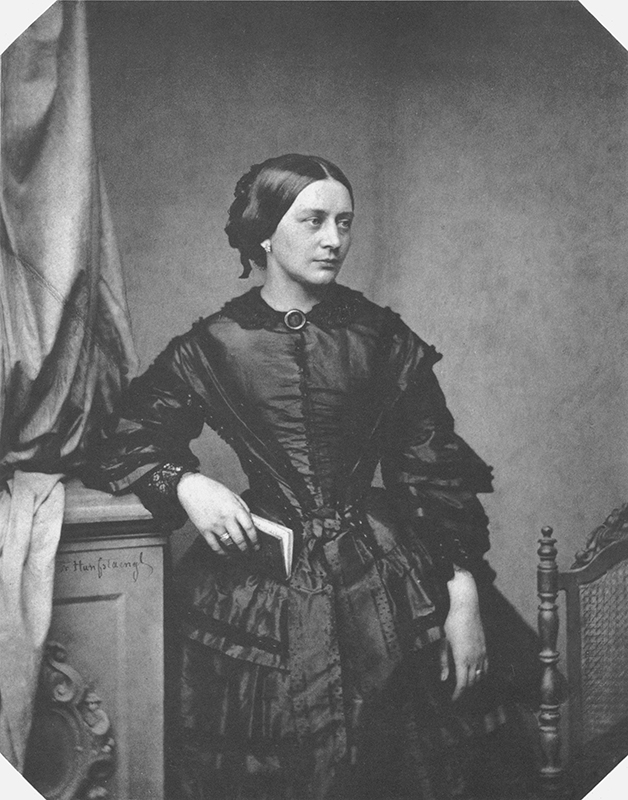
Clara Wieck (1819-1896) and Robert Schumann (1810-1856) made up one of the most famous couples in music history. Of the two, Robert is undoubtedly the better-known composer. However, in addition to being a fine composer, Clara was also one of the first women virtuoso performers. Unfortunately, during her marriage to Robert, she gave up her musical career. After his death, she toured extensively as a solo performer with her friend, the violinist Joseph Joachim.
In many ways Robert was a typical product of the age in which he lived, combining a number of the principal characteristics of Romanticism in his music and his life. Born in Zwickau in 1810, he expressed an early interest in literature. After brief study at university, he was allowed by his widowed mother and guardian to undertake serious study of the piano with Friedrich Wieck, whose favorite daughter Clara was later to become his wife. An injury to his right hand, however, stopped his dreams of becoming a virtuoso pianist.
Both Robert and Clara were greatly influenced by literature. Schumann himself was a writer, and in his mid-20s he founded an influential musical periodical, New Journal of Music, in which he frequently published his own musical criticism. He wrote very favorably about both Johannes Brahms (1833-1897) and Frédéric Chopin (1810-1849).
Schumann seems to have been subject to sudden depression, and, on one occasion, attempted to take his own life. After Robert's final mental collapse around 1854 and his eventual commitment to a local insane asylum, Brahms and Clara developed a deep attachment towards each other that resulted in a wonderful, enduring friendship.
Clara published between 20 to 30 compositions, including a piano concerto, a piano trio in G minor, pieces for piano, and songs (Lieder).
Composer: Clara Schumann
-
"Piano Sonata In G minor: III. Scherzo And Trio"
Piano Music of Robert Schumann
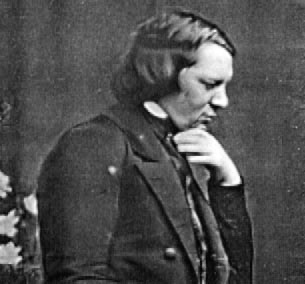
The piano music of Schumann, whether written for himself, for his wife, or, in later years, for his children, comprise a wealth of material. In fact, his entire early work as a composer (Opp. 1-23), excepting one piano concerto, was written for piano solo.
A master of the miniature, Schumann's piano compositions were, for the most part, loose collections of cycles unified by fanciful literary titles and wordplay. His earlier period yielded Carnaval, a series of short musical scenes based on the letters of the composer's name (Robert A. Schumann) and that of the town of Asch. Asch was the home of Ernestine von Fricken, to whom Schumann was briefly engaged, and the letters themselves are the German equivalents of the notes A, E-flat, C, and B, respectively. In the same decade, he wrote the Davidsbündlertänze (Dances of the League of David), a reference to the imagined league of King David's men, friends of art united against the Philistines; the first version of the monumental Symphonic Studies, based on a theme by Ernestine von Fricken's father; and the well-known Kinderszenen (Scenes of Childhood). Adding to the literary tie-ins, Kreisleriana had its source the E. T. A. Hoffmann character Kapellmeister Kreisler, and Papillons (Butterflies) was based on the work of the writer Jean Paul. Novelette displayed a clear literary reference in the title itself. Later piano music by Schumann included the Album für die Jugend (Album for the Young) of 1848, Waldszenen (Scenes of the Forest) of 1849 and the collected Bunte Blätter and Albumblätter drawn from earlier work.
Schumann's compositions also included piano, violin, and cello concertos, four symphonies, a piano quintet, and an extensive song output (more than 140) based on the writings of outstanding poets of his time, including Goethe, Byron, and Heine, among others.