
Learning Objectives
- Analyze selected works of different styles and genres from a broadly representative geographical range to examine how Latin American concert music has been understood in the international musical community.
- Examine the music of select indigenous peoples of South America.
- Analyze the impact by European colonial powers to expunge South American indigenous languages, music, and religious practices.
- Examine the musical impact of African slaves on the music of South America, such as call and response, the use of percussion instruments, and capoeira (an elaborately choreographed martial art), to name a few.
- Identify indigenous composers who were trained by the missionaries, such as the early nineteenth-century composer Manuel Dias de Oliveira (1764-1837), who synthesized European musical styles in music such as the samba, samba-reggae, and bossa nova.
- Examine how Latin American vernacular music, such as the Brazilian bossa nova or the Colombian cumbia, has been used to mark holidays, enliven repetitive or physically demanding work, celebrate national identity, and express other aspects of the human condition.
- Analyze Latin American concert music, the impact of Hollywood on it, and how protest songs, corridos, and operas based on the tumultuous history of Latin America inspired both North and South American composers.
Elements from African and European Music
In addition to the convergence of ancestral African and European elements in cultural and religious practices of the communities from the Colombian Pacific, prominent scholars have also traced different ancestral African and European elements in the music of the region.
European Elements
Different Mozarabic gestures brought by Spanish conquistadors from Andalucía and Extremadura are evident in the melismas, glissandi, and other embellishments of nostalgic alabaos and gualíes. Similarly, Afro-Colombian romances display hypnotic and repetitive melodic structures like the ones found in Gregorian litanies.
In addition to Mozarabic gestures and repetitive melodic designsin alabaos and gualíes, African-Colombian scholars mention other elements that are evidently inherited from Gregorian plainchant such as modal gestures, the reciting tones on scale degree 1 or 5, and the rhythmic freedom of African-Colombian romances.
The alabao Adios hijos, que me voy” (Good Bye my Children, I am Leaving), by cantaora Inés Granja, exemplifies these three elements.
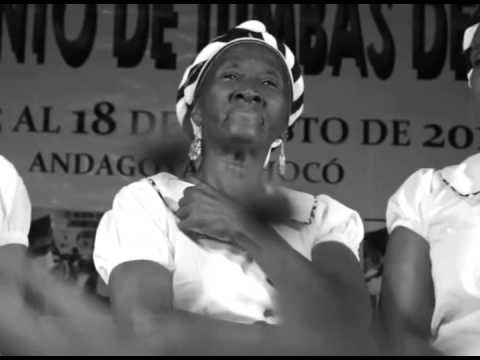
Alabado del pacífico colombiano (Timbiquí)- Inés Granja
Granja’s performance displays the typical rhythmic freedom of alabaos: Nonetheless, although her tempo fluctuates through the use of subtle accelerandi (speeding up) and rallentandi (slowing down), her phrasing is regular, allowing the listener to hear melodic connections throughout the form. Additionally, her interpretation includes different glissandi.
African Elements
Group performance, particularly antiphonal singing—music performed by two groups often in alternate musical phrases—is usually identified as a long tradition brought from Africa during the Transatlantic Slave Trade. Alabaos, in particular, resemble the improvised phrase endings found in duet and singing duels of current African-music practices.
Egberto Bermúdez, a prominent Colombian folk music scholar, has pointed out that typical African hemiolas and compound rhythmic patterns have been inherited by the music of certain Latin American and Caribbean countries. The marimba currulao bordón (harmonic-rhythmic pattern) that accompanies several arrullos exemplifies a typical African-Colombian hemiola, created by the constant juxtaposition of different meters.
Composer: 0
-
"Recording by Julian Brijaldo - Chief Jitoma sings Mui Numuru"



String instruments did not exist in the Peru region prior to the Spanish conquest
