





Folk Music, Art Music, and All That Jazz
Introduction
Folk, popular (“pop”), jazz, and art: these are just a few music categories that exist in today's culture. Each of these musical genres is rich in history, tradition, and content, and features a diverse array of styles. While they are not musically exclusive—indeed they share some common elements, at times influence each other, and may be enjoyed by the same listeners under different circumstances—not all music genres can or should be approached with the same set of expectations in mind. In this section, we will cover some of the differences and commonalities between these genres, in order that they may be more fully appreciated.
Folk music is a type of music that is rich in oral tradition. Understood by large segments of the local population that holds these traditions, folk music is:
- Usually not notated (i.e., not committed to paper in a music score);
- Utilitarian in the sense that it is typically associated with extra-musical activities (e.g., lullabies, work, celebrations, national/regional identity, etc.); and
- Passed on from generation to generation by listening, remembering, and imitating performances.
Popular music is widely disseminated through mass media. While popular music is notated, it is for the most part less complex than art music and not as bound by sets of composition and performance rules.
Art music—also called cultivated or classical music—refers to the tradition of Western religious and secular music produced from the eleventh century until the present day. It is a regrettably common mistake to think of art music as superior to other kinds of music, including folk and popular music. A byproduct of this mistake is that art music has become increasingly confined to cultural, economic, and intellectual elites.
Over the years, jazz has come to be recognized as an acceptable art tradition (although in some cases, begrudgingly so). Three issues, however, complicate this categorization:
- Jazz uses improvisation as a primary structural component.
- Most enduring jazz is not notated (at least, not in the traditional sense), including many of the improvised sections and solos.
- Jazz incorporates elements of folk music.
Improvisation means that the music, usually a solo, is created “in the moment” by the performer. Many jazz compositions, including many of the improvised sections, follow the art music rules for music composition and performance. However, some critics have trouble reconciling the improvisational and folk aspects of jazz with art music. Therefore, while on one end of the spectrum critics categorize jazz as art music, others think of jazz as folk music.
Folk Music
In his own words...
"The individual performer has complete freedom for his own individual and inspired variation within these fixed limits. Provided he keeps to the main rules, an African performer may introduce as many subtle variations as he pleases—and all conceived on the spur of the moment. It is spontaneous music. You never hear the same song done exactly the same way."
A.M. Jones on African music, as quoted by Leonard B. Meyer in Emotion and Meaning in Music.
Folk music is considered by many to be simple, unsophisticated music. A more thorough examination reveals that this is far from being the case. The category of folk music is so multi-faceted and complex that it is difficult to define. Folk music is as rich and varied as the peoples that produce it.
Love, children, work, protest, and religion are just a few of the aspects of human experience expressed through folk songs. Folk music may be performed by any combination of voices and instruments—whatever is available at the time. Despite its diversity of experience, however, there are common elements and qualities present in all forms of folk music.
Regardless of its place of origin and purpose, folk music is:
- Rooted in oral tradition, meaning that it is passed from one person to another without the use of written documents or music scores;
- Spontaneously created;
- Generally associated with rural or peasant cultures;
- Usually secular (not religious), but may have religious connotations (gospels and spirituals);
- An essential part of the cultural life of many nations and ethnic groups;
- Deeply influential, affecting the style and compositional practices of many musicians, including composers of art music;
- The property of the community, even though a particular piece may have been created by an individual or a small group of individuals;
- Recreated constantly by performers who learn it via oral tradition;
- Subject to constant change and variation as tunes, or parts of tunes, are shared between individuals and groups; and
- Rapidly declining because of urbanization and industrialization.
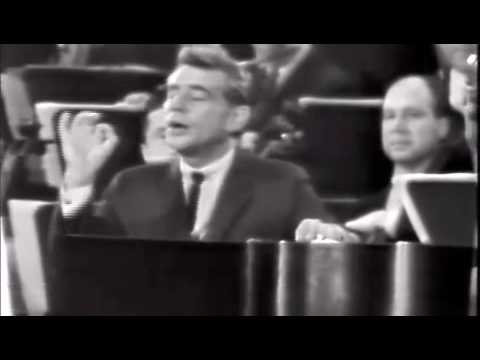
What is Folk Music? (Leonard Bernstein) [ 01:13-09:58 ]
Young People's Concerts
Now, listen to the following Russian folk song, taking note of its structure. Written in the nineteenth century, this beloved tune has come to reflect a kind of Russian national character.
Composer: Anonymous
-
"Dark Eyes"
Main melody
Composer: Anonymous
-
"Dark Eyes" [ 00:00-01:05 ]01:05
Same melody, a little faster
Composer: Anonymous
-
"Dark Eyes" [ 01:05-02:02 ]00:57
Women and men together and faster still
Composer: Anonymous
-
"Dark Eyes" [ 02:02-02:33 ]00:31
Back to main melody
Composer: Anonymous
-
"Dark Eyes" [ 02:33-03:11 ]00:38
In his own words...
"The far reaching lands of Russia, the severity and changeability of its climate, its frequent wars and ruinous internal strife, and the insecurity of a centralized state that must control widely divergent ethnic groups, have produced one constant factor, the enigmatic Slav soul, the spiritual abyss. Whatever name is given to this phenomenon, understanding the Russian national character is difficult, perhaps most easily approached through allegories, parables and metaphors, through art. The pain and grandeur of Russian history, the joy and despair of the Russian character lies in the depths of Russian folklore."
Alexander Smelkov
Art Music
With few exceptions, art music has been:
- Traditionally performed by trained professional musicians;
- Notated in music scores as a means of transmission from composer to performer;
- Performed by musicians and singers that have relatively clear interpretation guidelines indicated by the composer; and
- Archived and cataloged into an established body of literature in which accepted versions of music change little over time.
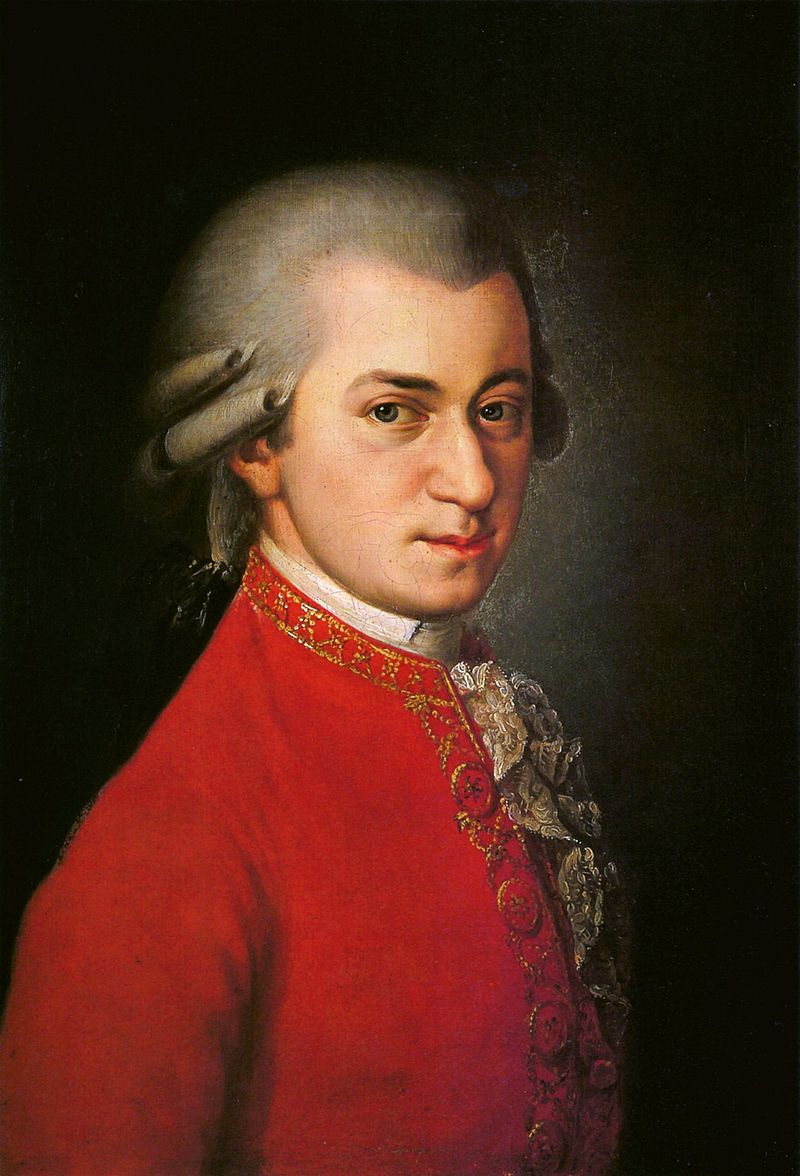
One of the most beloved pieces in the art music répertoire is the Clarinet Concerto in A major by Wolfgang Amadeus Mozart. Listen to the second movement of this wonderful piece.
Composer:
-
"Clarinet Concerto in A Major, K. 622: II. Adagio"
Jazz
Composer: Duke Ellington
-
"Searchin'"
When describing its main attributes, it may be said that jazz:
- Originated with black Americans of the early twentieth century in the urban areas of New Orleans, Chicago, and New York;
- Relies heavily on syncopated rhythms and a combination of
improvisation and riffs (short melodic and rhythmic patterns) for its basic structure;
Composer: Duke Ellington
-
"Black and Tan Fantasy"
- Gives the performer wide creative freedom even when playing from a score;
- Uses blue notes; and
- Uses traditional instruments in unusual ways (for example, exploring extreme high or low ranges, or using a wide variety of mutes in brass instruments).
In his own words...
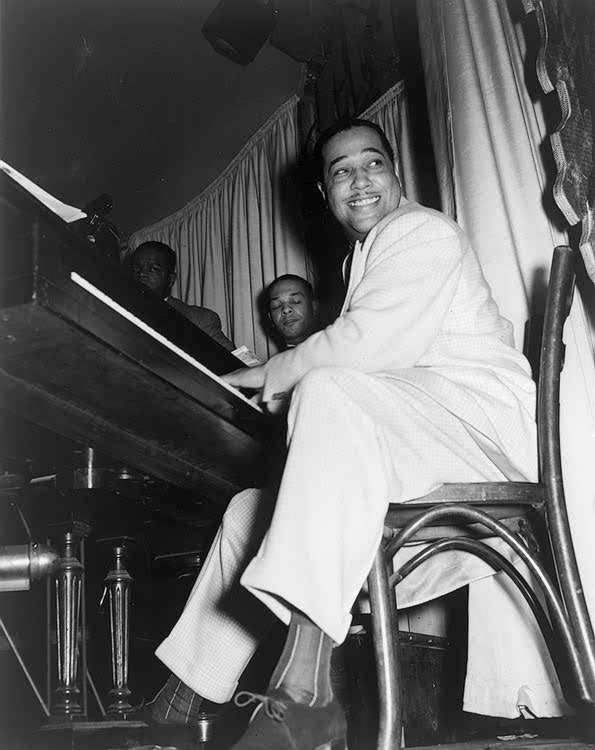
"‘I'm going to give you one note today,’ he once told me. ‘See how many ways you can play that note-growl it, smear it, flat it, sharp it, do anything you want to it. That's how you express your feelings in this music. It's like talking.’"
Richard Hadlock, as quoted by Ted Gioia in The History of Jazz