
Learning Objectives
- Explain form as a musical concept.
- Identify visually and aurally forms that are based on the principle of repetition.
- Identify visually and aurally forms that are based on the principle of contrast.
- Identify visually and aurally forms that are based on both repetition and contrast.
- Examine how the performer acts as a bridge between the composer and the listener.
- Recognize how the performer conveys the composer's intent by using their own individual style and emotional approach to the printed score.
- Examine the role of the performer by listening to and interpreting the spiritual.
- Define the following musical terms: composer, notation, performer, score, spiritual, technique.
Form
Introduction
Form may be thought of as a pattern or a roadmap—a plan. Form is essential to every art: literature, architecture, dance, music, etc. Like liquid poured into a container, each novel, building, dance composition, and symphony fits into a structure. For example, a novel is a literary form built around literary elements (characters, scenes, and plots) organized into chapters according to established literary and grammatical principles. Similarly, a symphony is a musical form built around musical elements organized into movements according to principles of music and composition.
In the last two sections, we have covered the fundamental elements of music, including concepts such as pitch, timbre, rhythm, melody, harmony, and texture. We are now ready to study how these elements come together into the framework of a musical form.
"Form: the constructive or organizing element in music."
New Grove's Dictionary of Music and Musicians.
Musical form may be defined as the overall structure and organization of the flow of musical time. Consider a symphonic work: even though each section or movement of that symphony has its own formal design, they ultimately fit into the overall design of the whole work (like chapters in a novel.) The form of a musical piece can act as its main unifying element. Understanding the big picture as well as the underlying components of musical form will greatly enhance your appreciation of music—it will show you how compositions are put together.
By studying form, it is possible to learn how composers hold the listener's interest through the manipulation of two essential factors already familiar to us: unity and variety. Unity is achieved mainly through repetition; variety is achieved through change and contrast. For music to be interesting, it must feature both. When a listener hears a composition, the mind remembers certain sounds and musical phrases that act as signposts. The recognition of these signposts calls attention to what is repeated and what is altered. That way, we maintain our musical bearings. For example, in Les Barricades Mistérieuses, François Couperin repeats a musical idea enough times to make sure that the listener becomes closely acquainted with it.
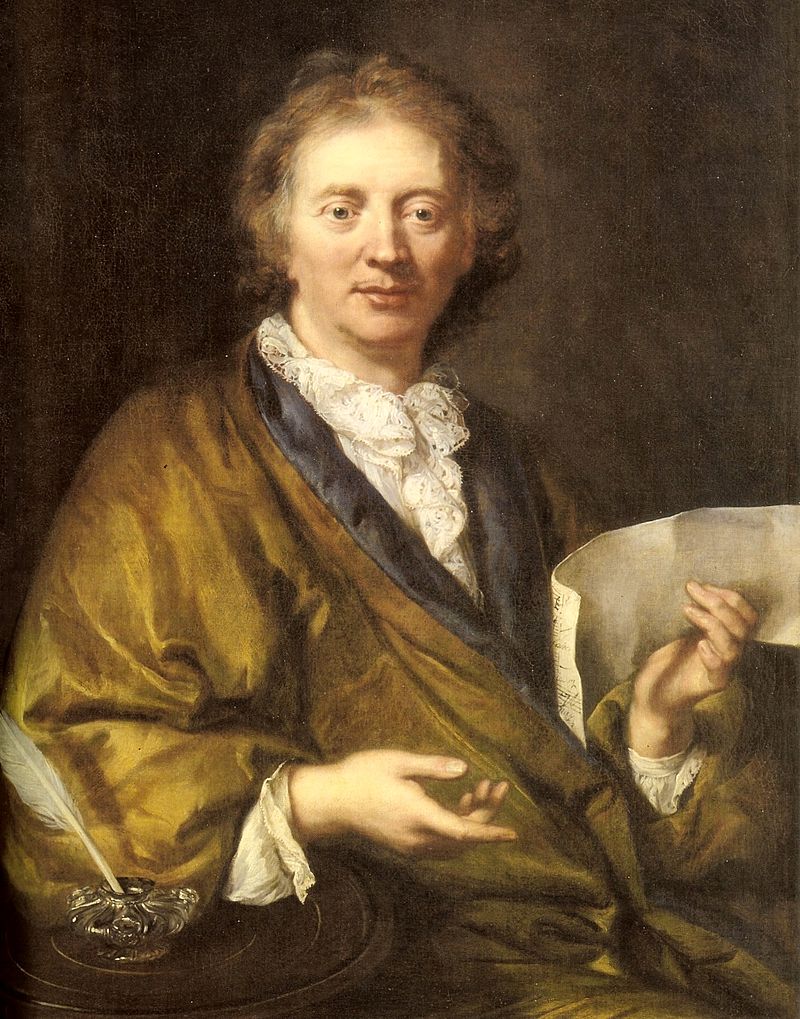
Form may be based on the principle of repetition, on the principle of contrast, or a combination of the two.
Among the musical forms based on the principle of repetition are the strophic form, theme and variations, and rondo form. Binary forms are based on the principle of contrast, while ternary form uses a mixture of repetition and contrast.
Composer: François Couperin
-
"Les Barricades Misterieuses"
"My Lord What a Morning"
Cello Suite No. 5: Sarabande
Listening GuideMazurka No. 24 in C major
Twelve variations on "Ah vous dirai-je, maman"
Listening GuidePathétique Sonata: Rondo
Composer: Anonymous
-
"My Lord What a Morning"
Composer: Johann Sebastian Bach
-
"Cello Suite No. 5 in C Minor, BWV 1011: IV. Sarabande"
Composer: Frédéric Chopin
-
"Mazurka No. 24 in C major, Op. 33, No. 3"
Composer: Wolfgang Amadeus Mozart
-
"12 Variationen über "
Composer: Ludwig van Beethoven
-
"Piano Sonata No. 8 in C Minor, Op. 13, "
Let's start by looking at with forms based on the principle of repetition.