
Learning Objectives
- Explain how the Classical period (1750-1825) characteristics of order, objectivity, and harmonious proportion relate to the music characteristics of the period.
- Summarize how the American Revolution (1775-83) and the French Revolution (1789-99) profoundly changed political systems and social order.
- Classify the large-scale musical forms in which the Classical masters composed.
- Explain music making in the context of the royal court and the patronage system.
- Define form and absolute music, and relate these concepts to one another.
- Differentiate between the main musical forms of the Clasical-era by summarizing the development of the symphony, sonata, string quartet, and the concerto.
- Define and analyze the symphony, sonata, string quartet, and concerto forms in the context of the Classical period.
- Describe the impact of the major Classical composers Haydn, Mozart, and Beethoven.
- Discuss the impact of Beethoven's thirty-two piano sonatas.
- Compare and contrast the two types of Italian opera: opera buffa and opera seria.
Classical Period (1750-1825)
Two Giants of the Classical Period
Is there such a thing as perfection in an art form that, by its very nature, is asymmetrical? How do you express beauty in music?
Of course, there are no definitive answers to these questions. However, if one were to begin a quest for answers, the first place to search would be the music of Franz Joseph Haydn and Wolfgang Amadeus Mozart, two great masters of the Classical period.
These composers and their music have much in common. For a time, both lived in Vienna, composed in all of the major genres, and expressed an indefinable element of charm or even whimsy in their works. Yet, in other respects, they could not have been more different. One was a venerated gentleman, the other an impudent young man. One held a long, prosperous position with a respected music-loving aristocratic family, the other suffered through tremendous financial ups and downs, partly incurred by his own mismanagement. One was a self-made musician who lived to the ripe age of 77, the other a child prodigy who died at 35. Together they wrote the greatest music of the Classical age and thus are considered two of the greatest composers the world has ever known.
Franz Joseph Haydn
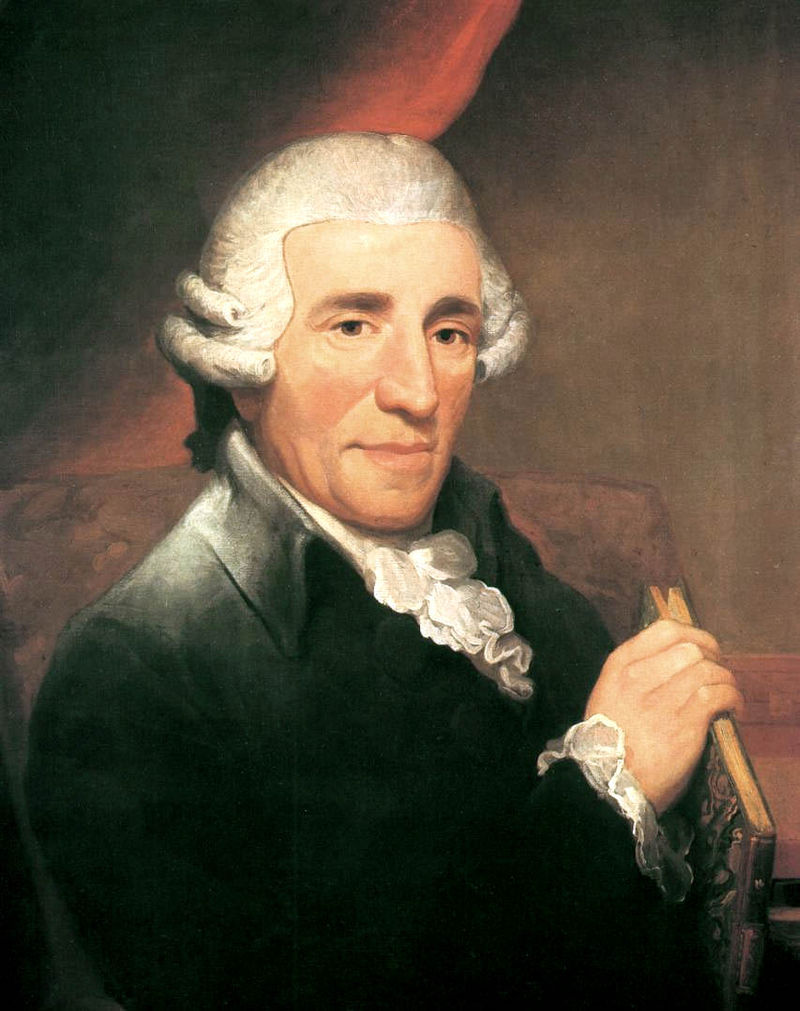
Haydn was one of the main forces behind the development of the Classical style. It has been argued that his music is some of the most cheerful ever written, and, to a large extent, that is true. At times, however, it also reveals the serious, perhaps even tragic, side of his character. Haydn was a deeply religious man that could write intense, powerful music.
Composer: Franz Joseph Haydn
-
"Symphony No. 94 in G Major, Hob.I:94, "
Mozart on Haydn:
"He alone has the secret of making me smile and touching me to the bottom of my soul."
“There is no one who can do it all—to joke and to terrify, to evoke laughter and profound sentiment—all equally well, except Joseph Haydn."
Even though Haydn composed over 750 works, he is most famous for his 104 symphonies, including his last symphony, nicknamed the London Symphony, and for his 83 string quartets. He also composed concertos for various instruments, of which the best known are two concertos for cello and the Trumpet Concerto in E-flat major.
Composer: Franz Joseph Haydn
-
"Symphony No. 104 in D major, London: I. Adagio-Allegro"
Composer: Franz Joseph Haydn
-
"Trumpet Concerto in E flat major, Hob.VIIe:1: II. Andante cantabile"
Haydn's Life
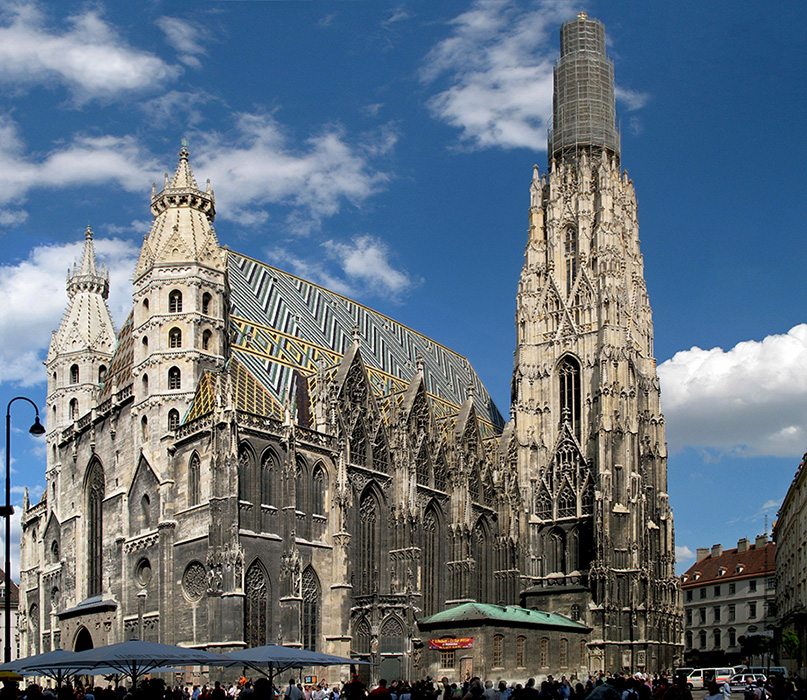
Haydn was born into a poor family in the small Austrian village of Rohrau in 1732, the year of George Washington's birth. As a child, he had a beautiful singing voice, and at the age of eight, he became a choirboy at St. Stephen's Cathedral in Vienna. After his voice changed in 1749, Haydn had to make his early living as a street musician. However, he soon found work as Kapellmeister for the small music establishment of Count Morzin.
In 1761, the turning point in his life came when he entered the service of the Esterházy family, an extremely wealthy royal family in Hungary. From this point onward, Haydn's life and daily activity revolved around the magnificent palace and estate at Esterháza, Prince Nikolaus's country estate.
Because he was fairly isolated at the palace, other composers didn't significantly influence Haydn's music. Instead, he developed his own, highly original style. Even though public performances were becoming more common, these were still the days of the patronage system, and music performances were, for the most part, still the privilege of the nobility. When the prince died in 1790, Haydn's obligations became much lighter. Although he remained in the service of the Esterházy family, he was able to move permanently to Vienna and make several visits to London.
During the final years of his life, Haydn's relentless creativity continued unabated until he finally retired in Vienna. He died quietly on May 31, 1809, following the surrender of the city to the troops of Napoleon, who just a few days before had ordered a guard of honor in front of Haydn's house.
Haydn was venerated by most of his musical contemporaries, who gave him the nickname “Papa Haydn,” referring to the man’s approachability and sense of humor. Beethoven moved to Vienna in 1792 in part so that he could study composition with the master. Though the younger man was too impetuous to take instruction, Haydn’s music left a strong mark on Beethoven’s style.
Haydn's Works
The great majority of Haydn's work was composed during his service to the Esterházy court. Haydn was required to write new music for each of the twice-weekly concerts and opera performances at Esterháza. This resulted in an enormous amount of instrumental and vocal music. Most of Haydn's 104 symphonies were written for the small but exceptional Esterházy orchestra in residence at the palace.
Symphonies
His symphonies form a remarkably complete record of Haydn's development as a composer, ranging from his earliest, somewhat crude efforts to the rich and masterful works of the 1780s and 1790s. Many of the more popular symphonies bear identifying nicknames, of which The Horn Signal (No. 31, 1765), Farewell (No. 45, 1772), Surprise (No. 94, 1791), and the Drumroll (No. 103, 1795) are but a few. His greatest works in this form are the last 12 symphonies, called the London symphonies, which were written for his two London visits.
Composer: Franz Joseph Haydn
-
"Symphony No. 45 in F sharp minor, Farewell:III. Menuetto: Allegretto"
Composer: Franz Joseph Haydn
-
"Symphony No. 94 in G major, Hob.I:94, The Surprise: IV. Finale: Allegro molto"
Chamber Music
While many of Haydn's experiments with musical form were carried out in the symphonies, his chamber music, particularly the string quartets, was equally significant in his development as a composer. In his 83 quartets, Haydn laid down many of the fundamental principles that were adopted by younger composers such as Mozart and Beethoven. Among Haydn's other chamber works were more than twenty divertimenti. As the title suggests, these were light, “diversionary” pieces written in a simple, popular style. Other chamber music included a multitude of trios and sonatas for various instruments. Of the some 60 piano sonatas he wrote, 52 survive.
Composer: Franz Joseph Haydn
-
"String Quartet No.17 in F major. I: Moderato"
Operas
Opera was a highly important part of musical activity at the Esterházy palace, and Haydn was quite proud of his more than twenty stage works. Austrian Empress Maria Theresa is reported to have said, “If I want to hear a good opera, I go to Esterháza.” However, when he became familiar with Mozart's genius for opera composing, Haydn acknowledged his own works as being of lesser quality. Today Haydn's operas are all but forgotten.
Masses and Oratorios
The last six of Haydn's twelve Masses, composed between 1796 and 1802, are his crowning achievement as a church composer. These works, composed during his mature period, demonstrate a mastery of form and technique accumulated over more than fifty years of composing. Several of them, for example the Missa in Tempore Belli (Mass in Time of War, 1796), the Missa in Augustiis (Nelson Mass, 1798), and the Harmoniemess (Wind Band Mass, 1802) are among Haydn's masterworks.
Inspired by Handel's oratorios, some of which he had heard during his London visits, Haydn composed two great oratorios entitled The Creation (1798) and The Seasons (1801).