
Learning Objectives
- Outline the social, cultural, and political impact of WWI and WWII.
- Discuss the growth of the United States as a world power.
- Describe the impact of technological advancements on the development of music in the twentieth century.
- Describe, compare and contrast the main stylistic differences of Contemporary music styles including impressionism, post-Romanticism, serialism, and expressionism.
- Summarize the changing nature and application of the concept of tonality throughout the century.
- Discuss the impact of Claude Debussy's "Prelude to the Afternoon of a Faun" in light of the Symbolist movement in literature.
- Illustrate how the Russian composer Igor Stravinsky experimented with rhythm, new instrumental combinations, and the percussive use of dissonance, and discuss the impactof these techniques on contemporary music.
- Describe the impact of Arnold Schoenberg and the Second Viennese School on 20th-century music.
- Distinguish the main stylistic differences of nineteenth- and twentieth-century composers and styles.
- Describe the musical and political impact of “national schools” of composition that developed across Europe during the 20th century.
- Explain the impact of composer Aaron Copland on American contemporary music.
- Describe the impact of Latin American composers on the larger "art music" scene and repertoire.
- Define and analyze the main differences between jazz, ragtime, and blues.
Early Twentieth Century
French Impressionism
Although Paris was an important musical center throughout the 1800s, the general feeling among French musicians at the end of the century was that very little music of any significance had been produced in France since the Baroque era. Fueled by the desire to promote "serious" French chamber and orchestral music and spurred by nationalistic sentiments after the Franco-Prussian War that had ended just a month before, a small group of musicians including Camille Saint-Saëns, Ernest Guiraud, Henri Duparc, Paul Taffanel, Gabriele Fauré, and César Franck founded the Societé Nationale de Musique on February 25, 1871. With the proclamation Ars Gallica (French Art) as their slogan, the organization set out to encourage the composition and performance of French works and counteract what they saw as the pervasive and unhealthy influence of Germanic music—Wagner's in particular.
Internal strife caused by arguments over the performance of foreign works didn't preclude the Societé from acting as the catalyst that allowed France to leave an indelible mark on 20th-century music. Claude Debussy and Maurice Ravel, two important figures that belonged to a younger generation of composers, became members of the Societé toward the end of the century. It was Debussy's work that brought the aims of this organization to fruition and, indeed, introduced the first viable alternative to tonal music.
Claude Debussy
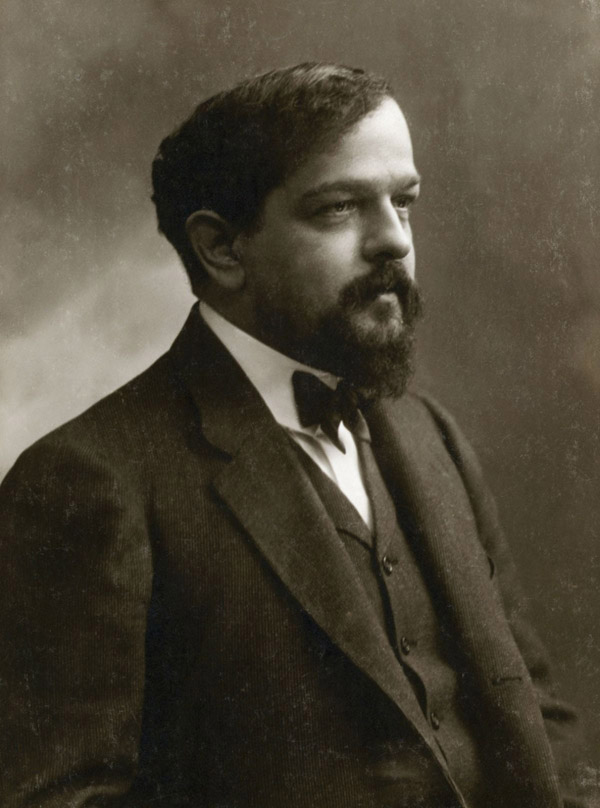
Claude Debussy was trained at the Paris Conservatoire and decided to pursue a career as a composer rather than a pianist. His highly characteristic musical language, thoroughly French in inspiration, extended the limits of harmony and form with a remarkable command of delicate sound nuance, whether in composing for piano or in the handling of a large orchestra. In his private life, he had to endure many trials including financial struggles, social scandals because of his marital life, severe depression at the outbreak of World War I, and from 1910 onward, a long battle with rectal cancer to which he finally succumbed to in Paris on March 25, 1918, during one of the German bombing campaigns.
Debussy's main interest was the sensuous quality of music, which led him to develop a unique musical style known as the purely French style. He often referred to himself proudly as Claude Debussy, musicien français (“French musician”). Wagner's music was nonetheless a powerful influence on Debussy, even after he embraced the "French music" banner against the ponderous Germanic musical tradition. Wagner's influence notwithstanding, Debussy always remained a remarkably independent artist. As a music journalist writing under the pseudonym of Monsieur Croche (“Mr. Quarter Note”), he fiercely opposed all worship of past composers.
Composer: Claude Debussy
-
"Prélude à l'après-midi d'un faune"
Debussy was influenced by the late 19-century French symbolist movement, which rejected naturalism and realism in favour of an esoteric, spiritual, and dreamlike approach to everyday life. He absorbed much of its doctrine from the symbolist poets Paul Verlaine and Stéphane Mallarmé at cafés and literary "evenings." In fact, it was Mallarmée's sensual poem “'Laprès-midi d'un faune” (Afternoon of a Faun), which provided the inspiration for Debussy's famous composition. The verses portray a mythological creature, part goat part man, awakening in the woods and recalling a dream of passionate sensuality. Debussy's tone poem mirrors the mood and general outline of the Mallarmé's work.
Debussy also had a keen interest in the visual arts. Around this time, French Impressionism was attempting to capture the impressions evoked by reality in the observer's emotions and subconscious mind. Painters such as Monet, Manet, Seurat, and Degas often used brush techniques to suggets rather than faithfully portray visual images and symbols. Debussy achieved the musical equivalent of these visual effects through the use of novel compositional techniques and harmonic idioms, which created atmospheric effects and delicate washes of sound that give the listener the impression of a lack of tonal center or key. In summary, Debussy was influenced by the symbolist use of free verse in poetry and the disappearance of the subject or model in painting.
Maurice Ravel
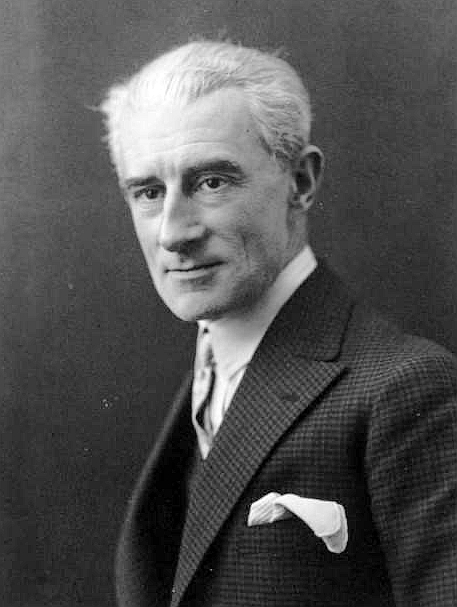
Maurice Ravel, coming from the same musical background and training as Debussy at the Paris Conservatoire, had to suffer being labeled Debussy's imitator. The two were contemporaries (Debussy was 13 years older than Ravel) and eventually came to be considered the most significant French composers during the turn of the century. Ravel was, however, much more precise, less emotional, and more Classically-inclined than Debussy. He had a deep admiration, and even a love, for the music of Mozart; Debussy did not share this admiration. Nevertheless, both composers had much in common: they reacted and rebelled against the established Germanic musical thought, loved the work of the influential poet Mallarmé, and admired and respected each other's talent and work.
Composer: Maurice Ravel
-
"Boléro, M. 81: Bolero"
Composer: Maurice Ravel
-
"Violin Sonata No. 2 in G Major, M. 77: II. Blues: Moderato"
Ravel's "Blues" for violin and piano illustrates the fascination that jazz held over some European composers and the obvious influence it had on their work.
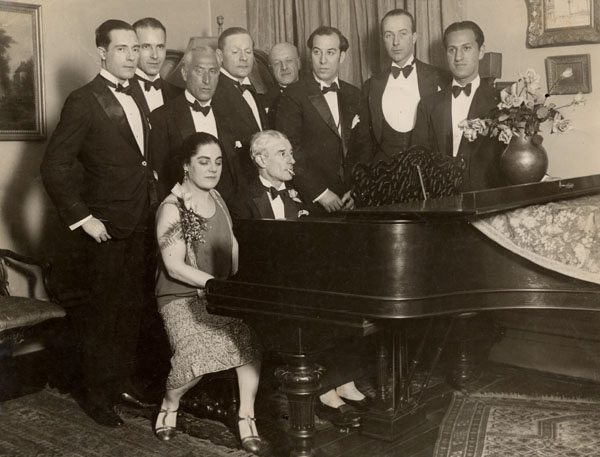
Ravel demonstrated his capacity for large-scale music in his ballet Daphnis et Chloé, composed in 1912. This piece, written for large orchestra, was originally intended for the Russian Ballet. Daphnis et Chloé was Ravel's last major Impressionistic work. His later works clearly show a strong jazz influence, due, at least in part, to his contact with American musicians in the United States and American expatriates living in Paris in the 1920s and 30s.
Composer: Maurice Ravel
-
"Daphnis Et Chloe, Suite No. 2"
Erik Satie
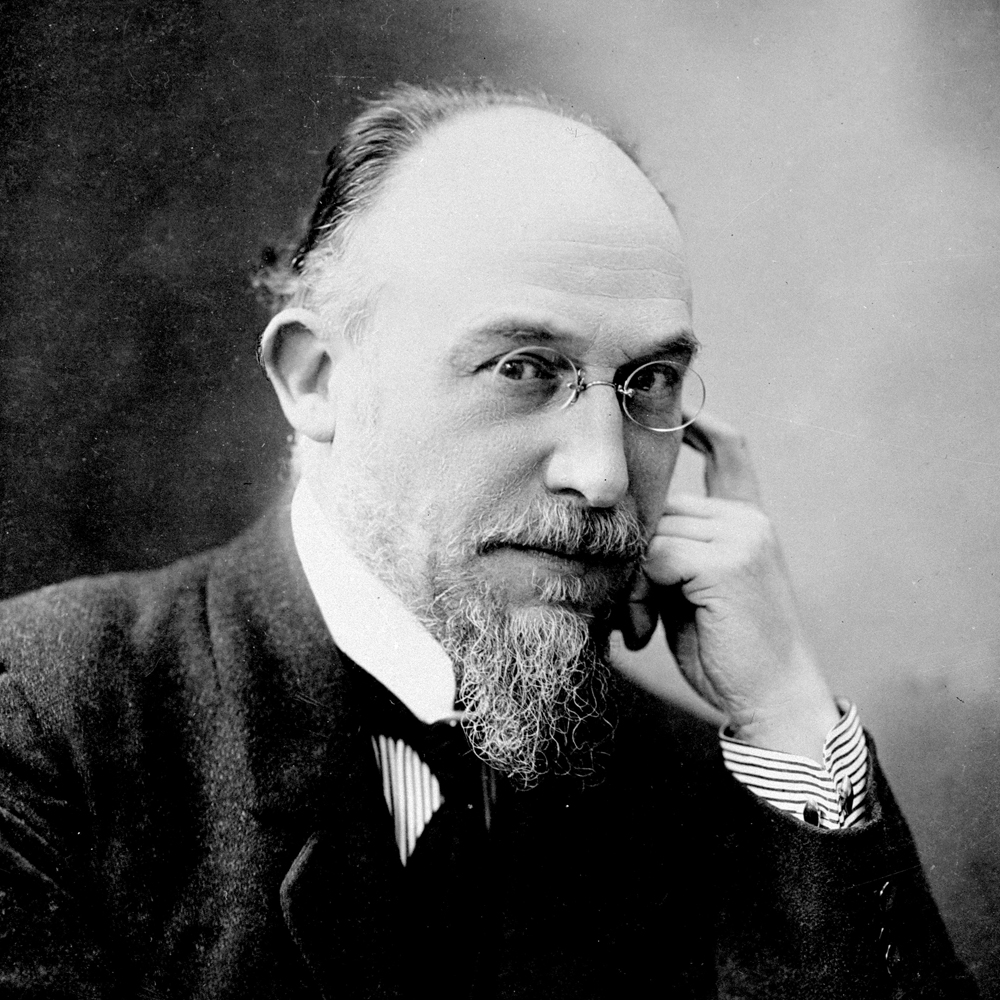
A forerunner of minimalism and a composer ahead of his time, Erik Satie held tremendous influence over his contemporaries Ravel and Debussy as well as many other modern composers. Satie was unique both personally and artistically, and like Ravel and Debussy, he rejected Wagner's strong influence. His innovative harmonies, simplicity, and freedom of form impressed not only peers but also younger composers such as Francis Poulenc, Darius Milhaud, and John Cage.
Composer: Erik Satie
-
"Gymnopédie No. 1 (arranged by Anders Miolin)"
In his own words...
“A true musician grows in wisdom...He is brilliant...He learns to do without and is prepared to make great sacrifices...enormous sacrifices... if I may say...His energy is tremendous... In other words he is prepared for the struggle...and with honesty he shall fight it... The performance of an Art demands complete self-denial... ...It was not meant as a joke what I just said...about sacrifices... The Music makes heavy demands upon those who want to devote themselves in it...This is what I have wanted to call your attention to... A true musician must subordinate himself his Art...he must place himself above human suffering...he must draw courage from within...and only from within.”
Erik Satie