
Learning Objectives
- Analyze selected works of different styles and genres from a broadly representative geographical range to examine how Latin American concert music has been understood in the international musical community.
- Examine the music of select indigenous peoples of South America.
- Analyze the impact by European colonial powers to expunge South American indigenous languages, music, and religious practices.
- Examine the musical impact of African slaves on the music of South America, such as call and response, the use of percussion instruments, and capoeira (an elaborately choreographed martial art), to name a few.
- Identify indigenous composers who were trained by the missionaries, such as the early nineteenth-century composer Manuel Dias de Oliveira (1764-1837), who synthesized European musical styles in music such as the samba, samba-reggae, and bossa nova.
- Examine how Latin American vernacular music, such as the Brazilian bossa nova or the Colombian cumbia, has been used to mark holidays, enliven repetitive or physically demanding work, celebrate national identity, and express other aspects of the human condition.
- Analyze Latin American concert music, the impact of Hollywood on it, and how protest songs, corridos, and operas based on the tumultuous history of Latin America inspired both North and South American composers.
History and Culture of Indigenous Peruvian Music
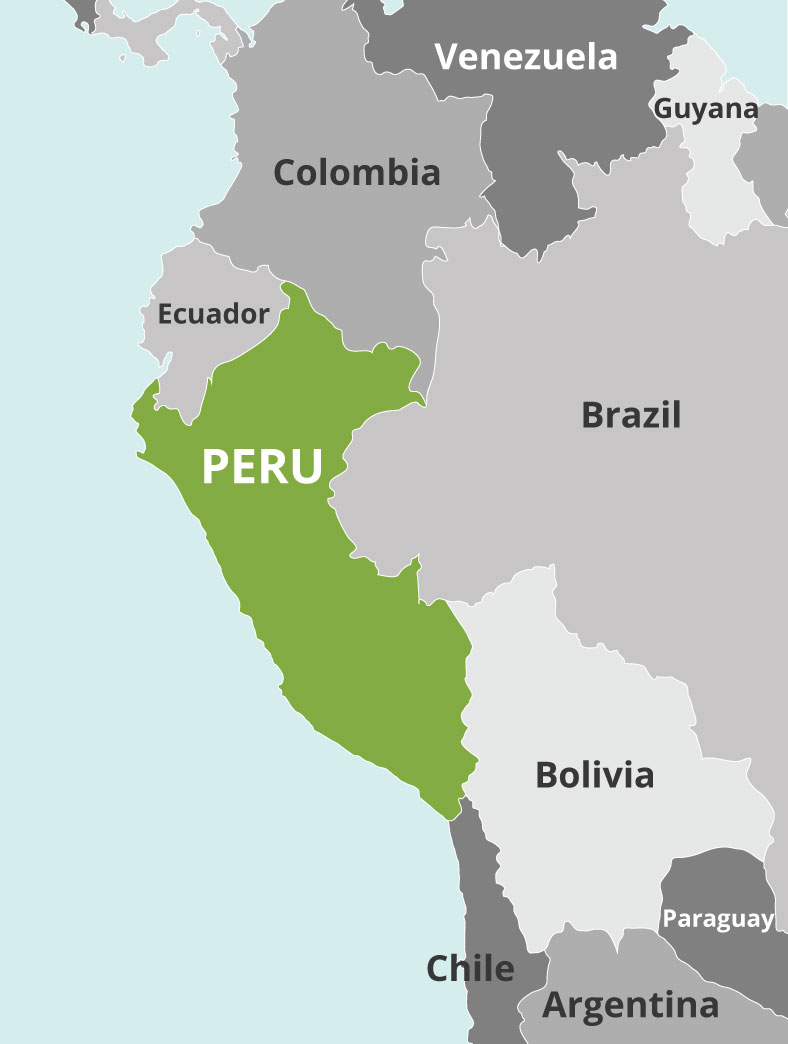
Peru, the third largest South American country by size, covers 1,285,216 km2 (496,225 sq miles) of western South America. It borders Ecuador and Colombia to the north, Brazil to the east, Bolivia to the southeast, Chile to the south, and the Pacific Ocean to the west. To give you a better idea of its size, Peru is slightly smaller than Alaska and almost twice the size of Texas. Peru is an extremely biodiverse country with habitats that range from the arid plains of the Pacific coastal region in the west to the tropical Amazon Basin rainforest in the east. The Andes mountains with its impressive peaks run parallel to the Pacific Ocean from the north to the southeast of the country.
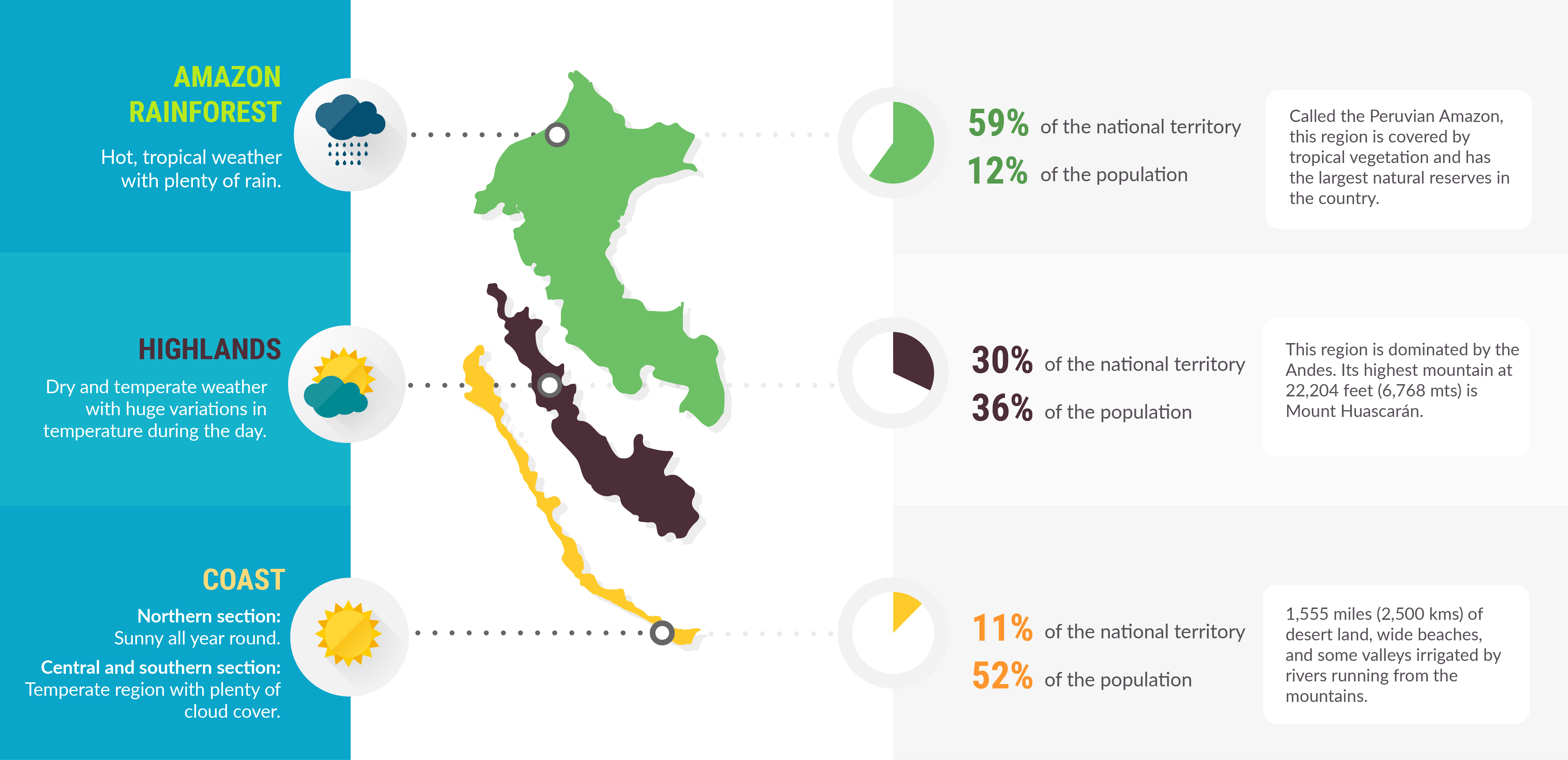
The Andes mountains divide the country geographically into three traditional regions: The costa (coast), to the west—a narrow plain, largely arid except for valleys created by seasonal rivers, covers 11% of the territory and holds roughly 52% of the population; the sierra (highlands), the mountainous Andean region that separates the coast and the Amazon region to the east, has 30% of the territory and about 36% of the population; and the selva (jungle)—a wide area covered by the Amazon rain-forest that extends east—covers 59% of the country's area, holds 12% of the population, and, as mentioned above, is one of the most diverse ecosystems on Earth. The inland regions (highlands and Amazon rain-forest) are marked by extreme poverty and subsistence agriculture, while the fertile river valleys of the coast have produced a wealthier, more cosmopolitan culture. We will look at music selections that are representative of the music traditions of each of those areas.
Population
Home to approximately 32.6 million people (expected to reach approximately 46-51 million in 2050), Peru is a multi-ethnic country formed by the amalgamation of different cultures and ethnicities over thousands of years, and the fourth most populous country in the continent after Brazil, Colombia, and Argentina. As of 2017, 79.3% of those people lived in urban areas and 20.7% in rural areas. Major cities are Lima, the capital city and one of South America's largest urban areas with over 9.5 million people, Arequipa, Trujillo, Chiclayo, Piura, Iquitos, Huancayo, Cusco, and Pucallpa. Although most Peruvians speak Spanish (84.1%), a significant number speak Quechua (13%), Aymara (1.7%), or other native languages (1.2%) in pure or mixed form.
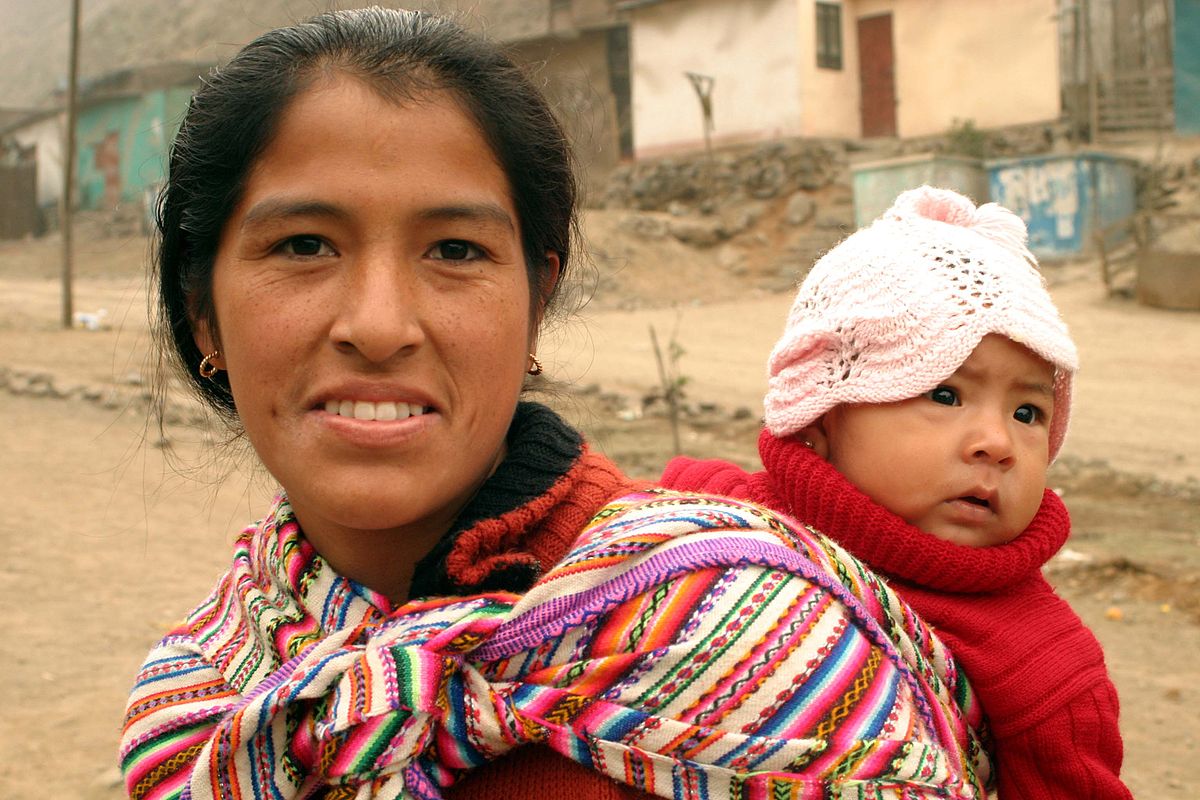
Peru's multi-ethnic population includes the indigenous peoples of Peru or Amerindians (25.7%), white Peruvians of European descent (5.9%), mestizos, a combination of Amerindian and European races (60.2%), AfroPeruvians (8%), as well as mulattos and zambos, which also constitute an important part of the population. Japanese and Chinese immigrants—about 3% of the Peruvians and the largest population of Asians in Latin America after Brazil—arrived in large numbers in the 1850s as laborers following the end of slavery, and have since become a major influence in Peruvian society.
Mestizaje
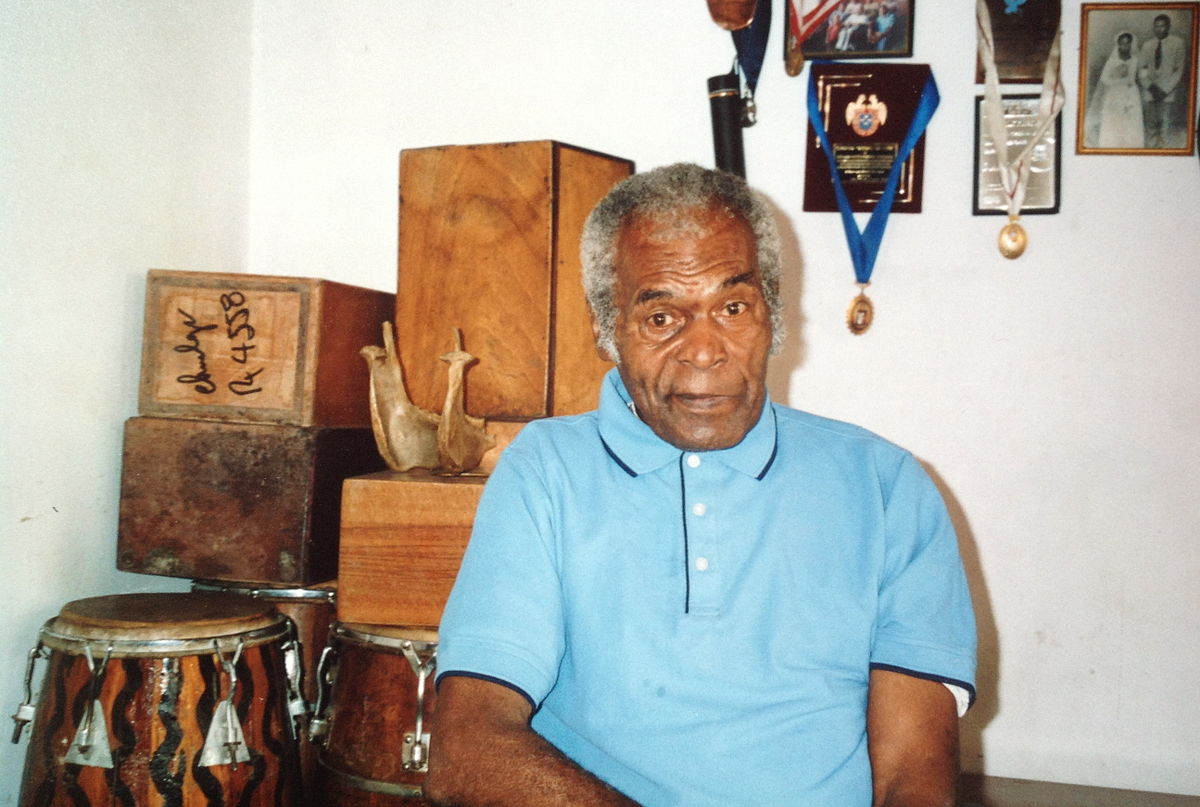
The unique mixture of geography, races, and cultural traditions in Peru has resulted in a wide diversity of expressions in art, cuisine, literature, and as we shall see, in music. Indeed, it can be said that to appreciate the depth of Peruvian music, we need to understand the long history of racial and cultural blending known as "mestizaje." Before we consider aspects of, it would be useful, however, to take a brief look at pre-Columbian musical expressions in Peru.



String instruments did not exist in the Peru region prior to the Spanish conquest
