
Overview:
The most important basic skills for young students are the ability to keep a steady pulse and establish a sense of pitch. Without these essential, internalized skills students cannot progress successfully into more complex music behaviors. After an established sense of pulse, students must discriminate between rhythm and pulse, and after an internalized sense of pitch students learn to recognize melody because these skills the foundation for all subsequent music learning.
Objectives:
Students will be able to:
- Identify and describe the discrete elements of rhythm,
- Identify and describe the discrete elements of melody,
- Analyze lessons plans in rhythm and melody,
- Design and create lesson plans in rhythm and melody.
- Prepare and demonstrate the implementation of a lesson in rhythm.
How is a melody lesson designed?
Developing students’ perception and understanding involves guiding students through activities that focus on the basic components of melody. Because very young students may not be capable of verbalizing or explaining their thoughts about melodic concepts, it is more effective to lead students through active participation in observable behaviors that reveal their understanding.

The implementation of melodic concepts should begin with simple, concrete activities that are clear and obvious in their focus. For example, students can begin to experience melodic contour as part of their vocal warm-ups. Learning to control the pitch of their voices, students can experiment with the up and down movement of their voices.
Students can use some of these basic contours to explore melodic contours with vocal warm-ups.
When singing familiar songs, students should be encouraged to move their hands to the melodic contour. This can also be implemented as a group activity with five or six students holding one piece of long cord and each student responding to a part of the melodic line, moving the cord up and down with their hands in relationship to the pitches. The cord can also be used to create a melody. As a group of the students decide on how their melodic line should move, the class can respond by singing the contour on a neutral syllable such as "loo."
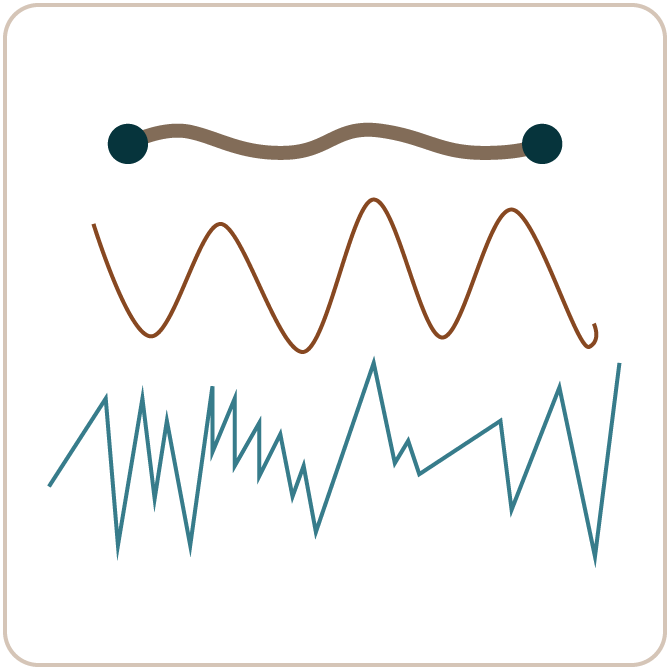
Students can draw the melodic contour of a familiar song on paper or take “aural dictation” while listening to melodic phrases the teacher plays on song bells, piano, or an Orff xylophone.
Examples of lesson plans in melody:

High or Low; Up, Down, or Same Lesson Plan
Can Technology be Used to Teach Rhythm and Melody?
PowerPoint™ or PowerPoint™ movies can be used to help students identify melodic lines, phrases, and sequences. The following example can be created from any song and used in the elementary music classroom setting.
