




Listening Skills
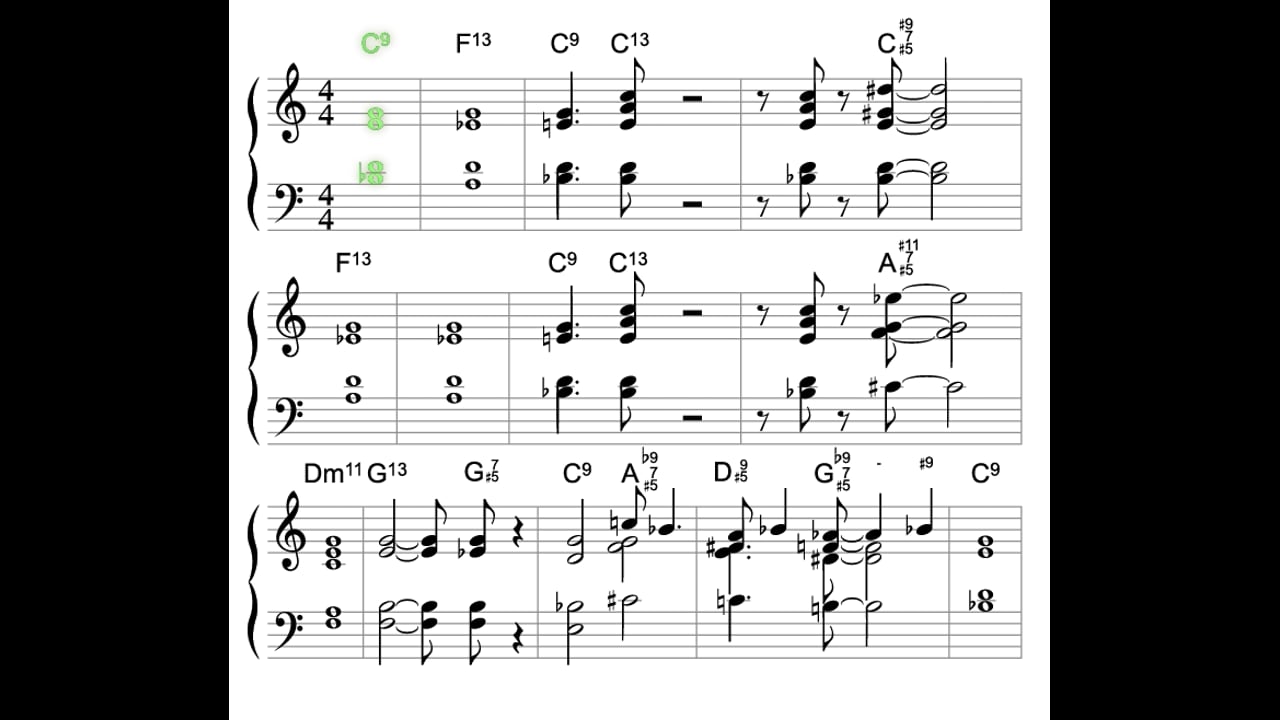
As we study the evolution of jazz, you will hear increasing harmonic and melodic complexity in the music. Certain harmonies, or chords, are idiomatic of jazz, as are certain melodic figures. Jazz musicians even have their own terminology of jazz chords. Listen, for example, to this 12-bar blues progression incorporating characteristic jazz harmonies. Notice that the increased harmonic complexity is largely the result of stacking still more thirds on top of seventh chords — producing 9th chords, 11th chords, and 13th chords of varying chromatic content.
Blues Listening Skills
Listening is the most important activity of this course. What does it mean to "listen"? To listen is to focus your attention on the music.
The first time you listen to a jazz recording, try situating yourself in front of the speakers (or better yet, wear headphones) and close your eyes. Simply hear the music, nothing else. With repeated listening, you will notice more and more musical details from specific instruments and get a feel for how these various instruments interact.



"Blues developed in the southern United States after the American Civil War (1861–65) and was largely played by Southern black men, most of whom came from the milieu of agricultural workers."
