





Music of the 20th and 21st Centuries (1900-Present)
Music of Modern Europe: Poland
Henryk Górecki
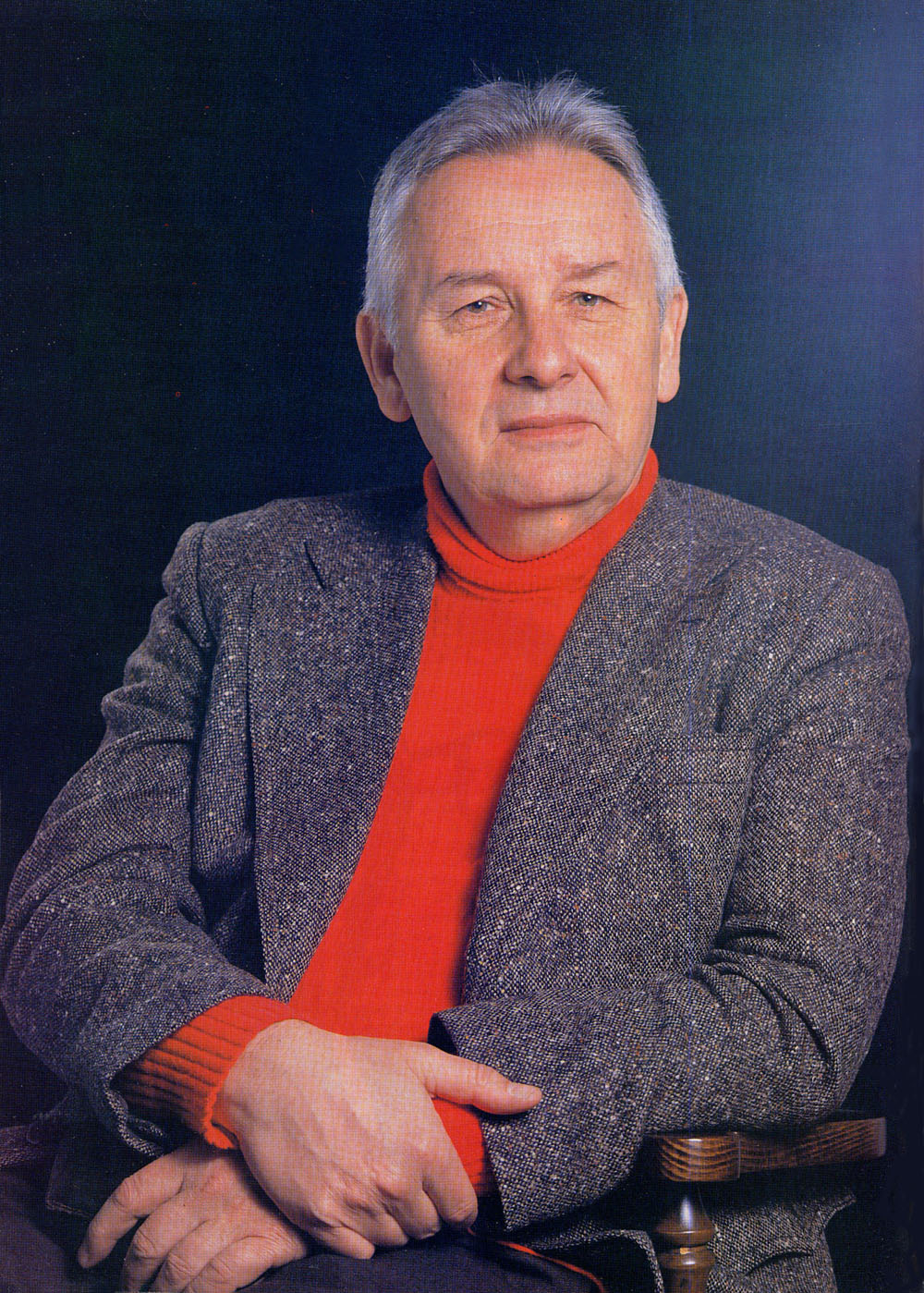
The Polish composer and educator Henryk Górecki was born in Silesia, southwest Poland in 1933. Against the wishes of his father, he studied music and joined the High School (now Academy) of Music in Katowice in 1955, graduating with distinction in 1960. Górecki's successful debut as a composer came in 1958 while still a student in Katowice. This auspicious debut led to performances of his Symphony No. 1, Op. 14 (1959) and Scontri, Op. 17 (1960) at the Warsaw Autumn International Festival of Contemporary Music. Shortly afterwards, he gained international notoriety by winning first prize for Symphony No. 1 at the 1961 Biennial Festival of Youth in Paris.
Górecki was appointed to teach at the Academy's faculty in 1968 and became Professor of Composition in 1975. He resigned his post in 1979, protesting the communist government's refusal to allow Pope John Paul II to visit Katowice during his historic pilgrimage to Poland in the summer of that year, a trip that would turn out to be the beginning of the end of the Polish Communist regime.
During his formative and early years as a composer, Górecki was influenced by a wide variety of contemporary styles that ranged from the music of Szymanowski, Bartók, and Stravinsky to the serialism of Webern and Boulez to Polish folk traditions, and finally while in Paris—when he was already established as the leader of the Polish avant-garde—to the modernism of Pierre Boulez (b. 1925), Olivier Messiaen (1908-1994), and Stockhausen (1928-2007).
Górecki's style in the late 1960s and 70s shifted from his early radical modernism to a more traditional mode of expression marked by his use of massive, sustained instrumental sonorities, devotional texts, medieval music, and a fascination with the timbral possibilities of the large modern orchestra. All of these traits are evident in his Symphony No. 2, Op. 31, "Copernican" (1972), a monumental work for solo soprano, baritone, choir and orchestra that features texts from Psalms No. 145, 6, and 135, and from Copernicus' seminal treatise De revolutionibus orbium celestium (On the Revolution of Heavenly Spheres), for which Górecki used music contained in a 15th-century liturgical book from the Holy Sepulcher of Miechów (Poland). Listen to the second movement of the symphony, and in particular to the soprano passage that starts at 04:44 and ends at 05:30 with a masterful musical pause, which symbolically allows the melody to rise where "the light is" (luminaria magna).
Composer: Henryk Górecki
-
"Symphony No. 2, Op. 31, Copernican: Second movement"
Górecki's best-known work is the hour-long Symphony No. 3, Op. 36, also known as Symphony of Sorrowful Songs, a moving work for soprano and orchestra that uses a different text for each of its three movements. The first, the 15th century Lamentation of the Holy Cross Monastery in which the Mother of Christ begs her dying son to speak to her; the second, a message written on a Gestapo prison wall in Zakopane during World War II by an 18-year-old girl, Helena Błażusiak, seeking the protection of the Queen of Heaven; and finally, a Polish folk song in which a Silesian mother mourns a son who has died in the Silesian uprisings against Germany after World War II. In a manner reminiscent of minimalism, each of the three movements unfolds gradually, revealing fine gradations of texture in a tonal setting.
In this second movement, marked "Lento e largo – Tranquillissimo" (slow and broad – very tranquil), the imprisoned Polish girl's prayer reads:
Niebios Przeczysta Królowo,
Ty zawsze wspieraj mnie.
Zdeowas Mario.
Queen of Heaven most chaste
Help me always.
Hail Mary.
Composer: Henryk Górecki
-
"Symphony No. 3, Op. 36, Symphony of Sorrowful Songs: II. Lento e largo - Tranquillissimo"
Symphony of Sorrowful Songs, composed in Katowice between October and December 1976, became an international hit when a 1992 recording with soprano Dawn Upshaw and the London Sinfonietta sold over a million copies worldwide and topped the classical and pop charts simultaneously. The symphony has appeared in the soundtrack for Peter Weir's movie Fearless (1993) and in Julian Schnabel's movie Basquiat (1996). Several pop groups including the British group Lamb have also been inspired by it, and quotations have even appeared on TV commercials (Guinness) and video games (Tomb Raider: Underworld).
Undisturbed by the phenomenal success of this work, Górecki continued composing pieces along a highly personal path that mixed and expanded on a variety of styles, as if refusing to capitalize on his unexpected fame. Listen to the third movement of his Concerto-Cantata, Op. 65 from 1992.
Composer: Henryk Górecki
-
"Concerto-Cantata, Op. 65: III. Concertino: Allegro"
Górecki's later years were clouded by illness and largely dedicated to writing shorter choral and instrumental pieces, though he was working on a Fourth Symphony at the time of his death. He passed away in his home city of Katowice on November 2010 of complications from a lung infection.