
Learning Objectives
- Outline the social, cultural, and political impact of WWI and WWII.
- Discuss the growth of the United States as a world power.
- Describe the impact of technological advancements on the development of music in the twentieth century.
- Describe, compare and contrast the main stylistic differences of Contemporary music styles including impressionism, post-Romanticism, serialism, and expressionism.
- Summarize the changing nature and application of the concept of tonality throughout the century.
- Discuss the impact of Claude Debussy's "Prelude to the Afternoon of a Faun" in light of the Symbolist movement in literature.
- Illustrate how the Russian composer Igor Stravinsky experimented with rhythm, new instrumental combinations, and the percussive use of dissonance, and discuss the impactof these techniques on contemporary music.
- Describe the impact of Arnold Schoenberg and the Second Viennese School on 20th-century music.
- Distinguish the main stylistic differences of nineteenth- and twentieth-century composers and styles.
- Describe the musical and political impact of “national schools” of composition that developed across Europe during the 20th century.
- Explain the impact of composer Aaron Copland on American contemporary music.
- Describe the impact of Latin American composers on the larger "art music" scene and repertoire.
- Define and analyze the main differences between jazz, ragtime, and blues.
Music of the 20th and 21st Centuries (1900-Present)
Currents in the New World: Musical Theater
Leonard Bernstein and West Side Story
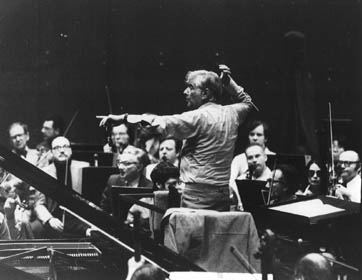
Primarily a classical composer, pianist, and conductor, the tremendously talented and versatile Leonard Bernstein wrote one of the most enduringly successful musicals. West Side Story, which premiered in 1957, brought together social criticism with hit songs, classical thematic development with jazz rhythms, and emotional depth with spectacular dance. Latin inflections and the American immigrant story provided a new, rich context for the Shakespeare tragedy Romeo and Juliet, and thus a new way of considering the interaction between ideal love and brutal social realities. Tony Award-winning choreography by Jerome Robbins translated teenage posturing and street violence into spellbinding movement onstage.
In West Side Story, Shakespeare's rival Montague and Capulet families become rival New York City gangs called the Jets and the Sharks. Tony, the Romeo character, is a former Jet, and Maria, the Juliet character, is the Shark leader's sister. The Sharks are Puerto Rican, the Jets white Americans. Several songs from West Side Story have become deeply ingrained in our culture. The exciting “America” is a dialogue, driven by complex and propulsive rhythms, between the Shark girls and Shark boys about the relative advantages or disadvantages of being in their new land.
Composer: Leonard Bernstein
-
"West Side Story: America"
“Tonight” juxtaposes, in operatic fashion, the disparate moods of three groups of characters: gang members preparing for violence, lovers anticipating a meeting, and one woman simply looking forward to a romantic encounter.
Composer: Leonard Bernstein
-
"West Side Story: West Side Story, Act I: Tonight"
"Somewhere" expresses tenderly and idealistically the hope for a place where a forbidden love may flourish, and "I Feel Pretty" conveys the confidence boost and even giddiness love can produce.
Composer: Leonard Bernstein
-
"West Side Story: Somewhere"
Composer: Leonard Bernstein
-
"West Side Story: West Side Story: I Feel Pretty (Anger Management)"
Early in the first act, Tony serenades his new love at her window with “Maria.” The song uses a theme, made slower and more romantic, from a brisk Cuban cha-cha dance number during which the two first spotted each other at a neighborhood dance. Bernstein made very effective use of thematic transformation throughout West Side Story in order to underscore characters' feelings, presage action, and communicate mood. Follow the Listening Guide as you listen to this song. The 1961 film version of West Side Story, directed by Robert Wise and Jerome Robbins, won ten Academy Awards, including Best Picture.
Composer: Leonard Bernstein
-
"West Side Story: Act I: Maria"
Leonard Bernstein was a truly multitalented artist—a consummate pianist, conductor, composer, writer, and educator. Perhaps the first internationally respected and recognized American conductor of the 20th century, he appeared as guest conductor with orchestras throughout the world, and he made numerous national television appearances. He composed works for choir and orchestra, for the concert hall and for film and television. He performed in concert at the piano and could also play anything on sight. His educational series The Young People's Concerts had a deep impact on a whole generation of American children, and it made him enormously popular. As an author, he published The Joy of Music and The Infinite Variety of Music. The Charles Eliot Norton lectures he delivered at Harvard University were published in 1976 under the title The Unanswered Question. In December 1989, he conducted the performances of Beethoven's Ninth Symphony (changing “Ode to Joy” to “Ode to Freedom”) in both East and West Berlin for the worldwide celebration of the fall of the Berlin Wall a month earlier.
The lyricist of West Side Story, Stephen Sondheim (b. 1930), went on to achieve great success of his own in musical theater and film, winning multiple Tony Awards and Grammy Awards, an Academy Award, and a Pulitzer Prize. His string of hits includes A Funny Thing Happened on the Way to the Forum (1962), Company (1970), Follies (1971), A Little Night Music (1973), Sweeney Todd (1979), Sunday in the Park with George (1984), Into the Woods (1987), Assassins (1990), and songs for the 1990 film Dick Tracy. He also wrote the lyrics for Gypsy (1959). In 2007, Sweeney Todd became a movie, directed by Tim Burton and starring Johnny Depp and Helena Bonham Carter.
Hair: The American Tribal Love-Rock Musical (1967), with music by Galt MacDermot, broke new ground, and during the last decades of the 20th century, several composers introduced rock music into musicals. Englishman Andrew Lloyd Webber (b. 1948) collaborated with lyricist Tim Rice to compose Joseph and the Amazing Technicolor Dreamcoat (1968) and Jesus Christ Superstar (1970). Lloyd Webber went on to compose Evita (1978), Cats (1981), and The Phantom of the Opera (1986), among many other musicals.
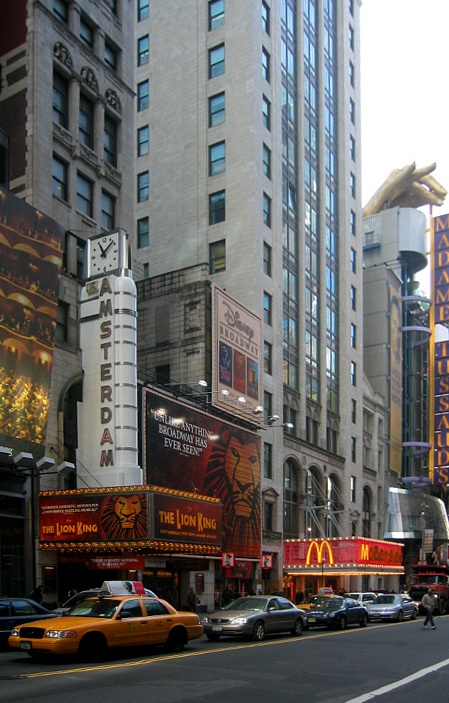
Some highly successful musicals have brought earlier works to new life. Claude-Michel Schöberg's Les Misérables (1987) dramatized the novel of the same name by the 19th century French novelist Victor Hugo, and his second big collaboration with lyricist Alain Boublil, Miss Saigon (1988), transplanted Giacomo Puccini's 1904 opera Madame Butterfly, set in Japan, to 1970s Vietnam. Rent (1996), by Jonathan Larson, was modeled after Puccini's 1896 opera La bohéme.