
Learning Objectives
- Define meter in relation to rhythm.
- Differentiate between duple and triple meter.
- Describe how composers use syncopation.
Meter
Another important aspect of rhythm is meter. Meter organizes pulses into groupings called measures depending on the pattern of stressed (strong/accented) or unstressed (weak/unaccented) beats. A crucial part of a musician's training consists of becoming familiar with meter signatures (also known as time signatures). These signatures come in a wide variety of combinations. Common ones include 2/4, 4/4, 3/4, 6/8, but every now and then musicians might encounter more unusual ones such as 9/8 or 5/4. Knowledge of time signatures is crucial for musicians because of the information the signatures convey: the top number indicates how many beats (or counts) are contained in each measure, while the bottom number identifies the note value (e.g., quarter note (4) or eighth note (8)) that gets the beat. For the listener, however, it is usually sufficient to recognize groupings of two (referred to as duple meter) or groupings of three (referred to as triple meter). Let's look briefly at duple and triple meter.
Duple Meter
A pattern of alternating strong (stressed) and weak (unstressed) beats creates duple meter. We can see this pattern in an example of a line of quarter notes in which strong pulses—marked with an accent (>)—occur every other note.

In duple meter, pulses are heard in pairs, with the stress or accent placed on the first pulse of each pair, and the weak or unstressed on the second. Each pair of pulses constitutes one measure. Tap the pulse of this excerpt and count.
Count out loud 1, 2, 1, 2, 1, 2 as you listen. This is duple meter.
Composer: Johann Sebastian Bach
-
"Overture (Suite) No. 3 in D Major, BWV 1068 (arr. L. Rose for cello and piano): Suite No. 3 in D Major, BWV 1068: Air (trans. L. Rose)"
Triple Meter
A pattern in which a strong beat is followed by two weak beats creates triple meter. We can see this pattern in an example of a line of quarter notes in which each strong pulse—marked with an accent (>)—is followed by two weak pulses.

In triple meter, pulses are grouped in threes with the stress placed on the first pulse in each group. Each group of three pulses constitutes one measure. Tap and count to this example in triple meter.
Count out loud 1, 2, 3, 1, 2, 3, 1, 2, 3 as you listen.
Composer: George Frideric Handel
-
"Water Music Suite No. 2 in D Major, HWV 349: II. Alla Hornpipe"
Although they are two distinctly different components of music and are independent of one another, some novice listeners confuse tempo and meter. A piece may be in duple meter and have either slow or fast tempo:
Composer: Johann Sebastian Bach
-
"Overture (Suite) No. 3 in D Major, BWV 1068 (arr. L. Rose for cello and piano): Suite No. 3 in D Major, BWV 1068: Air (trans. L. Rose)"
Composer: George Frideric Handel
-
"Solomon, HWV 67 *: Solomon, HWV 67, Act III: Sinfonia, "
Composer: Frédéric Chopin
-
"Waltzes, Op. 64: Waltz No. 7 in C-Sharp Minor, Op. 64, Op. 2" [ 00:33-00:53 ]00:20
Pulse
The pulses in much of the music we hear are grouped in duple or triple meter, but sometimes composers decide to use other groupings, which are heard as mixed or changing meter. For example, if a composer chooses to group pulses in fives, it may be heard as a group of three followed by a group of two, then another group of three and group of two.
The following is an example of mixed meter. There is a strong pulse and frequent accents but no recurring pattern to create a clear duple or triple meter.
Everything stated thus far in this lesson describes foundational elements of rhythm. Most music has an underlying pulse that creates a tempo. Some pulses receive more emphasis than others, creating a meter. Over these foundational elements are patterns of long and short tones that create the unique rhythmic fabric of each musical piece.
Some notes with long durations extend over several beats; others with short duration may subdivide a beat. Listen to this 16-beat example and count each pulse. It should be easy to follow the beat by listening to the string bass part.
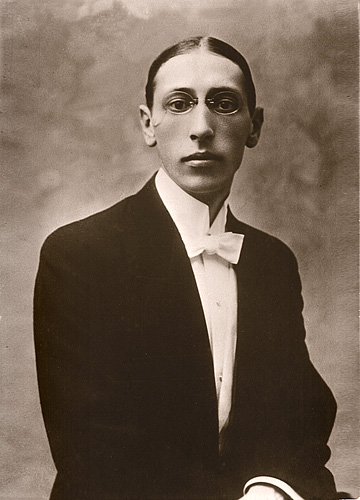
Composer: Igor Stravinsky
-
"Le Sacre Du Printemps (The Rite Of Spring): Part I: The Adoration of the Earth"
Now listen again and focus your attention on the highest part, played by the violin. This excerpt begins with a long tone that is sustained over the first 10 beats, followed by some shorter tones that subdivide the beat.
Rhythm patterns combine with pitch patterns to create melodies or themes, which give structure to music. Composers will often repeat rhythm patterns (providing unity) with different pitches (creating contrast).
Listen to some more of this piece and notice how the composer used the idea of a long sustained tone followed by a few shorter tones in several different ways, but always on top of the steady pulse played by the bass. There are other rhythm patterns played by other string instruments in between the melody of the violin and the bass, but for this listening exercise, try to focus only on the highest part; i.e., the melody.
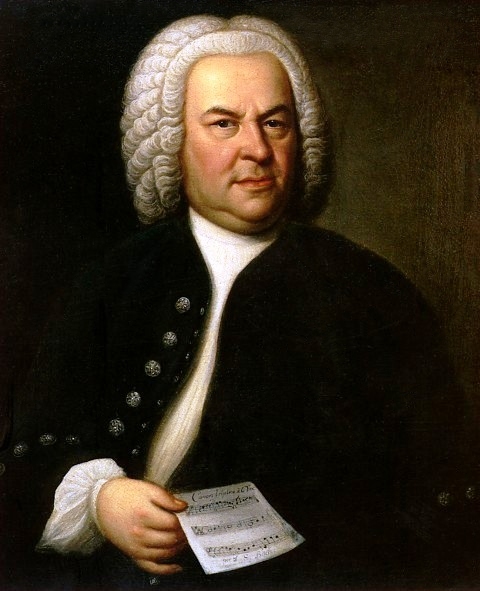
Composer: Johann Sebastian Bach
-
"Overture (Suite) No. 3 in D Major, BWV 1068 (arr. L. Rose for cello and piano): Suite No. 3 in D Major, BWV 1068: Air (trans. L. Rose)"
Composers may also create a rhythmic pattern and use it repeatedly in the accompaniment to provide unity within a piece. In the following movement from Water Music, Handel created a pattern of three short tones followed by one long tone and placed the long tone on an accented pulse to give it even more emphasis. The result is the rhythmic pattern:
[ _ _ _ ____ ] short short short long that becomes the main musical idea in this section of the piece.
Composer: George Frideric Handel
-
"Water Music Suite No. 2 in D Major, HWV 349: II. Alla Hornpipe" [ 01:05-01:24 ]00:19