
Tuplets
As you know, simple meters normally divide the beat into equal parts that are multiples of two (two, four, etc.) and compound meters normally divide the beat into multiples of three (three, six, etc.). Tuplets are rhythmic groupings that divide simple beats (undotted values) into divisions other than multiples of two and compound beats (dotted values) into divisions other than multiples of three.
The most frequently used tuplets are triplets and duplets. Tuplets also include quadruplets, quintuplets, sextuplets, and septuplets, but these larger tuplet groupings are not nearly as common.
Triplets
A triplet is the result of dividing a beat in simple meter (an undotted note) into three rather than two parts. (This technique is sometimes called borrowed division.) The triplet symbol is the number three ("3") written above a group of notes, sometimes combined with a bracket or a curved line. Triplets occur only in simple meter.

Remember:
A triplet is a group of three notes performed in the time of two notes. In other words, it is the compound division of what is normally a simple division.
Here is an example in simple duple meter, first without triplets:
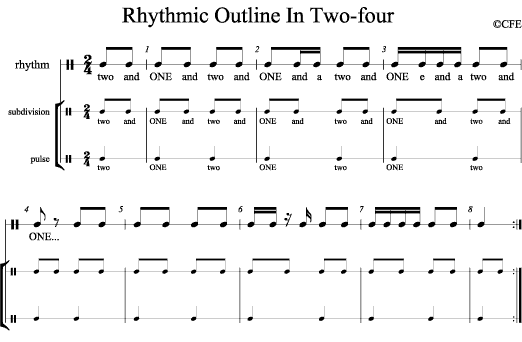
Rhythmic pattern in two-four time without triplets
Now here is the same pattern with triplets substituted for the regular eighth notes in measure 1 and measure 5. (Notice the 3
added above the group of three eighth notes on the first beat of these two measures.) Click on the score to hear the rhythmic effect of substituting triplets for the regular eighth notes. You will notice that the triplet eighth notes are performed faster than the regular eighth notes, since three notes must fit into the same space as two notes. Triplets do not affect the duration of the beat, which must remain steady.

Rhythmic Outline in Two-Four with Triplets
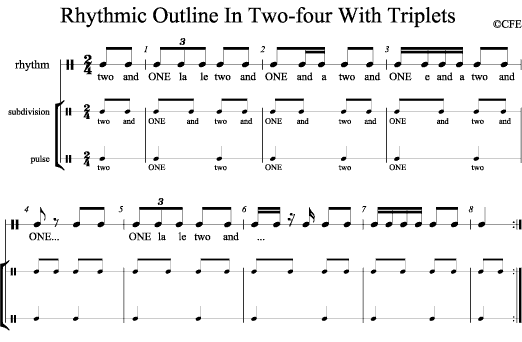
Rhtythmic Outline in Two-Four With Triplets
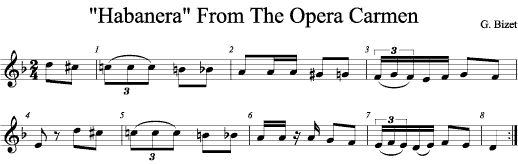
In the hands French composer Georges Bizet (1838-1875), the simple rhythmic pattern above became the basis of the famous Habanera from the opera Carmen, one of the most popular works in the operatic repertoire. Notice that Bizet also adds a quicker triplet division in measures 3 and 7, writing three sixteenths in the space of two sixteenths. Click on the score below to hear the melody or the audio link to hear a recording.
Composer: Georges Bizet
-
"Carmen: Habanera"
Excerpt of "Habanera" From the Opera Carmen by Georges Bizet
Examples of Triplets in Various Meters
Triplets can occur in any simple duple, triple, or quadruple meter. Here are some examples of triplets in various meters. In this first example, we see eighth-note triplets in measure 1 and sixteenth-note triplets in measure 2. In the third measure, the first set of triplets features a grouping with a long and a short note equalling three eighths. Since the first note of the group doesn't have a beam, a bracket is added above the notes to show the triplet grouping better.
Triplets in two-four time
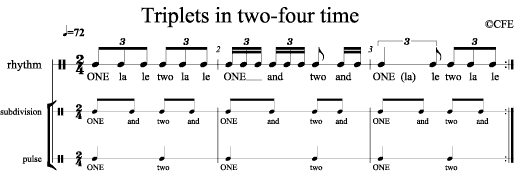
Triplets in two-four time
Here is another example of a long-short note grouping in measures 2 and 3 (an eighth note and a sixteenth note beamed together, with an incomplete beam on the sixteenth note).
Triplets in two-eight time
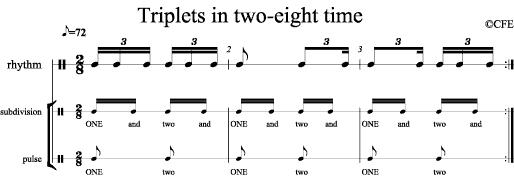
Triplets in two-eight time
Triplets can be based on any note value. In this example, there are quarter-note triplets in measure 1 and eighth-note triplets in measure 2, with another long-short grouping in measure 3.
Triplets in two-two time
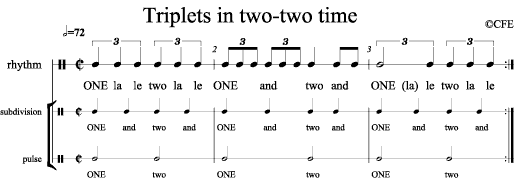
Triplets in two-two time
Duplets
A duplet is the result of dividing a beat in compound meter (a dotted note) into two rather than three equal parts. The duplet symbol is the number two ("2") written above a group of notes, sometimes combined with a bracket or a curved line. Duplets occur only in compound meter.
Remember:
A duplet is a group of two notes performed in the time of three notes. In other words, it is the simple division of what is normally a compound division.
Here is an example of duplets in six-eight meter. Each beat is normally divided into three eighth notes, but in measure 2, two-note duplet groups are substituted.
Duplets in six-eight time
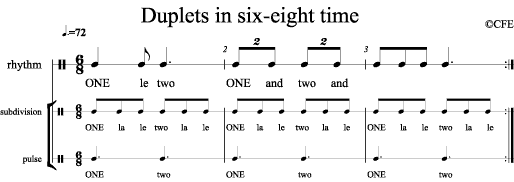
Duplets in six-eight time