Learning Objectives
- Outline the social, cultural, and political impact of WWI and WWII.
- Discuss the growth of the United States as a world power.
- Describe the impact of technological advancements on the development of music in the twentieth century.
- Describe, compare and contrast the main stylistic differences of Contemporary music styles including impressionism, post-Romanticism, serialism, and expressionism.
- Summarize the changing nature and application of the concept of tonality throughout the century.
- Discuss the impact of Claude Debussy's "Prelude to the Afternoon of a Faun" in light of the Symbolist movement in literature.
- Illustrate how the Russian composer Igor Stravinsky experimented with rhythm, new instrumental combinations, and the percussive use of dissonance, and discuss the impactof these techniques on contemporary music.
- Describe the impact of Arnold Schoenberg and the Second Viennese School on 20th-century music.
- Distinguish the main stylistic differences of nineteenth- and twentieth-century composers and styles.
- Describe the musical and political impact of “national schools” of composition that developed across Europe during the 20th century.
- Explain the impact of composer Aaron Copland on American contemporary music.
- Describe the impact of Latin American composers on the larger "art music" scene and repertoire.
- Define and analyze the main differences between jazz, ragtime, and blues.
Music of the 20th and 21st Centuries (1900-Present)
Music for Film
In addition to their music for the concert hall and opera house, many of the world's most renowned composers have contributed music for film. In cinema's earliest days, musicians played live in the theater while the film was shown. The first moving picture to include synchronized dialogue and song was The Jazz Singer in 1927. As film grew in significance as a medium and sound technology improved, music for soundtracks became an important compositional outlet. At the same time, music became an essential dramatic ingredient for most films. In some cases, music helped to clarify what was going on and what the audience could expect to feel. Aaron Copland, for instance, reputedly rescued a misinterpreted scene from The Heiress (1948) by writing tragic music for it—audiences had initially laughed, and the director asked Copland for help. Copland won an Academy Award for the music to this film.
Film composers write two kinds of music: preproduction and postproduction. Preproduction music accompanies some action in the film: dancing, background musicians on stage, and so on. Films that revolve around music (The Sound of Music, The Mambo Kings, Amadeus, La Bamba) require a great deal of preproduction music. The majority of film music, however, is added in postproduction, that is, after the film has been edited, to enhance the emotional content of the final product. The film soundtrack has become a popular, commercially successful genre in its own right.
Max Steiner (1888–1971), who emigrated to the United States from Vienna in 1914, was a film music pioneer. He wrote evocative soundtracks for such movie classics as King Kong (1933), The Three Musketeers (1935), Gone With the Wind (1939), and Casablanca (1942).
Composer: Max Steiner
-
"Gone with the Wind: Tara's Theme"
Two other important early film composers were Alfred Newman (1901–1970) and Bernard Herrmann (1911–1975). Newman's scores included the music to Captain from Castile (1947), The Hunchback of Notre Dame (1939), Wuthering Heights (1939), and Airport (1970). Newman was the head of a family of film composers including nephew Randy Newman (Toy Story, 1995) and son Thomas Newman (American Beauty, 1999). Herrmann was one of the first film music composers to successfully introduce 20th century compositional techniques as a way of heightening tension in suspense films. He wrote for directors such as Orson Wells (Citizen Kane 1941); Alfred Hitchcock ( The Trouble with Harry [1955], The Man Who Knew Too Much [1956], Vertigo [1958], North by Northwest [1959], and Psycho [1960]); and Martin Scorsese (Taxi Driver, 1976). He also composed the music for the Western Garden of Evil (1954).
Composer: Alfred Newman
-
"Airport, main theme"
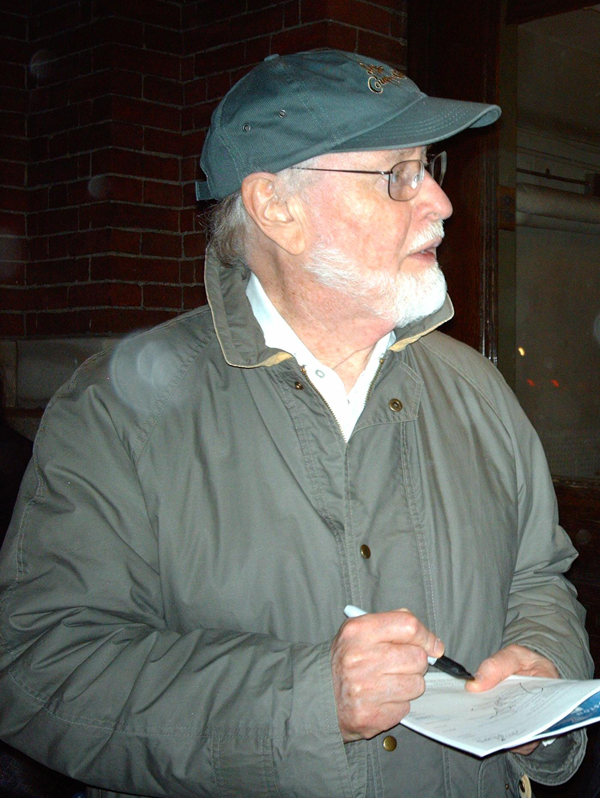
Filmmakers also incorporate music that existed beforehand. For example, American composer Samuel Barber's (1910–1981) Adagio for Strings was liberally used throughout the movie Platoon (1986). Premier film composer John Williams (b. 1932) incorporated music by Gustav Holst, Pyotr Tchaikovsky, Edward Elgar, and Carl Orff, as well as music by the earlier film composer Eric Korngold (1897–1957), into his Star Wars series. Stanley Kubrick's 2001: A Space Odyssey (1968) is an interesting case. Typically, a temporary score is used early in the film editing process. Stanley Kubrick became so attached to the temporary score— consisting of the striking compositions Thus Spoke Zarathustra by Richard Strauss; the Blue Danube Waltz by Johann Strauss Jr.; Atmosphères, Lux Aeterna, and Requiem for soprano, mezzo-soprano, two mixed choirs, and orchestra by György Ligeti; and the Gayane Ballet Suite by Aram Khatchaturian—that he insisted on retaining this music for the final version of the movie rather than applying the score commissioned by composer Alex North. The music became particularly important in this film, which featured little dialogue and ultimately won the Academy Award for Best Visual Effects.
Composer: Samuel Barber
-
"Adagio for Strings, Op. 11"
In addition to the Star Wars series, John Williams has composed the music for many of the most-watched movies of our time. He has scored Jaws, Indiana Jones, Ferris Bueller's Day Off, Schindler's List, Saving Private Ryan, the first three films in the Harry Potter series, Memoirs of a Geisha, E. T., and Superman. He also composed the NBC Nightly News theme, as well as themes for the 1984, 1988, and 1996 Summer Olympic Games. He has won numerous Grammys, Golden Globes, and Academy Awards, and in 2010, he was awarded the National Medal of Arts for his tremendous output of deeply affecting symphonic movie scores. His music for the six Star Wars movies, in particular, makes use of leitmotifs to introduce characters, foreshadow events, describe characters' transformations, and recall scenes from other movies in the series.
Stanley Myers' "Cavatina" from The Deer Hunter (1978), a film examining the effect of the Vietnam War on small-town Americans, is a particularly poignant example of how music can enhance a film's impact. Myers (1930–1993) wrote scores for over sixty movies.
Composer: Stanley Myers
-
"Cavatina"
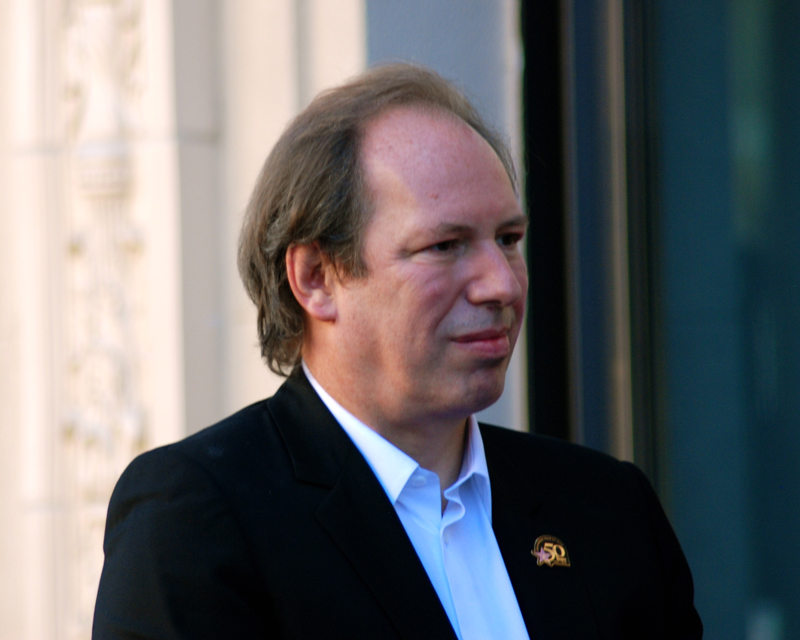
In the 1980s, Myers formed a musical partnership with the younger Hans Zimmer (b. 1957) to produce music for a number of films. Zimmer, who now heads DreamWorks' film music division, has become known for his brilliant integration of traditional orchestral sounds with new electronic technology. He has composed soundtracks for such films as Rain Man (1988), Driving Miss Daisy (1989), Thelma and Louise (1991), A League of Their Own (1992), and The Lion King (1994), which won an Academy Award for Best Original Score, a Golden Globe, an American Music Award, a Tony, and two Grammys. Other films include Gladiator (2000), Black Hawk Down (2001), Spirit: Stallion of the Cimarron (2002), The Dark Knight (2008), Frost/Nixon (2008), Inception (2010), and three films in the Pirates of the Caribbean series: Dead Man's Chest (2006), At World's End (2007), and On Stranger Tides (2011).
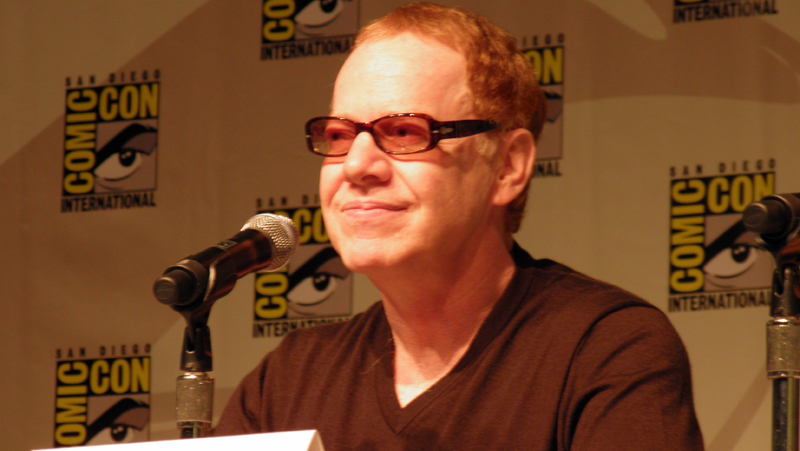
Two other preeminent contemporary film composers are James Horner and Danny Elfman, both born in 1953. Horner, famed for his lush sounds and his skillful use of synthesizers, composed one of the best–selling soundtracks of all time for the movie Titanic (1997), including Celine Dion's song “My Heart Will Go On.” The soundtrack won an Academy Award and a Golden Globe for Best Original Score. Horner was also nominated for Aliens (1986), Field of Dreams (1989), Braveheart (1995), Apollo 13 (1995), A Beautiful Mind (2001), and Avatar (2009). Danny Elfman, a member of the former band Oingo Boingo, has had a close partnership with director Tim Burton, producing music for Pee-wee's Big Adventure (1985), Batman (1989), Edward Scissorhands (1990), The Nightmare Before Christmas (1993), Mars Attacks! (1996), and Sleepy Hollow (1999). His impressively long list of other film credits includes such hits as Men in Black (1997), Spider-Man (2002), and Good Will Hunting (1997). Elfman also wrote the themes for TV series including The Simpsons and Desperate Housewives.