
Objectives
- Outline the social, cultural, and political impact of WWI and WWII.
- Discuss the growth of the United States as a world power.
- Describe the impact of technological advancements on the development of music in the twentieth century.
- Describe, compare and contrast the main stylistic differences of Contemporary music styles including impressionism, post-Romanticism, serialism, and expressionism.
- Summarize the changing nature and application of the concept of tonality throughout the century.
- Discuss the impact of Claude Debussy's "Prelude to the Afternoon of a Faun" in light of the Symbolist movement in literature.
- Illustrate how the Russian composer Igor Stravinsky experimented with rhythm, new instrumental combinations, and the percussive use of dissonance, and discuss the impactof these techniques on contemporary music.
- Describe the impact of Arnold Schoenberg and the Second Viennese School on 20th-century music.
- Distinguish the main stylistic differences of nineteenth- and twentieth-century composers and styles.
- Describe the musical and political impact of “national schools” of composition that developed across Europe during the 20th century.
- Explain the impact of composer Aaron Copland on American contemporary music.
- Describe the impact of Latin American composers on the larger "art music" scene and repertoire.
- Define and analyze the main differences between jazz, ragtime, and blues.
Contemporary Period (1910-present)
Music since WWII Part I
After World War II, as composers focused on ever more abstract ideas and became increasingly isolated from the mainstream and each other, art music splintered off into several different directions. A common trait among all of these factions was an extremely abstract and intellectual approach to creating music. This philosophy continued until the last two decades of the century, when the trend reversed to emphasize a more tonal, emotional form of musical expression. We will look at each of these factions separately, and then, from a more general perspective, examine the state of music at the millennium.
Serialism
Since the defining moment in 20th-century history is also a defining point in serial music, Webern’s death in the closing days of World War II is immediately symbolic. His work had been moving toward a type of serialism that gave the composer total control over all of the elements of a piece of music (rhythmic duration, dynamics, range, and pitch). This compositional technique, often called total serialism, was employed by a core group of composers after World War II including Witold Lutoslawski (1913-1994), Pierre Boulez (b. 1925), Karlheinz Stockhausen (b. 1928), and Milton Babbitt (b. 1916).
Composer: Witold Lutoslawski
-
"Novelette: First Event"

Although it has certainly not been the most popular method, serialism remains one of the most important musical developments of the 20th century. The harmonic chaos of the form led some, if not most, listeners to shy away from it. In his famous article, Who Cares If You Listen?, Milton Babbitt summed up the feelings of his contemporaries when he wrote that serialism offered the possibility of writing absolute music in its purest form. This was music for music’s sake, he argued, and it existed regardless of the approval of a listening public. In some circles of new music, this attitude still exists and, while disconcerting to the music listener, it allows the composer the rare freedom to create totally original music.
Some composers, such as Japan’s Toru Takemitsu, are often labeled for his or her deliberate melding of discrepant methods as "post-impressionist." In works such as Moby Dick from Toward the Seafor alto flute and strings, Takemitsu uses serial techniques in combination with other atonal techniques.
Composer: Toru Takemitsu
-
"Moby Dick"
Aleatoric Music
Aleatoric, or "chance" music, reflects the interest of some composers in Eastern religious or mystical thought. Also known as "indeterminacy," this type of music, either through a performer’s improvisation or a composer’s design, allows for the element of chance to enter into a musical performance. This philosophical construct accomplishes two things: it reverses the trend begun with Guido d’Arezzo in the 11th century towards a written musical tradition that emphasizes the composer, and it forces the composer and the listener to consider the question, "What is music?".
Composer: John Cage
-
"Sonatas and Interludes for Prepared Piano: Second Interlude"
The primary figure in aleatoric music, and one of the main forces in more mainstream 20th-century American music as well, is John Cage (1912-1992). His works include a series of sonatas and interludes for a piano with various nails, bolts, pieces of wood and leather inserted between the strings of the piano, which change its tone completely; this instrument is called a prepared piano. Another piece by John Cage is 4’33”, a work that calls for the performer to look at a blank score for four minutes and thirty-three seconds, turning the pages at specified intervals. The resulting sounds in the room (shuffling feet, coughs, and murmurs of disbelief) become the composition, a work that the composer "created" but over which he has no control.
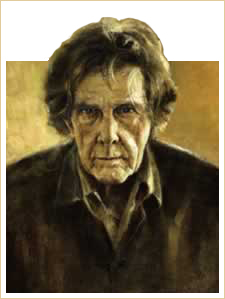

Indeterminacy accomplishes two things: it reverses the trend, begun with Guido d’Arezzo in the 11th century, towards a written musical tradition that emphasizes the composer, and it forces the composer and the listener to consider the question, ‘What is music?’...

Computer Music
The ascendancy of the computer after World War II provided composers with a new ally in their search for original timbres and sounds. In the 20th century, composers used percussion instruments in new and interesting ways partly because they represented an element of timbre that had not previously been explored in depth. One of the first composers to exploit percussion timbres, Edgard Varése (1883-1965) was also a pioneer in electronic music. Varése’s Ionisation (1933), the first work for percussion instruments alone, is still considered one of the most important works of the century. His Poéme electronique (1958), on the other hand, premiered at the Brussels World Fair, combines electronically altered natural sounds (the human voice) and synthetic (created with a computer) sounds. Stockhausen explored electronic music with his Gesange der Jünglinge (1956), as did Babbitt with Philomel (1963).
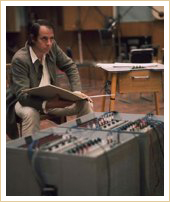
After 1950, the numerous technological advancements continually expanded opportunities for composers. With the development of recording technology came experiments in taped music (Babbitt’s Philomel) and tape loops (Steve Reich’s It’s Gonna Rain). Since 1980, technological developments (i.e. the synthesizer, MIDI technology, the portable computer) have greatly augmented the creative tools available to composers.
The synthesizer, MIDI technology, and the computers have greatly augmented the creative tools available to composers...
Sound Mass
Several composers after World War II focused on a timbre created by using entire masses of pitches. Henry Cowell (1897-1965) hinted at this in some of his early piano works that called for tone clusters, which are a group of notes played simultaneously with the performer's forearm. This technique reached a peak with the music of Krzysztof Penderecki (b. 1933) and Georgy Ligeti (b. 1923). Penderecki's disturbing Threnody for the Victims of Hiroshima employs sound mass within the string section to produce a chilling effect. Ligeti uses the technique most effectively in Atmosphéres for orchestra (1961) and Lux Aeterna for chorus (1966). Both of these works were chosen by Stanley Kubrick as part of the soundtrack for his epic film 2001: A Space Odyssey. Today, these techniques are most consistently used in suspense and horror films.
Composer: Krysztof Penderecki
-
"Threnody for the Victims of Hiroshima"



Ralph Vaughan Williams was the great-nephew of Charles Darwin and the great-great-grandson of Josiah Wedgwood
