
Overview
Objectives
- Examine Elvis Presley's music and his particular blend of many different styles and genres.
- Identify the key figures and institutions that helped turn Presley into the cultural phenomenon that he became during the 1950s
- Examine ways in which Presley was turned into a commodity through television appearances and Hollywood films
Presley’s Cover Versions
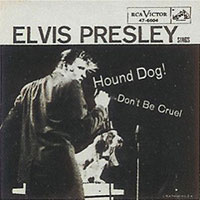
Elvis Presley was a singer, not a songwriter. He never wrote any original material. Although he could play the guitar reasonably well, he did not know how to read or write music, and he learned all of his material by rote. As a result, all of his songs were either the products of cover versions or of songwriting teams, or sometimes both, as was the case of "Hound Dog ♫." Written by the songwriting duo of Jerry Leiber and Mike Stoller, "Hound Dog ♫" was first recorded by the rhythm and blues artist Big Mama Thornton in 1953. Big Mama Thornton’s version of the song is raw, gritty, and far more suggestive than Presley’s cover. Compare the lyrics of the two, both of which are in the AAB form of the 12-bar blues:
Big Mama Thornton (written by Leiber and Stoller)
Quit snoopin’ ‘round my door
You ain't nothin’ but a hound dog
Quit snoopin’ ‘round my door
You can wag your tail
But I ain’t gonna feed you no more
Presley (cover version; lyrics modified from Leiber and Stoller original)
Cryin’ all the time
You ain’t nothin’ but a hound dog
Cryin’ all the time
You ain’t never caught a rabbit and you ain’t no friend of mine.
While Big Mama Thornton’s lyrics have a clearly sexual undertone, the lyrics of Presley’s cover version become almost nonsensical. As we saw in the previous lesson, white rock and roll covers of black artists’ rhythm and blues songs frequently edited the lyrics almost to the point of incomprehensibility in order to negate any possible references to sex or sexuality. The lyrics might have lost their original meaning, but Presley’s delivery of them is electrifying. Scotty Moore’s rousing guitar solos, the crisp drumming by D.J. Fontana, and the invigorating background vocals and handclaps combine in an explosive, catchy track. "Hound Dog ♫" was a runaway success for Presley, spending eleven weeks at number one on the pop charts in 1956.
As mentioned, "Hound Dog ♫" was penned by composer Mike Stoller and lyricist Jerry Leiber, who were one of the most active and influential writer-producer teams in the field. In 1951, when both were eighteen years old, they had their first tune, "Real Ugly Woman ♫," recorded by bluesman Jimmy Witherspoon. For the next twenty years they carved out their place in rock and roll history, leading the way with innovations that soon became standard operating procedures for all songwriters. Every aspect of their recording sessions was carefully pre-planned, and there were times when they did sixty takes and agonized through much editing before they approved the final master.
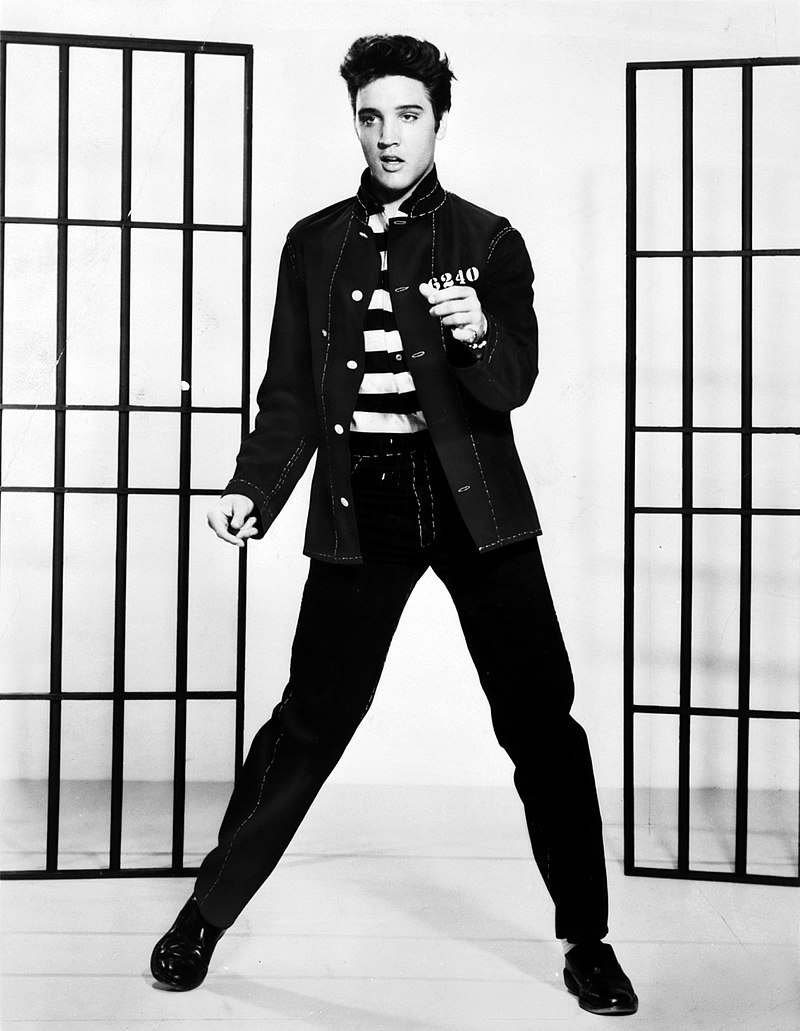
They were among the first songwriters to become independent producers. Leiber and Stoller influenced music for many years, and we will encounter them again in subsequent lessons. They wrote several of Presley’s greatest hits, including "Hound Dog ♫," "Jailhouse Rock ♫," "Don’t ♫," "Loving You ♫," and "Love Me ♫."
Although Presley was not a songwriter, he was a master interpreter and song stylist. If he decided that he did not like a particular song or recording that he had made, neither Sun Records nor RCA could release it. Presley controlled this aspect of his recording throughout his career. After his death in 1977, however, many of his rejected recordings were issued.



