
Learning Objectives
- Relate how Romantic poets and artists abandoned traditional subjects, turning instead to the passionate and the fanciful.
- Relate how the Industrial Revolution impacted the technological development and affordability of musical instruments.
- Analyze how the orchestra grew in size and sound as new instruments were introduced and composers demanded greater levels of expression.
- Illustrate how Romantic composers explored nationalistic folklore and exotic subjects.
- Identify the form of romantic period songs, including strophic, through-composed, and the modified strophic forms.
- Examine the German art song (or Lied) as a favored romantic period genre.
- Discuss how the music of Franz Schubert impacted romantic period music.
- Discuss how the music of Frédéric Chopin impacted romantic period music.
- Trace the ascendance of program music in relation to absolute music.
- Summarize how political unrest throughout Europe stimulated the formation of schools of musical nationalism in Russia, Scandinavia, Spain, England, and Bohemia among other countries.
- Differentiate between the distinct national styles of romantic opera in France, Germany, and Italy.
- Discuss how the Italian nationalist composer Giuseppe Verdi impacted romantic period music.
- Trace how choral music became a popular artistic outlet for the middle classes.
- Discuss how the Russian composer Pyotr Ilyich Tchaikovsky impacted romantic period music.
Romantic Period (1820–1910)
Program Music
Recall that program music was written to tell a story, create a picture, or express a specific idea. The concept of program music, while not new, was perfectly suited to the Romantic ideals of the period. Music compositions relating heroic feats, faraway lands, and bizarre or uncommon life experiences and human relationships became standard themes of many works during the era. Many of these pieces continue to be very popular and are frequently included in the recordings and standard repertoire of orchestras and recitalists.
Hector Berlioz
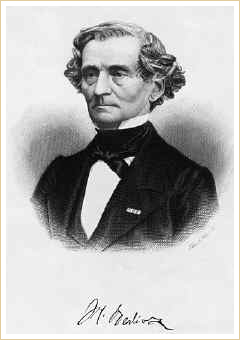
Berlioz was one of the first famous composers who didn't come from a musical family. He was expected to follow in his father's footsteps and become a doctor, but his interest in music quickly surpassed his interest in medicine. Berlioz was not a particularly talented performer on any instrument; furthermore, one of the only music-related jobs he ever held was music librarian at the Paris Conservatory. He would, however, compose music and then arrange concerts to perform his compositions. Berlioz only composed in large forms, writing nothing for soloists or chamber ensembles. He was also a music journalist and wrote a famous book on the rules and conventions of orchestration.
The Symphonie Fantastique (Fantastic Symphony) is the ultimate autobiographical Romantic program work. It represents five episodes in the life of a lovesick, obsessed musician who, to top things off, is under the influence of opium throughout. In true Romantic fashion, his love is unrequited; therefore, in a raging fit of jealousy, he kills his beloved. For this act, he is sentenced to be executed at the guillotine. "March to the Scaffold" represents this moment, complete with a sinister, gloomy, funeral procession, in the middle of which, the young artist has time to think one last time of his beloved, represented musically by an idée fixe.
Composer: Hector Berlioz
-
"Symphonie Fantastique, Op. 14: IV. March To The Scaffold"
The Virtuosos
In every age there have been virtuoso performers. Vivaldi and Bach were considered virtuosos in their time, as were Mozart and Beethoven in theirs. The standards and expectations of one time period are bested by the next, as competition compels musicians to outdo one another. During the 19th century, two remarkable musicians reached such a degree of mastery over their instruments that, to this day, their names are still synonymous with virtuosity: Niccolò Paganini and Franz Liszt.
Niccolò Paganini
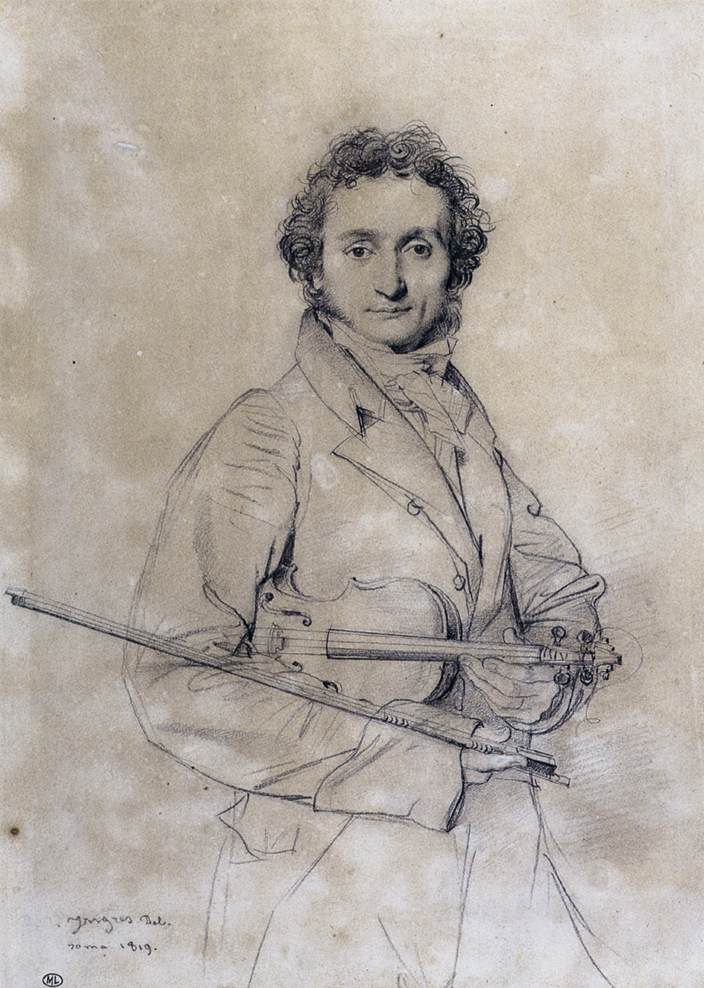
The virtuoso who set the standard for all performers to follow was violinist Niccolò Paganini. In addition to his ability to play incredibly fast and complicated musical passages, Paganini was a consummate showman. He is said to have commented one time, “I am not handsome, but when I play music, women throw themselves at my feet.”
Not only was Paganini an unmatched violinist, he was also a violist, guitarist, and composer. He delighted in writing extremely difficult pieces that only he could play, for example, the Capriccio No.1 from the Twenty-four Caprices for Solo Violin, a collection written when he was only 16 years old that, to this day, remains a compendium of technique for the instrument.
Paganini's 24 Caprices was published in 1820. He dedicated them “to the artists,” probably knowing quite well that few, if any, of the violinists of his day would be able to perform the pieces within. These masterful pieces have influenced entire generations of musicians. Among the most prominent composers that have written works based on them are Franz Liszt, Robert Schumann, Johannes Brahms, Sergei Rachmaninoff, and Witold Lutoslawski.
Composer: Niccolò Paganini
-
"Twenty-four Caprices for the violin, Op. 1: Capriccio No. 1 in E major, L'Arpeggio"
Franz Liszt
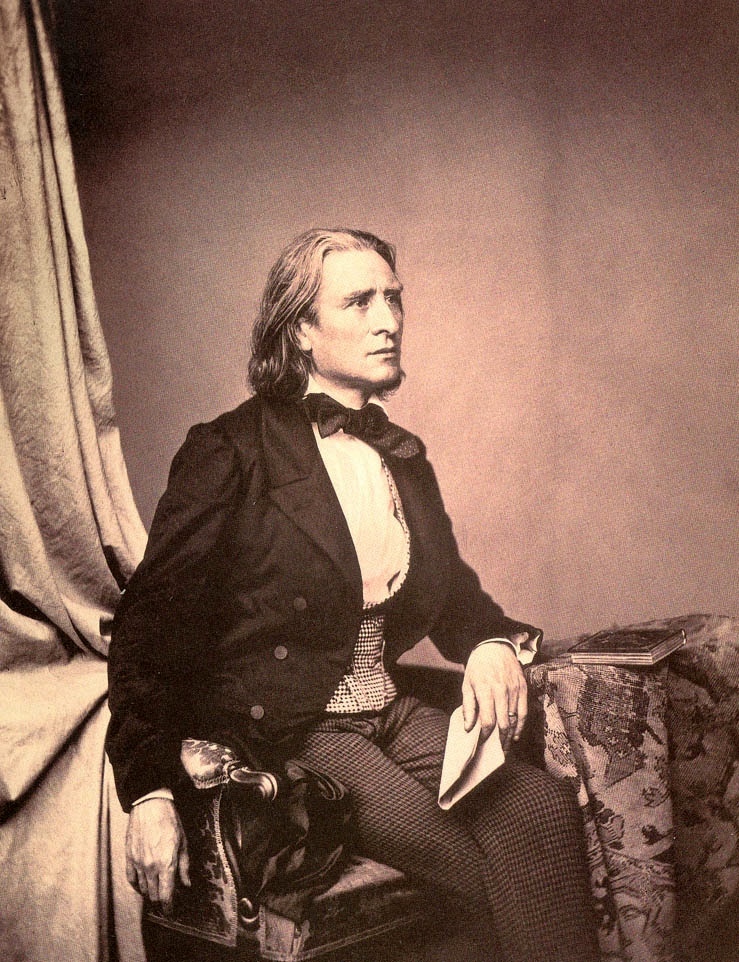
Liszt was born in 1811 in Hungary. Although many think of him as a Hungarian composer, and the Hungarians themselves have claimed him as a national treasure, the fact is that he remained very much an international artist and man of the world throughout his life.
When Liszt was ten, his family moved to Vienna, where he took piano lessons from Beethoven's pupil Czerny and composition lessons from Salieri. Two years later, the family moved to Paris, where he became friends with Chopin, Victor Hugo, and Berlioz. In 1830, Liszt heard the phenomenal violinist Paganini and decided that he would develop similar technical wizardry at the keyboard. After three years of near seclusion, he emerged as the most astonishing pianist of his day.
Composer: Franz Liszt
-
"Grandes études de Paganini, S. 141: No. 3 in G-Sharp Minor, "
Composer: Franz Liszt
-
"Études d'exécution transcendante, S. 139: No. 5 in B-Flat Major "
Liszt coined the term recital, which suggests something more important than simply playing an instrument. He was also largely responsible for the now-accepted custom of playing in public from memory.
From 1835 until 1847 (when he gave his last paid public concert), Liszt toured widely from England to Turkey, performing to adoring crowds wherever he went. His dazzling technique and personal magnetism made him one of the first true international virtuosos. Even Clara Wieck Schumann, who tended to think of him as a showman, admitted: “He can be compared to no other virtuoso. He is unique. He arouses fright and astonishment.” Liszt was also the first pianist to transcribe, perform, and therefore disseminate compositions by Bach, Beethoven, Schubert, Berlioz, Wagner, and Schumann.
By 1848, Liszt had settled in Weimar as Director of Music, accompanied by the Princess Carolyne zu Sayn-Wittgenstein, having separated some years earlier from the Comtess D'Agoult, mother of his three children. At Weimar, he concentrated his efforts on composition, and, in particular, on the creation of a new form, the symphonic poem for orchestra, and the method of thematic transformation through which one or two themes serve as the basis for an extended orchestral work. This principle was later used by Richard Wagner to develop the so-called leitmotifs in his operas. (Coincidentally, Wagner became Liszt's son-in-law in 1870.)
In 1861 Liszt moved to Rome, where he took minor religious orders. From 1869 on, he divided his time between Rome, Weimar, and Budapest. His main activity during this time was teaching and helping some of the most important pianists and composers of his day including Edvard Grieg, Mily Balakirev, Alexander Borodin, and Claude Debussy.
Liszt died in Bayreuth in 1886, four years after the death of Richard Wagner. Liszt's late compositions anticipated the breakdown of tonality and the harmonic style of Claude Debussy. His Bagatelle Without Tonality arguably foreshadows the work of Béla Bartók and Arnold Schoenberg.
Among Liszt's more than 700 compositions are his 12 symphonic poems, two piano concerti, several sacred choral works including the oratorios Die Legende von der heiligen Elisabeth (1857–1862) and Christus (1855–1866), and a great collection of piano pieces that pushed the technical and musical limits of the piano. This vast output attest to his genius as a composer and places him as one of the main figures in the Romantic movement.
Composer: Franz Liszt
-
"A Faust Symphony: Final Chorus"
Frédéric Chopin
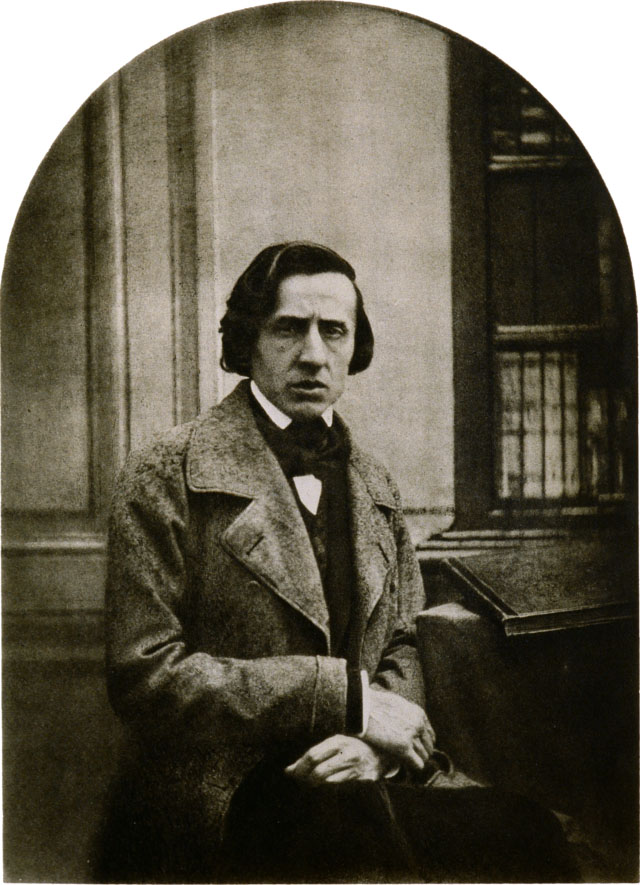
Born in a small Polish town where his father was a French teacher, Chopin began composing and improvising at the piano from a very early age. He was considered a child prodigy. One of the few composers who wrote almost exclusively for piano—he did write a few songs, but didn't write any choral music, masses, oratorios, operas, anthems, or ventured into the symphonic realm—by the age of 18 Chopin had already identified and developed his own compositional style. He explored a wide range of emotion in music full of clear, graceful melodies.
After attending the Warsaw Lyceum and later the Conservatory, he left Poland for Vienna where he made his debut in 1829. In late 1830, he left again with the intention of continuing his studies in Germany and Italy, but instead he settled in Paris.
Chopin gave his first concert in Paris in February 1832. Even though he wasn't particularly successful with the Parisian public, he quickly became closely associated with the most prominent intellectuals, artists, musicians, Polish political activists, and financiers of his day. His circle of friends included the writers Victor Hugo and Honoré de Balzac, the painter Eugène Delacroix, and fellow musicians such as Franz Liszt, Vincenzo Bellini, Giacomo Meyerbeer, and Hector Berlioz. It was in the Parisian salons that Chopin's music met with boundless admiration, and he became an instant celebrity. His fame was cemented by striking new works including two sets of Études (Op. 10 and 25) (1829-1836), the Ballade in G minor, the Fantaisie-Impromptu Op. 66, and shorter pieces including Mazurkas and Polonaises inspired by Chopin's strong nationalistic feelings.
Composer: Frédéric Chopin
-
"Polonaise in A-flat major, Op. 53, Heroic"
Despite wide acclaim as a performer and an improviser, Chopin gave only around 30 public appearances over the course of his lifetime. When he did perform, it was almost always at small gatherings, or soirées musicales, where he felt that his music was most appreciated and understood by a select audience of admirers and friends. Sought-after as a teacher, especially by the Parisian upper class, Chopin was able to lead quite a comfortable life and devote a significant amount of time to composing. A shrewd businessman, he also struck advantageous financial deals with music publishers.
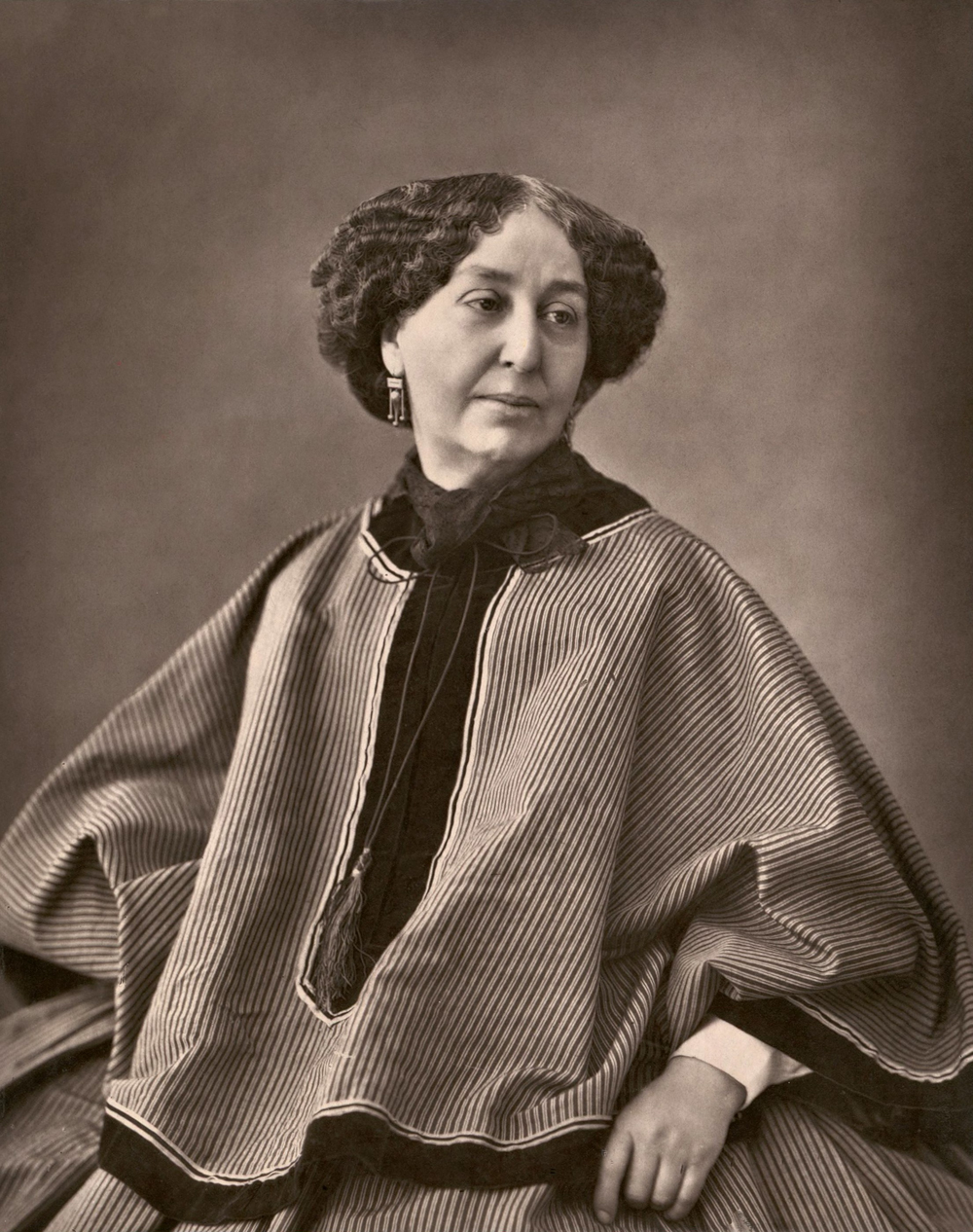
In 1836, Chopin met the famous French novelist George Sand—pen name of Amantine-Aurore-Lucile Dupin (1804-1876)—at the home of Liszt's mistress, the Comtess Marie d'Agoult. Sand became Chopin's companion and lover until 1847, providing the frail and shy composer with the care and nurturing environment that he needed to produce the majority of his most important compositions: Fantaisie in F minor (1840-1841), Barcarolle (1845-1846), Polonaise-Fantaisie (1845-46), Ballade in A flat major (1840-1841), Ballade in F minor (1842), and Sonata in B minor (1844), which was also known as the "Funeral March" sonata.
After Sand left him, Chopin's frail health declined drastically. His last public engagement was given at the Guildhall in London on November 16, 1848. A few months after his return to Paris, he succumbed to tuberculosis on October 17, 1849 at the age of thirty-nine.
The clarity, elegance, and formal balance of Chopin's music reflects his reverence for Johann Sebastian Bach (1685-1750) and Wolfgang Amadeus Mozart (1756-1791) and his rejection of any hint of program music. Aside from two early piano concertos (No. 1 in E minor (1830) and No. 2 in F minor (1829)), 17 Polish songs, and a few pieces for cello and flute, his entire output was devoted to solo piano. Few composers in the history of Western music have understood the intrinsic nature and potential of the piano as an expressive instrument as well as Chopin did. In his small but vastly influential output, Chopin left a legacy of technical innovation, daring harmonic and melodic effects, timeless beauty, and universal appeal. His works include 55 mazurcas, 16 polonaises, 26 preludes, 27 études, 21 nocturnes, 20 waltzes, 3 sonatas, 4 ballades, 4 scherzos, 4 impromptus, and several individual pieces such as the Barcarolle, Opus 60; the Fantasia, Opus 49; and the Berceuse, Opus 57.
Composer: Frédéric Chopin
-
"Mazurka No. 23 in D major, Op. 33, No. 2"