
Learning Objectives
- Recognize the differences between the Medieval and Renaissance periods in terms of society, religion, art, science, and freedom.
- Explain how Renaissance musicians made their living.
- Use relevant musical vocabulary to analyze Renaissance a cappella singing.
- Distinguish the characteristics of Renaissance music, and differentiate between Renaissance music and Medieval music.
- Illustrate how composers used the motet, a sacred genre with a Latin devotional text, to experiment in musical style and texture.
- Describe how Renaissance composers set texts from the Ordinary of the Mass for their polyphonic Masses.
- Describe how instrumental dance music was performed by professional and amateur musicians.
Renaissance Period (1450–1600)
Social, Cultural, and Political Background
The time period known as the Renaissance saw great cultural, scientific, and economic resurgence in Europe. It was an era replete with inventors, explorers, artists, politicians, scientists, and royal figures famous for their prolific and groundbreaking achievements in almost every area of human endeavor.
Renaissance is a French term that means “rebirth.” In the context of the Renaissance period, the question is, rebirth of what? Notably, there was a resurgence of interest regarding man's place in the world. In contrast to the religious creeds that had dominated the previous thousand years, the Renaissance stressed individualism, humanism, and secular values. Once again, it became possible to express complex human emotions, please the senses, and enjoy life for its own sake. This period also saw the rebirth of the classics with an emphasis on ancient Greek and Roman art, literature, and philosophy.
The Roman Catholic Church, while still a dominant presence in every aspect of life, was nonetheless losing ground to new ideals of humanism. These ideals brought about a movement against perceived abuses by the Church, and they culminated in Martin Luther's Ninety-Five Theses of 1517, which he allegedly nailed to the door of the Castle Church in Wittenburg, Germany. Historians consider this act the catalyst for the Protestant Reformation, which established Protestantism as a legitimate branch of Christianity.
In a comprehensive effort to respond to the Protestant Reformation, the Catholic Church convened the Council of Trent (1545–1563), which marked the beginning of a 100-year movement known as the Counter-Reformation. The Counter-Reformation is associated with an outpouring of exuberant sculpture, architecture, painting, and music designed to promulgate and support the power and doctrine of the Papacy in Rome and the Catholic Church.
Trade flourished during the Renaissance. Seaports, trade routes, and merchants not only brought increased wealth, they also expanded the horizons of the world in which people lived. The ability to travel with greater ease meant that the arts could be enjoyed by more individuals. Musicians and writers began creating works that they hoped would appeal to as wide an audience as possible. During this period, secular art—and therefore secular music—flourished, as did the novel concept of the artist as genius.
Major inventions such as movable type, the compass, and gunpowder literally changed the physical and intellectual landscape of Europe. Gutenberg, Columbus, Magellan, Copernicus, Shakespeare, Michelangelo, Botticelli, Martin Luther, Charles V, Henry VIII, and Elizabeth I are but a few of the key figures who, despite fierce challenges to their novel ideas, brought about major changes that had enormous repercussions for centuries to come.
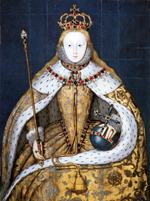
Elizabeth I was born in 1533 to Henry VIII and Anne Boleyn (c. 1507-1536). Known as the Virgin Queen, she never married nor had children. The last of the Tudors, Elizabeth died at 70 years of age after a very successful 44-year reign.
Elizabeth's reign is referred to as the Elizabethan era, or the Golden Age of Elizabeth. English music is said to have reached its summit during this period; it was the only time in history that English composers held such influence over their European counterparts. William Byrd, John Dowland, John Taverner, Thomas Morley, and Orlando Gibbons are a few of the English composers who flourished under her patronage. Such was the influence of Queen Elizabeth that music from this period is known as Elizabethan music.
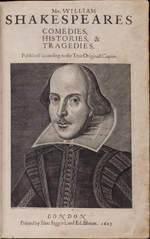
William Shakespeare was an English poet and playwright widely regarded as the greatest writer of the English language as well as the world's preeminent dramatist. He wrote approximately 38 plays and 154 sonnets, as well as a variety of other poems.
His plays and poems were popular during his lifetime and are celebrated and adored to this day. Shakespeare's works have been translated into every major language, and his plays are performed all around the world.
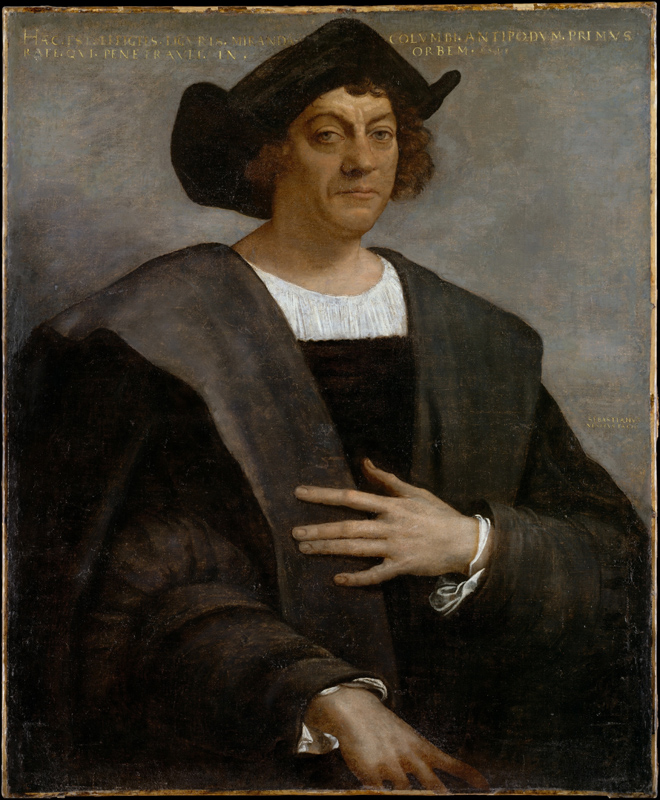
Christopher Columbus, credited with discovering the New World, was a navigator and maritime explorer. Although associated with Spain—the sponsors for his discovery voyage were the Catholic monarchs Ferdinand of Aragon and Isabella I of Castile—he was actually born in Italy under the birth name Cristoforo Colombo.
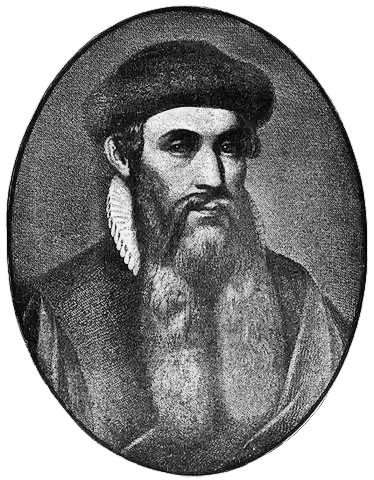
Christopher Columbus, credited with discovering the New World, was a navigator and maritime explorer. Although associated with Spain—the sponsors for his discovery voyage were the Catholic monarchs Ferdinand of Aragon and Isabella I of Castile—he was actually born in Italy under the birth name Cristoforo Colombo.