



Renaissance Period (1450–1600)
In this section, we'll take a look at key composers who represented the changes in music that occurred during the Renaissance.
Giovanni da Palestrina
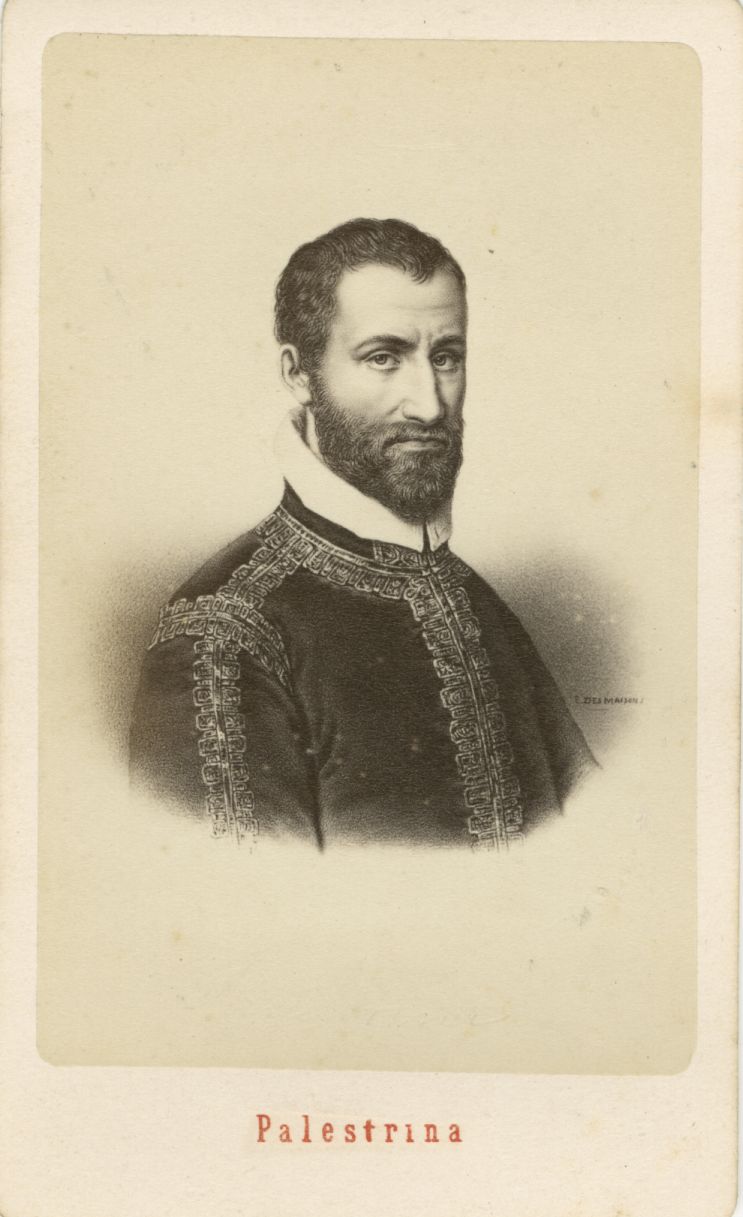
The Kyrie from the Missa Papae Marcelli ("Pope Marcellus Mass") showcases the hallmarks of the "Palestrina style," which became the model for future generations of composers: a smooth and consonant type of polyphony that avoids sharp dissonances and strives to make the text as clear and intelligible as possible. This characteristic style remained largely consistent in his music from the 1560s until the end of his life. Later, during the early Baroque period, the composer Claudio Monteverdi would refer to this style as prima pratica (first practice) as opposed to Monteverdi's seconda pratica (second practice). It has been said that Palestrina's style embodies the archaic, dogmatic completeness of Counter-Reformation Catholicism, making him the supreme musical theologian.
Palestrina's 105 masses, 68 offertories, 140 madrigals both on secular and religious themes, and more than 300 motets, make him the most prolific and consistent composer of the Counter-Reformation and indeed, of Western music history.
Composer: Giovanni Pierluigi da Palestrina
-
"Pope Marcellus Mass: Kyrie"
William Byrd
William Byrd, whose sacred compositions rank among the finest ever written in England, is the first superstar among English composers. He belongs to a select group of composers who were recognized as geniuses during their lifetimes. His contemporaries referred to him as “a Father of Musick” and “Our Phoenix.” The piece Qui passé, performed here on a virginal (an instrument related to the harpsichord), shows the composer's remarkable skill.
Composer: William Byrd
-
"Qui passe; for my Ladye Nevell"
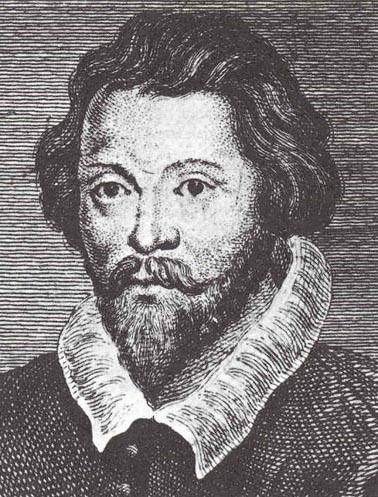
Although remaining Catholic was a loyalty that caused him considerable trouble in times of religious persecution in England, Byrd served as a member of the Chapel Royal, providing music for the liturgy of the Church of England and, on a more private scale, for his fellow Catholics.
Following the popular fashion of the time, Byrd composed music for various groups of instruments. He frequently performed in homogenous ensembles, generally playing viols and other bowed and fretted string instruments that were more highly esteemed than the lowly violin. Byrd's consort music, like that of his English contemporaries, used the forms of the fantasia, the dance forms of the stately pavan, and the more vigorous galliard. One such piece is the Galliard a 6. It is thought to be a relatively late work and probably one of Byrd's last for the viol consort.
Composer: William Byrd
-
"Galliard a6"
Johannes Ockeghem
Ockeghem entered the service of the King of France in 1452. From 1465 until his death, he was the most important musician in Europe; his passing in 1497 was universally mourned. Among those mourners was Josquin Desprez, who wrote Déploration sur le trépas De Jean Ockeghem ("Deploration on the death of Jean Ockeghem") as a tribute to the late Flemish master.
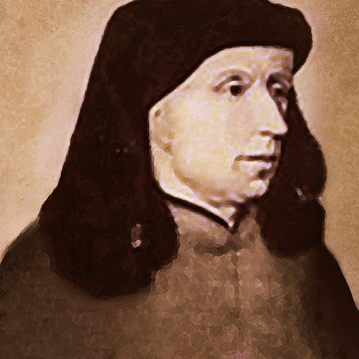
In his masses, Ockeghem extended the range of each of the voice parts and occasionally varied the texture by including passages for only two or three voices. This shows an attention to the overall form of the piece that, at the time, was uncommon. Note the varying textures in the Agnus Dei from his Missa Prolationum.
Composer: Johannes Ockeghem
-
"Missa Prolationum: Agnus Dei"
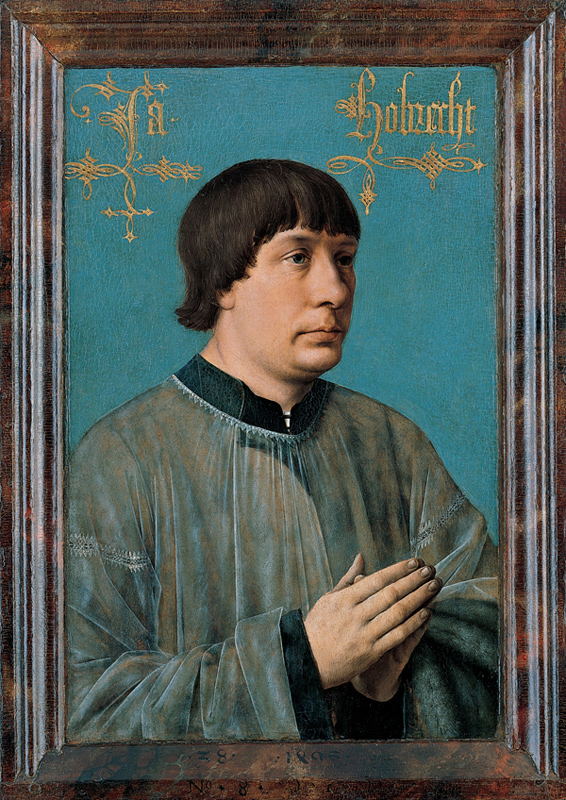
Jacob Obrecht
Few details are known about the life of Obrecht, other than that he held positions at various cities throughout Europe and that he died of the plague. His surviving works include masses, motets, chansons, and instrumental pieces. Most of his masses use a cantus firmus, which appears in various ingenious ways throughout each of the sections of the mass. Obrecht, unlike Ockeghem, loved imitation between the voices. The Agnus Dei from his Missa Caput opens with a clear point of imitation between the tenor and the bass parts. Obrecht's works contain some of the finest examples of structure and form in the early Renaissance.