





Renaissance Period (1450–1600)
Carlo Gesualdo
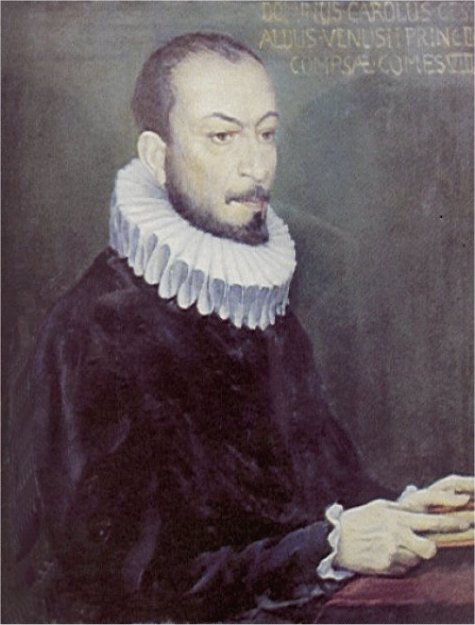
Gesualdo's madrigals contain the most extreme examples of Renaissance dissonance and chromaticism. Igor Stravinsky, one of the 20th century's most daring composers, called Gesualdo “the crank of chromaticism.” While not stepping totally beyond acceptable bounds, Gesualdo's madrigals are restless and colorful. Works such as the motet O vos omnes use an advanced form of harmony that wasn't heard again until the late 19th century. Aside from his collection of madrigals, Gesualdo wrote a quantity of sacred vocal music and a relatively small number of instrumental pieces. The unexpected and sudden changes of tonality, harmonic daring, and intensity of feeling in his music have found particular favor among some modern theorists.
Notorious for brutally murdering his wife and her lover in 1590, Gesualdo went on to marry Leonara d'Este of the house of Este. The Estes, rulers of the Italian city-state Ferrara, were renowned patrons of music and the arts during the Renaissance.
Composer: Carlo Gesualdo
-
"O vos omnes"
Thomas Weelkes
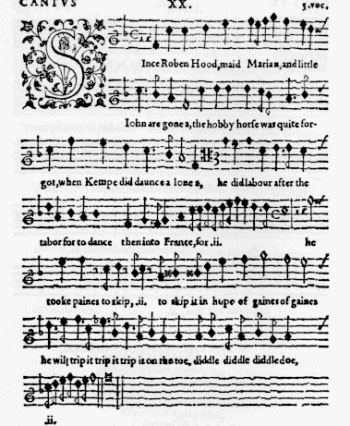
Weelkes is the second of the two principal English madrigal composers of the late 16th century, the first being William Byrd. His madrigals, such as As Vesta was descending, demonstrate the same concern with overall form as Byrd's while retaining an element of seriousness and depth. Note the imitation in this delicate madrigal.
Composer: Thomas Weelkes
-
"As Vesta was descending"
Although he was a contemporary of the great madrigalist Claudio Monteverdi (1567-1643), whose groundbreaking work marked the transition from the Renaissance to the Baroque period, Thomas Weelkes would not have been aware of Monteverdi's successful synthesis of old and new forms. Weelkes was a busy Church of England musician whose work, in a typically English vein, had its own sense of values and destiny according to a national temperament that found continental histrionics and emotional outpourings rather embarrassing. Enough changes were afoot at the turn of the 17th century, however, for Weelkes to realize that he was operating in a world of transition; he quickly took advantage of this understanding. The power of representing words and images, central to the upcoming Baroque ethos, was particularly evident in his madrigal writing. His ability to illuminate texts is evident in his exquisitely focused and atmospheric sacred madrigal When David Heard.
Composer: Thomas Weelkes
-
"When David Heard"
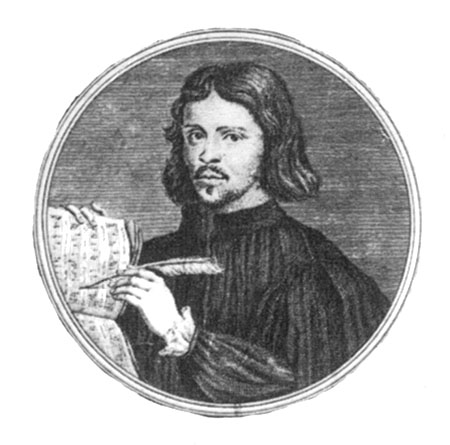
Thomas Tallis had a successful career as a church musician and composer during one of the most politically and socially turbulent periods in 16th-century England. Although his royal service began in the reign of Henry VIII and ended in the reign of Queen Elizabeth I (a span of six monarchs), Tallis managed to avoid the religious controversies and conflicts that constantly surrounded him.
Tallis wrote a significant amount of Latin church music and also contributed to the reformed English liturgy, in some cases adapting earlier Latin compositions. His better-known works from the Elizabethan years include his settings of the Lamentation for the Holy Week services and the unique motet Spem in alium, written for eight five-voice choirs. It is thought that this 40-voice piece was part of a celebration of Queen Elizabeth's 40th birthday in 1573.
Composer: Thomas Tallis
-
"Spem in alium"