




Learning Objectives
- Define the musical concept of rhythm.
- Identify by tapping and verbalizing the beat (or pulse) of a piece of music.
- Identify the musical element of tempo given a series of music examples.
- Explain the basic relationship between rhythm and the human body.
- Identify and discuss the role that silence plays in rhythm.
- Define the following musical terms: adagio, allegro, andante, beat, largo, moderato, movement, presto, rhythm, tempo, and vivace.
Rhythm
Rhythm and the Body
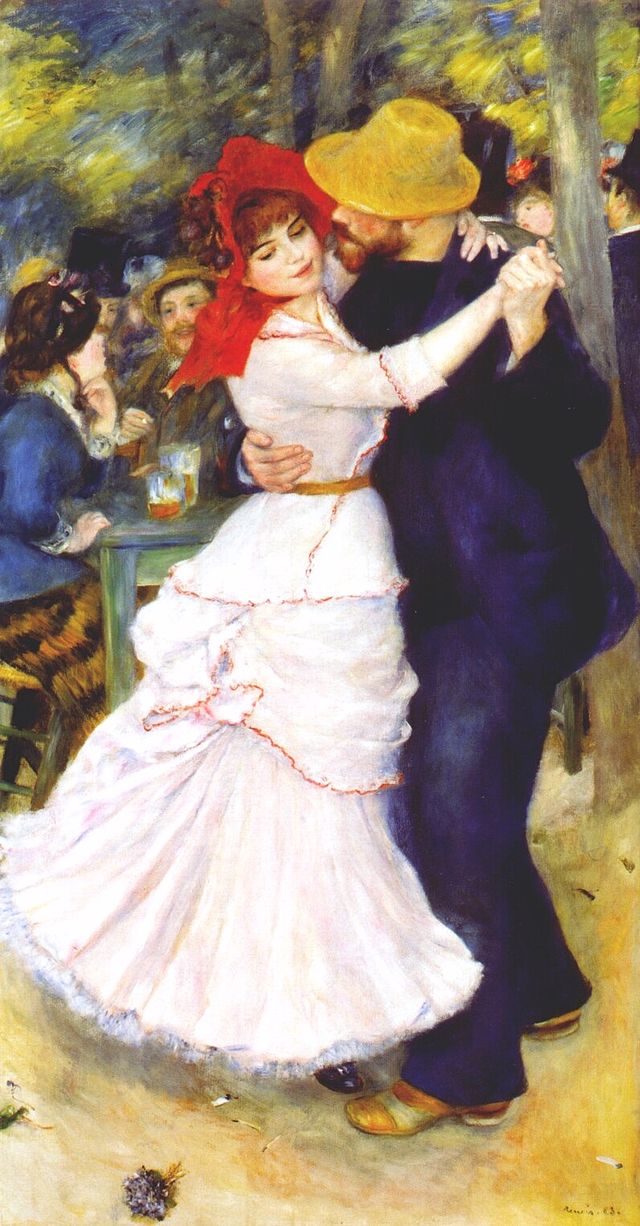
Because most people's nervous and muscular systems are stimulated by sound, reaction to the beat of music is often spontaneous and automatic. If the beat is strong enough to be heard or felt, most people will have a natural tendency to clap their hands, tap their feet, or move their heads with the music. Even babies respond naturally to beat and meter and will move on or to the beat. Reacting to the beat is more a matter of feeling it in the body than analyzing it, hearing it, or reading it from a music score.
There is a basic relationship between rhythm and the human body, essential to the understanding of rhythm. Our heartbeats, breathing, and walking may be used as metaphors for the organization of time into regular, ordered units.
Rhythm is strongly connected to movement through tension and relaxation. The alternation of tension and relaxation is experienced in motion and registered in the mind. The body's nervous and muscular systems respond to the rhythmic quality of music, creating a subjective feeling and mood in the listener. The subsequent visible and invisible responses to music are based on our perception of how music moves in time from one point of emphasis to another. These points of rhythmic emphasis or stress are called the beat in musical terms, and they are even visibly evident in dance.
Composer: Johann Strauss II
-
"An der schönen, blauen Donau (The Beautiful Blue Danube), Op. 314" [ 07:07-07:53 ]00:46
Composer: Johann Strauss II
-
"An der schönen, blauen Donau (The Beautiful Blue Danube), Op. 314" [ 06:39-07:06 ]00:27
Composer: Johann Strauss II
-
"An der schönen, blauen Donau (The Beautiful Blue Danube), Op. 314" [ 06:39-07:53 ]01:14
Rhythm and Music
Traditionally, the fundamental elements of music include melody, harmony, and rhythm. Although rhythm is the most easily perceived of these elements, the three are inseparably linked and work together as a whole. This holistic view of music is essential to understanding the function of rhythm. Although for classification purposes, it is sometimes useful to study rhythm as an independent entity, rhythm cannot be considered in isolation from the total musical phenomenon. Music is not a static object; listening to it is a temporal experience that requires being able to follow simultaneous events in time. Thus, melody, harmony, and rhythm are intertwined as a unit that moves in time.
Another basic concept related to rhythm is pace and its regular or irregular progression in time. Pace refers to the relative speed of a piece of music as a whole. It ranges from fast to slow. A piece may maintain a regular pace throughout or include one or many speed changes. Pulse, or beat, is another aspect of rhythm, but the word pulse suggests a sense of regularity that not all music has.
Did you Know...
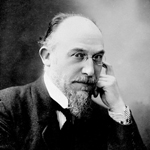
Erik Satie
(1866-1925)
A French composer as eccentric in his way of life as in his music, Erik Satie (1866–1925) exercised considerable influence over some of his more distinguished contemporaries, including Claude Debussy, Maurice Ravel, and Francis Poulenc, particularly through his tendency toward extreme simplicity. A number of his compositions have become very familiar, largely through their use in other contexts.
Satie has gained popularity through his piano pieces. Among these, some bear characteristically eccentric titles, for example the Gymnopédies and the three Gnossiennes.
Erik Satie's Gymnopédie No.1 will help to illustrate some of these concepts and how they fit together. Listen for the beat, harmony, and melody. First, listen to the way the beat is emphasized by the first and the second notes in the bass. These are points of rhythmic stress. Satie combines these two sounds with chords. Together, these two elements constitute the harmony of the piece. They also set the stage for the entry of the melody. The three elements—rhythm, harmony, and melody—progress at a steady pace until the end of the piece.
Composer: Erik Satie
-
"3 Gymnopédies (arr. D. Sosin): Gymnopedie No. 1 (arr. for flute and harp)" [ 00:00-00:08 ]00:08
Composer: Erik Satie
-
"3 Gymnopédies (arr. D. Sosin): Gymnopedie No. 1 (arr. for flute and harp)" [ 00:08-00:14 ]00:06
Silence
Silence is also an integral part of rhythm. The legendary conductor Leopold Stokowski (1882–1977) once remarked that “silence is the canvas on which music is painted.” Without silence between sounds, music would have no meaning. Listen to the effective way in which Johann Strauss, Jr. (1825–1899) used silence in this passage from his popular Blue Danube Waltz.
Composer: Johann Strauss II
-
"An der schönen, blauen Donau (The Beautiful Blue Danube), Op. 314"