
Learning Objectives
- Relate how Romantic poets and artists abandoned traditional subjects, turning instead to the passionate and the fanciful.
- Relate how the Industrial Revolution impacted the technological development and affordability of musical instruments.
- Analyze how the orchestra grew in size and sound as new instruments were introduced and composers demanded greater levels of expression.
- Illustrate how Romantic composers explored nationalistic folklore and exotic subjects.
- Identify the form of romantic period songs, including strophic, through-composed, and the modified strophic forms.
- Examine the German art song (or Lied) as a favored romantic period genre.
- Discuss how the music of Franz Schubert impacted romantic period music.
- Discuss how the music of Frédéric Chopin impacted romantic period music.
- Trace the ascendance of program music in relation to absolute music.
- Summarize how political unrest throughout Europe stimulated the formation of schools of musical nationalism in Russia, Scandinavia, Spain, England, and Bohemia among other countries.
- Differentiate between the distinct national styles of romantic opera in France, Germany, and Italy.
- Discuss how the Italian nationalist composer Giuseppe Verdi impacted romantic period music.
- Trace how choral music became a popular artistic outlet for the middle classes.
- Discuss how the Russian composer Pyotr Ilyich Tchaikovsky impacted romantic period music.
Romantic Period (1820–1910)
Times of Change
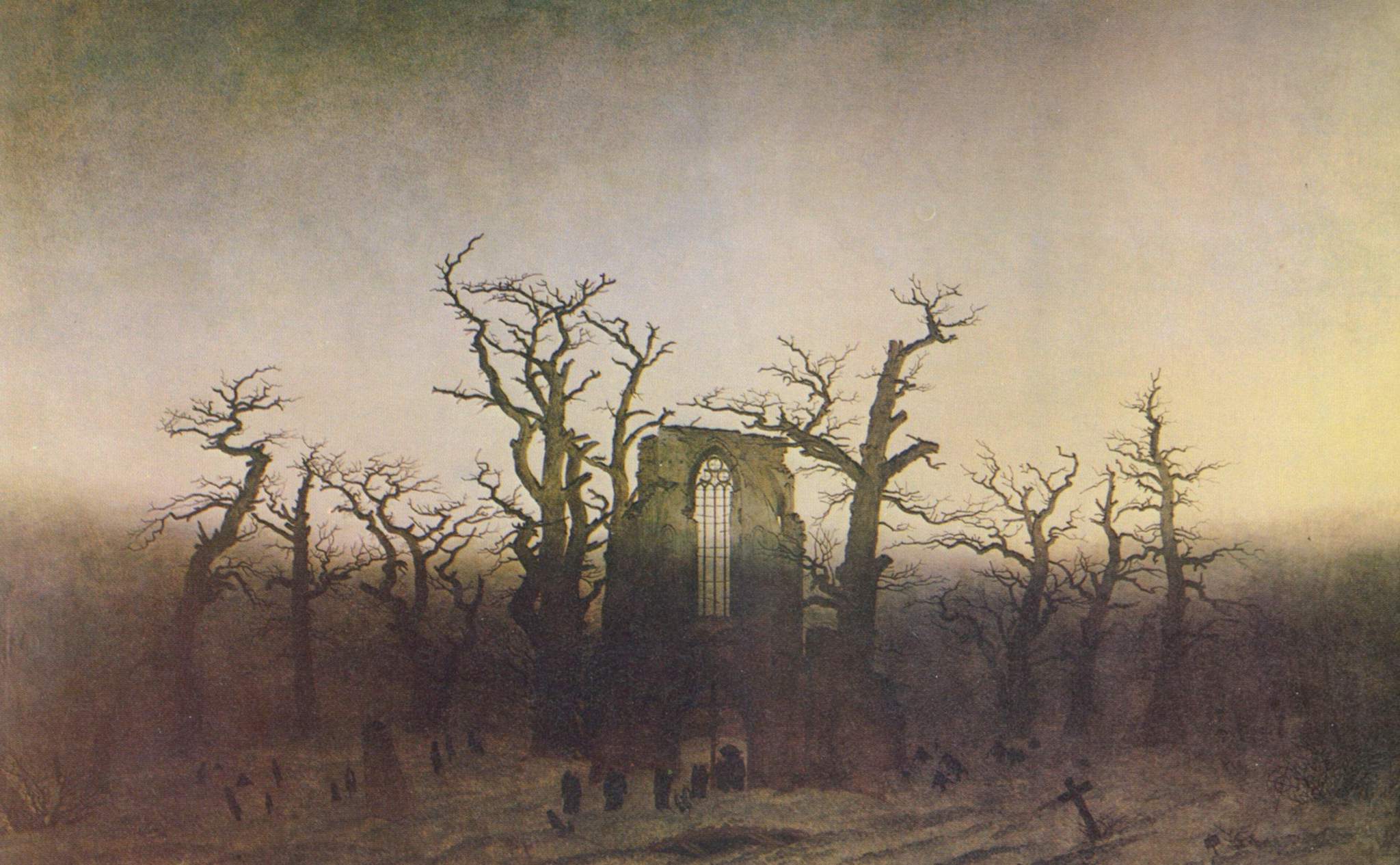
The term romantic describes a way of thinking that influenced much of the philosophy, literature, and visual arts of the early 19th century. The romantics were excited by the upheavals that followed the French Revolution, and fascinated by the power of the individual. Unbridled expression of emotions became an important component of all art forms. Poetry, literature, theater, music, and the graphic arts often depicted individuals who gave full rein to their feelings and lived in a private world of often turbulent emotions and solitary dreams. The idealistic “hero” figure represented the grandest possibilities of each individual.
Romanticism began at the end of the 18th century as a literary concept and was more of an attitude of mind than an actual code. Romantics rejected the supposedly cold, intellectual, logical approach of the Classical period. Instead, they trusted in the instinctive truth of their own emotions. Rules no longer circumscribed what could be achieved.
Related Arts
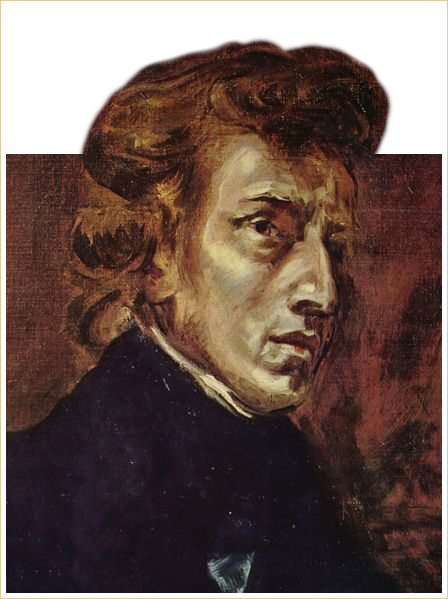
One of the main characteristics of Romantic music was its strong relationship to other art forms, in particular painting and literature. The Romantic poetry of Lord Byron inspired the art of Eugène Delacroix, who in turn painted a portrait of his friend Chopin. Franz Schubert, enchanted by the writing of Friedrich Schiller and Johann Wolfgang von Goethe, created many beautiful songs from the texts of their works.
Romanticism gave new life to opera. At the dawn of this period, there were two main opera styles: Italian and German. In typical style, the Italians —led by Rossini, Donizetti and Bellini, about whom we will learn more later—emphasized great melodies and catchy tunes, while the Germans less interested in memorable tuneswere and more in high drama. Beethoven had already created heroic, larger-than-life characters in his —Fidelio—premiered in 1805. In the 1820s, Carl Maria von Weber took things a step further, and started using specific themes to denote particular characters. His opera Der Freischütz (The Marksman), considered the first important German Romantic opera, would impress the young Richard Wagner, who used the union of opera and drama as the vehicle for the Gesamtkunstwerk (total work of art), a grand creation that combined of all the arts.
Program Music and The Symphonie Fantastique
Audiences in the Romantic era were fascinated with program music; i.e., music that told a story or painted a musical picture. The four main types of program music in the Romantic era were
- incidental music,
- the concert overture,
- the symphonic poem, and
- the program symphony.
Composers wrote incidental music to be performed during a play. Its modern equivalent would be music for film. A single-movement work, the concert overture was designed to be a short attention-grabber at the beginning of a concert. The symphonic poem, also a single-movement work, was most frequently found in the music of the late-Romantic period. Finally, the program symphony was a multiple-movement symphony with a program.
One of the prototypical examples of a program symphony (from any period) is Symphonie Fantastique by the French composer Hector Berlioz.This piece stands out as a radical departure from musical norm. A symphony about a heartbroken man who takes opium and starts having wild hallucinations about the object of his unrequited love is hardly traditional. Starting with an unconventional five-movement structure, the Symphonie Fantastique showcases Berlioz's fierce individuality as an artist. The five individual movements were
- "Reveries - Passions" ("Dreams, Passions"),
- "Un bal" ("A Ball"),
- "Scene aux champs" ("Scene at the Country"),
- "Marche au supplice" ("March to the Scaffold"), and
- "Songe d'une nuit de sabbat" ("Dream of a Witches' Sabbath").
Composer: Hector Berlioz
-
"Symphonie Fantastique, Op. 14: IV. March To The Scaffold"