Learning Objectives
- Relate how Romantic poets and artists abandoned traditional subjects, turning instead to the passionate and the fanciful.
- Relate how the Industrial Revolution impacted the technological development and affordability of musical instruments.
- Analyze how the orchestra grew in size and sound as new instruments were introduced and composers demanded greater levels of expression.
- Illustrate how Romantic composers explored nationalistic folklore and exotic subjects.
- Identify the form of romantic period songs, including strophic, through-composed, and the modified strophic forms.
- Examine the German art song (or Lied) as a favored romantic period genre.
- Discuss how the music of Franz Schubert impacted romantic period music.
- Discuss how the music of Frédéric Chopin impacted romantic period music.
- Trace the ascendance of program music in relation to absolute music.
- Summarize how political unrest throughout Europe stimulated the formation of schools of musical nationalism in Russia, Scandinavia, Spain, England, and Bohemia among other countries.
- Differentiate between the distinct national styles of romantic opera in France, Germany, and Italy.
- Discuss how the Italian nationalist composer Giuseppe Verdi impacted romantic period music.
- Trace how choral music became a popular artistic outlet for the middle classes.
- Discuss how the Russian composer Pyotr Ilyich Tchaikovsky impacted romantic period music.
Romantic Period (1820–1910)
Romantic Music: A First Look
Romantic Timbre, Texture, and Harmony
The Symphonie fantastique featured a massive orchestra with instrumental writing that was so detailed, rich, and colorful that Berlioz is regarded today as the first master of the art of orchestration. Orchestras grew in size as Romantic composers explored timbres as never before, and added new instruments, such as trombones, tubas, piccolos, and different kinds of percussion.
A significant portion of Romantic music features lush textures like what you heard in the Symphonie fantastique.Romantic composers continued to use polyphony to create multiple, independent layers of sound, but this texture was typically combined with more homophonic sections within the same piece. Given the larger orchestras and technically improved instruments at their disposal, Romantic composers were able to employ a much larger palette of sounds, both homophonically and polyphonically, and to produce thicker sounds than was possible in earlier periods. In this brief excerpt from the first movement of Anton Bruckner’s Symphony No. 4 in E–flat Major (composed in several versions, from 1874 to 1888), you can hear the texture thicken as he adds more and more instruments.
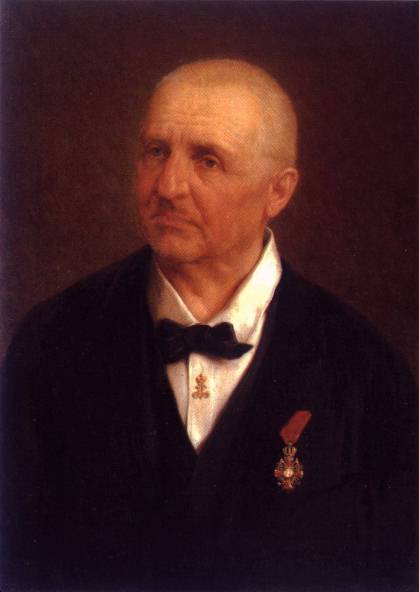
In this second excerpt from the same symphony, listen to the dramatic increase from very soft (pianissimo) to very loud (fortissimo). Romantic composers explored the extremes of the dynamic range, and they indicated their intentions very precisely in the score for performers and conductors to follow. Changes in dynamic level could be gradual or extremely sudden.
Composer: Anton Bruckner
-
"Symphony No. 4 in E-Flat Major, WAB 104, " [ 08:03-08:57 ]00:54
Composer: Anton Bruckner
-
"Symphony No. 4 in E-Flat Major, WAB 104, " [ 00:50-02:27 ]01:37
The piano, increasingly a presence in people's homes, could achieve similarly lush, full textures. In the closing moments of this Polonaise, a Polish national dance genre, Frédéric Chopin is able to produce the illusion of sustained tones by using thick, chordal textures that together with rhythmic and melodic elements, convey powerful patriotic feelings.
Composer: Frédéric Chopin
-
"Polonaise No. 6 in A-Flat Major, Op. 53, " [ 06:03-06:41 ]00:38
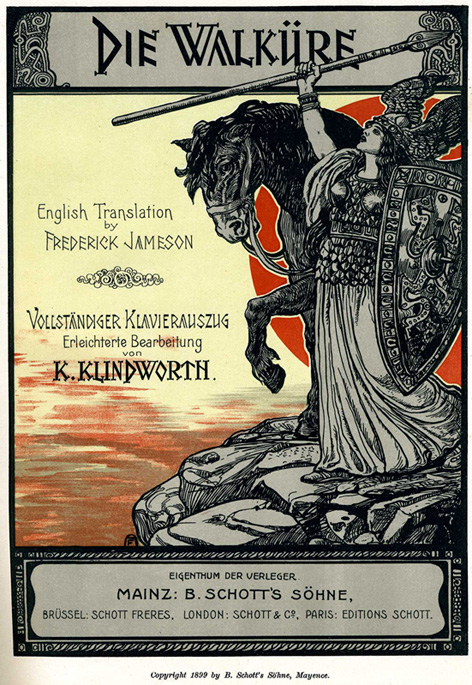
Berlioz’s Symphonie fantastique also demonstrates the rich harmonies that emerged during the Romantic period. In their quest for new, more expressive sonorities, Romantic composers did not feel restricted by the harmonic limitations established in earlier times. They inserted unexpected tones in chords and melodies and departed more frequently from tonal centers. The result was sometimes more dissonant, challenging sounds. Richard Wagner, in particular, pushed the limits of the traditional Western European harmonic language to its breaking point and opened the door for 20th century developments that led to the breakdown of tonality and atonal music (music without a tonal center). Listen for dissonant sounds and tonal shifts in this excerpt from Wagner’s “Ride of the Valkyries” from the opera Die Walküre(The Valkyrie; 1870).
Composer: Richard Wagner
-
"Die Walküre: Ride of the Valkyries"