
Learning Objectives
- Relate how Romantic poets and artists abandoned traditional subjects, turning instead to the passionate and the fanciful.
- Relate how the Industrial Revolution impacted the technological development and affordability of musical instruments.
- Analyze how the orchestra grew in size and sound as new instruments were introduced and composers demanded greater levels of expression.
- Illustrate how Romantic composers explored nationalistic folklore and exotic subjects.
- Identify the form of romantic period songs, including strophic, through-composed, and the modified strophic forms.
- Examine the German art song (or Lied) as a favored romantic period genre.
- Discuss how the music of Franz Schubert impacted romantic period music.
- Discuss how the music of Frédéric Chopin impacted romantic period music.
- Trace the ascendance of program music in relation to absolute music.
- Summarize how political unrest throughout Europe stimulated the formation of schools of musical nationalism in Russia, Scandinavia, Spain, England, and Bohemia among other countries.
- Differentiate between the distinct national styles of romantic opera in France, Germany, and Italy.
- Discuss how the Italian nationalist composer Giuseppe Verdi impacted romantic period music.
- Trace how choral music became a popular artistic outlet for the middle classes.
- Discuss how the Russian composer Pyotr Ilyich Tchaikovsky impacted romantic period music.
Romantic Period (1820–1910)
Rossini and Italian Opera
Due in part to the spectacular popularity of opera, Italy became the center of European music during the Baroque and Romantic eras. Italy was the place where a young composer could truly make his mark in the world. At the same time, Italian musicians, composers, and poets were in high demand throughout the principal cities of Europe: Paris, Vienna, Bonn, and Salzburg. Ironically, Italian opera had changed very little from its inception in the 17th century through the 18th century. During the latter period, innovations in opera had been primarily melodic and formal; the dramatic elements had remained relatively consistent.
However, in the early years of the 19th century, several composers made substantial changes to the operatic landscape, thereby paving the way for later musical giants. These early Romantic composers inherited Mozart’s operatic style, which adhered fairly strictly to Italian traditions and Romantic form. Gioacchino Rossini, Vincenzo Bellini, and Gaetano Donizetti changed Italian opera in a relatively brief period of time, and they paved the way for Italy’s two great late-Romantic opera composers: Verdi and Puccini.
Gioacchino Rossini (1792-1868)
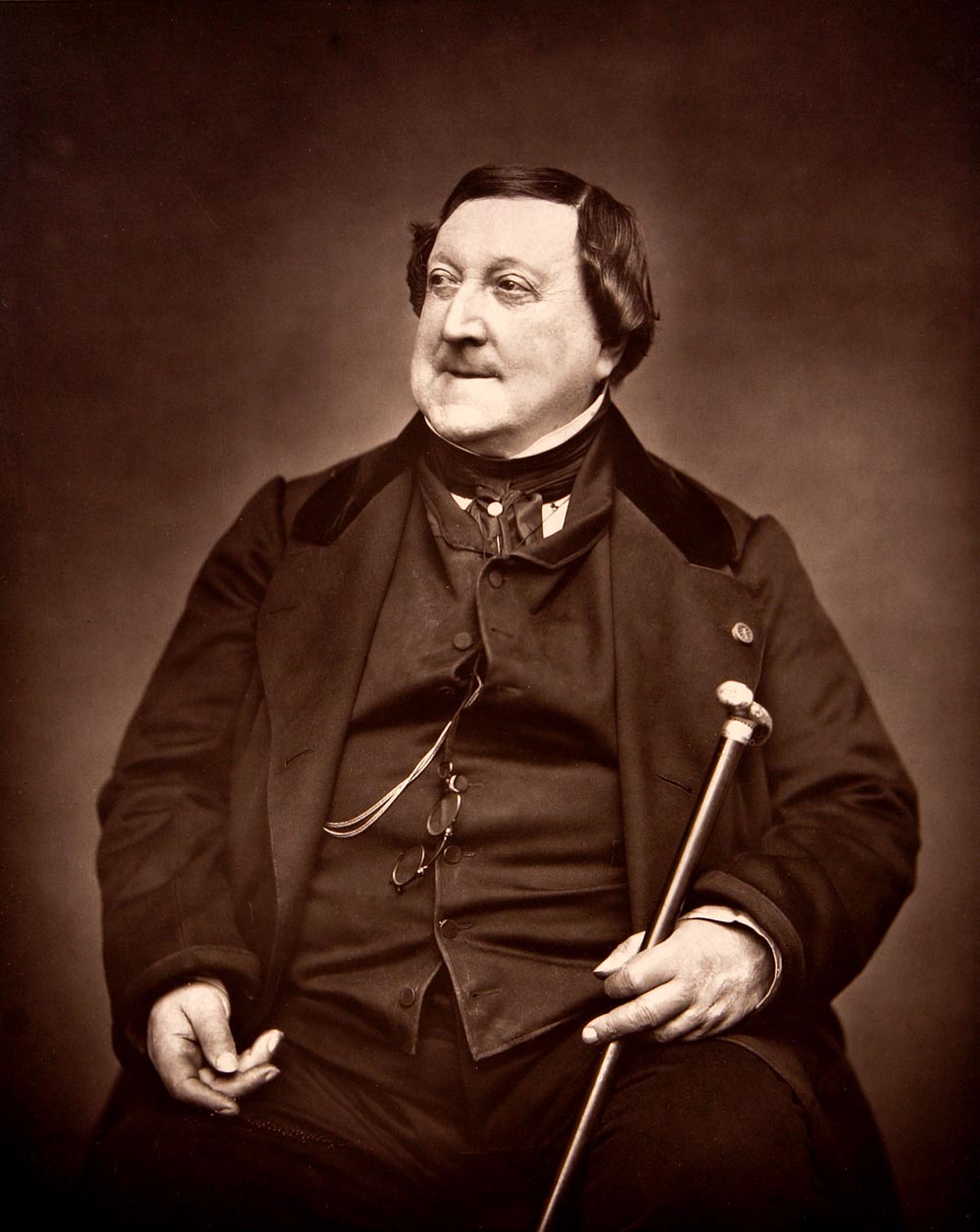
Rossini was a composer whose melodic gifts and comic flair were perfectly suited for opera buffa (comic opera)—witness the ari "Una voce poco fa" from his masterpiece, The Barber of Seville.
During the transition to the Romantic era, Italian opera composers slowly adopted French opera trends and a hint of Beethoven’s symphonic music. As the staging became more elaborate, orchestras for opera became larger. The inclusion of more brass and woodwinds increased the colors in the composer’s palette. The line between opera buffa and opera seria blurred, as did the line between recitative, aria, ensemble, and chorus. To see how one part of the operatic structure changed, compare Rossini's overture from The Barber of Seville (1816) to his overture from William Tell (1829). The earlier work employs a simplified sonata-allegro form with a medium-sized orchestra. The later work is considerably longer, has more passages for winds and brass, and exhibits a more complex form.
Composer: 0
-
"The Barber of Seville: "Una Voce Poco Fa""
Composer: Gioachino Rossini
-
"Il barbiere di Siviglia (The Barber Of Seville): Overture"
Composer: Gioachino Rossini
-
"William Tell: Overture"
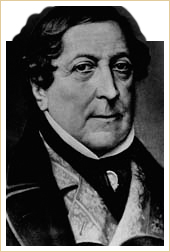
Rossini enjoyed a short but extremely successful career as a composer. His first opera, La cambiale di matrimonio, was written in 1810. His final work for the stage, William Tell, was written in Paris in 1829 with a libretto by Etienne Jouy and Hippolyte Bis, based on Friedrich Schiller's popular drama of the same name. Other operas had been commissioned in Paris, but the fall of the Bourbon King Charles X in 1830 scuttled these plans. In 1836, Rossini returned to Italy, and in spite of ill health, he involved himself with the administrative and academic affairs of the Liceo Musicale, a famous music school in Bologna. In 1853, having already retired from operatic composition after William Tell, he returned to Paris, where he enjoyed a reputation as an arbiter of musical taste, a wit, and a gourmet. Rossini devoted the last 40 years of his life to piano music and sacred choral works—and to the enjoyment of the continued popularity of his catalog. By the 1850s, he had already taken his place atop the pantheon of Italian opera composers.
Composer: Gioachino Rossini
-
"Il barbiere di Siviglia (The Barber Of Seville): Overture"
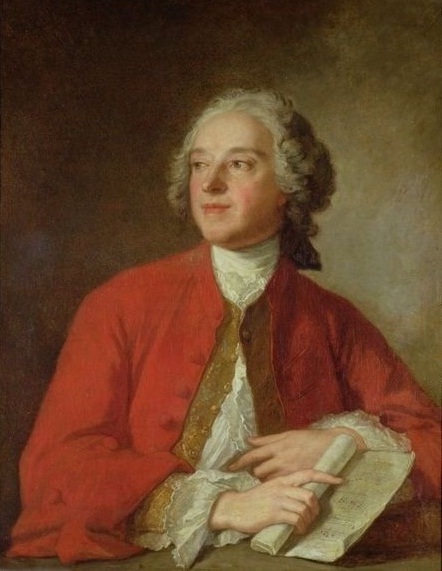
Il Barbiere di Siviglia (The Barber of Seville) is probably the best known opera by Rossini. The work was inspired by Pierre Beaumarchais' Figaro trilogy, which had also inspired Mozart 30 years earlier.
Examples of Rossini's opera buffa include
- La Scala di Seta (The Silken Ladder, 1812);
- Il Signor Bruschino (1813);
- L'Italiana in Algeri (The Italian Girl in Algiers, 1813);
- Il Turco in Italia (The Turk in Italy, 1814);
- La Cenerentola (Cinderella, 1817); and
- La Gazza ladra (The Thieving Magpie, 1817).
Examples of Rossini's opera seria include
- Otello (1816);
- Semiramide (1823);
- Mose in Egitto (Moses in Egypt, 1818); and
- Guillaume Tell (William Tell, 1829).
The overtures to many of these operas are still frequently played in concert halls all over the world.