
Overview
Objectives
- Recall the major developments of jazz after swing, including bebop, cool jazz, and fusion
- Recognize Miles Davis and his contribution to the major movements in jazz
- Examine the musical language and controversy of Bitches Brew
- Identify several musicians who formed successful fusion groups during the 1970s and the defining features of their musical styles
Selling Out?
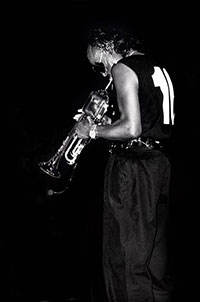
Bitches Brew angered a number of critics and fans, many of whom felt that Davis had violated a number of rules of jazz as a genre. Much of the criticism surrounding Bitches Brew concerned one of two issues: a) that Davis had sold out and became too commercial, and b) that Davis was no longer playing African American music.
In one review, critic Stanley Crouch wrote, "Davis was firmly on the path of the sellout. Davis’s music became progressively trendy and dismal." Although prog rock musicians were exploring the integration of jazz and classical idioms into rock music, for a jazz musician to play in a rock style was practically unthinkable for many jazz purists. Other critics took issue with the rock language of Bitches Brew because they perceived the album as Davis turning his back on African American music and musicians.
Although rock and roll was originally an African American genre of music, by 1970, rock was dominated by white musicians, with a few rare exceptions, such as Jimi Hendrix. Most listeners, black or white, considered rock a white genre of music. In contrast, jazz—created by African Americans around the turn of the twentieth century—was regarded as an African American genre of music. Certainly, jazz had had its great and respected white performers, but by and large, jazz was still considered an African American genre of music. To some critics, when Miles Davis began playing the African American genre of jazz in the style of white rock music, he was betraying jazz’s roots and origins.
Despite the anger it incited in some listeners, Bitches Brew was Davis’s most successful album, selling over five hundred thousand copies. Although it may have upset some jazz purists, the album drew in a number of listeners for whom Bitches Brew was their first exposure to jazz. According to an advertisement, "Critics agree Miles Davis has found a new audience. Or, is it that rock has just found Miles Davis?" It also inspired a number of other jazz musicians to begin exploring rock instrumentation, forms, and meters in their music. As we will see, a number of the musicians who performed on Bitches Brew went on to record some of the best-known fusion albums of the 1970s.



"In 2007, Herbie Hancock released his 47th studio album entitled River: The Joni Letters. The album was meant as a tribute and homage to longtime friend and fellow musician Joni Mitchell. Guest vocalists on the album included Leonard Cohen, Tina Turner, Norah Jones, Corinne Bailey Rae, Luciana Souza, and Mitchell herself. In February 2008, the disc beat out Amy Winehouse, Foo Fighters, Vince Gill, and Kanye West to win the Album of the Year award at the 50th annual Grammy Awards in Los Angeles. It was the first jazz album to win the award in over four decades and only the second in the award's history."
