



Tempo 2
Variations in Tempo
A composer may decide to change the tempo within a piece. It is very common for the tempo to slow at the end of a composition as in the following examples:
Composer: George Frideric Handel
-
"Water Music Suite No. 2 in D Major, HWV 349: II. Alla Hornpipe"
Composer: Johann Sebastian Bach
-
"Overture (Suite) No. 3 in D Major, BWV 1068 (arr. L. Rose for cello and piano): Suite No. 3 in D Major, BWV 1068: Air (trans. L. Rose)"
Accelerando
A composer may, of course, also choose to have the tempo quicken within a piece. The Italian term used to describe a gradual increase in tempo is accelerando.
A quickening of the tempo usually comes before the climax or at the end of a composition to create a sense of excitement. Naturally, it would be impossible for a musician to accelerate the tempo indefinitely. Therefore, accelerando indications usually lead into a new section of the piece where the tempo stabilizes at a faster speed than the preceding section. After this faster section, the composer may choose to have the music return to the original speed, in which case the indication a tempo ("on tempo") or tempo primo ("initial tempo") would be used.
The concepts of rhythm, meter, and tempo are closely interrelated. Let's look at a few pieces that may help us understand that relationship further.
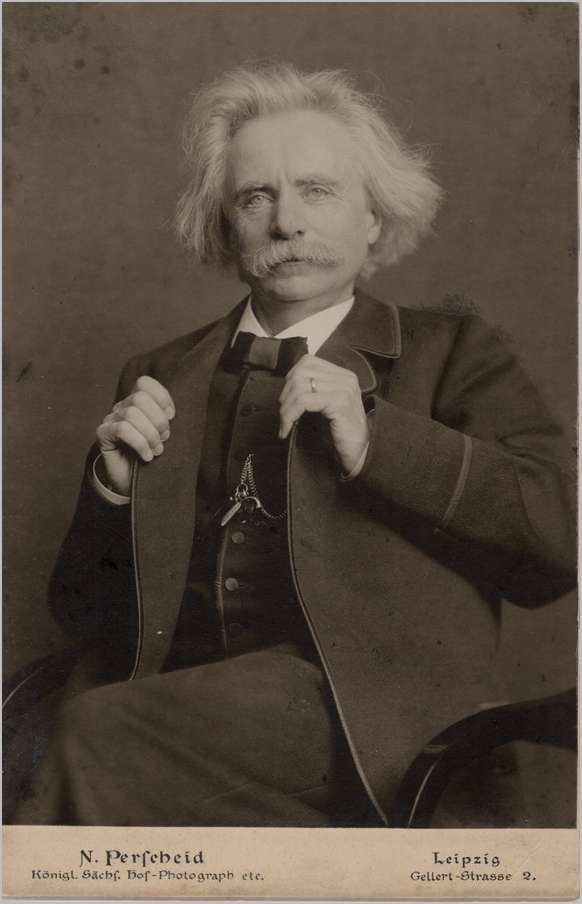
Accelerando is featured in the ending of Edvard Grieg's "In the Hall of the Mountain King". Mounting excitement is achieved by a gradual, though clearly noticeable, increase in tempo (accelerando) and volume (crescendo) as the protagonist, Peer Gynt, sneaks into the Mountain King's castle and is subsequently persecuted by the Mountain King and his band of trolls. (Accelerando does not necessarily have to be accompanied by crescendo; however, these independent music compositional techniques often happen together.) Listen to the five levels of increasing intensity in this music.
Composer: Edvard Grieg
-
"Peer Gynt Suite No. 1, Op. 46: IV. In the Hall of the Mountain King" [ 01:53-02:06 ]00:13
Composer: Edvard Grieg
-
"Peer Gynt Suite No. 1, Op. 46: IV. In the Hall of the Mountain King" [ 02:05-02:15 ]00:10
Composer: Edvard Grieg
-
"Peer Gynt Suite No. 1, Op. 46: IV. In the Hall of the Mountain King" [ 02:15-02:32 ]00:17
Did you Know...
Edvard Grieg collaborated with Henrik Ibsen (1828–1906), an important Norwegian playwright of the 19th century, by providing the music for Ibsen's play Peer Gynt. The original music makes use of solo voices, chorus, and orchestra, but it is most often heard in its orchestral form as two suites arranged by the composer.
"In the Hall of the Mountain King" portrays Gynt's encounter with a band of trolls, which is a type of mountain gnome in Scandinavian mythology. The trolls threaten him while dancing faster and faster.
Ritardando
Ritardando refers to music that gradually slows down, and is therefore the opposite of accelerando. Another equivalent Italian term for ritardando is rallentando. Ritardandos usually help to close off sections of a piece of music by providing an air of finality to a composition. The final bars of the Hallelujah Chorus from Handel's Messiah exemplify this use of ritardando.
Composer: George Frideric Handel
-
"Messiah, HWV 56: Hallelujah" [ 03:12-03:42 ]00:30
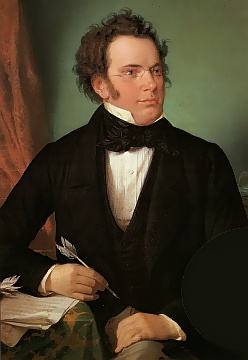
Schubert's Gretchen am Spinnrade is an example of a piece that alternates between accelerando and ritardando. In the song, Gretchen, having been seduced and abandoned by Faust, sings of her despair while spinning thread at the spinning wheel.
The piano part provides the setting that depicts the speeding up (accelerando), slowing down (ritardando), and faltering (final ritardando) of the spinning wheel. The lyrics tell Gretchen's story, which alternates between happy and sad events and emotions.
Mein Herz ist schwer,
Ich finde sie nimmer
Und nimmermehr.
My heart is heavy,
I will find it never
and never more.
Ist mir das Grab,
Die ganze Welt
Ist mir vergällt.
That is the grave,
The whole world
Is bitter to me
Ist mir verrückt,
Mein armer Sinn
Ist mir zerstückt.
Is crazy to me,
My poor mind
Is torn apart.
Mein Herz ist schwer,
Ich finde sie nimmer
Und nimmermehr.
My heart is heavy,
I will find it never
and never more.
Zum Fenster hinaus,
Nach ihm nur geh ich
Aus dem Haus.
Out the window
Only for him do I go
Out of the house.
Sein' edle Gestalt,
Seine Mundes Lächeln,
Seiner Augen Gewalt,
His noble figure,
His mouth's smile,
His eyes' power,
Zauberfluß,
Sein Händedruck,
Und ach, sein Kuß!
Magic flow,
His handclasp,
and ah! his kiss!
Mein Herz ist schwer,
Ich finde sie nimmer
Und nimmermehr.
My heart is heavy,
I will find it never
and never more.
Nach ihm hin.
Ach, dürft ich fassen
Und halten ihn,
toward him.
Ah, might I grasp
And hold him!
So wie ich wollt,
An seinen Küssen
Vergehen sollt!
As I would wish,
At his kisses
I should die!
So wie ich wollt,
An seinen Küssen
Vergehen sollt!
As I would wish,
At his kisses
I should die!
Mein Herz ist schwer,
Ich finde sie nimmer
Und nimmermehr.
My heart is heavy,
I will find it never
and never more.
Rubato
In some styles of music, tempo is rigid and consistent. In other styles, there is give and take. To make the music more expressive, the performer may slightly speed up in some places and slow down in others. This subtle speeding up and slowing down is called rubato or tempo rubato—Italian for "stolen time." Rubato is sometimes indicated in the music score by the composer, but for the most part is a matter left to the good sense of style, taste, and musical judgment of the performer. Listen to the following example and notice that the tempo is not the same from beginning to end. On the contrary, there are sections where the tempo is flexible, with gradual yet noticeable changes in speed:
Composer: Johann Strauss II
-
"An der schönen, blauen Donau (The Beautiful Blue Danube), Op. 314" [ 02:48-03:34 ]00:46
Now listen to the entire waltz, and see if you can identify the sections that feature tempo rubato.
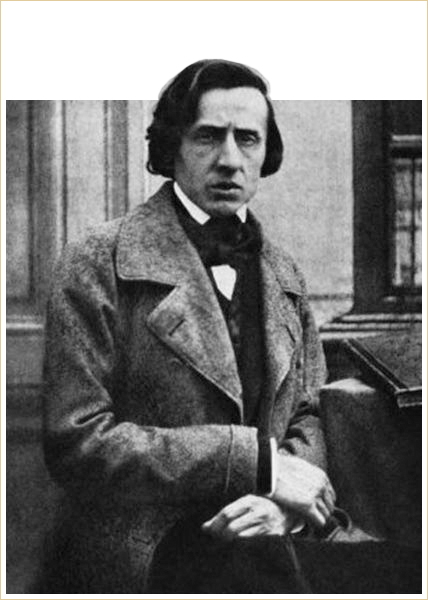
Chopin's Waltz in C-Sharp Minor also features changes in tempo, including tempo rubato at the beginning of Section B below: