
Overview
In the 1910s and 1920s, new types of musical theater were emerging on the American stage. Vaudeville, which had been the main type of musical and theatrical entertainment since the late 1800s, remained popular. Revues such as the Ziegfeld Follies included a series of popular tunes, skits, and dance numbers. The book musical was a play that included several songs performed by the characters. Composers such as Irving Berlin, Jerome Kern, and George and Ira Gershwin wrote hundreds of songs for these musical theater productions. Although most of the American musicals that were written during this era have been forgotten, their songs survive in what are known as standards.
Objectives
- Examine the transitional period between Tin Pan Alley songs and the rise of the Broadway musical
- Identify a number of important early composers and lyricists of Broadway songs such as George and Ira Gershwin, Irving Berlin, and Cole Porter
- Examine how and why many of the songs from these musicals survived long after musicals themselves flopped or were canceled
The Age of Great Standards
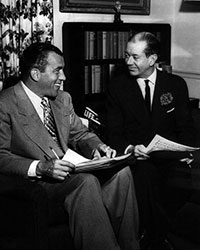
Most of the musicals written in the 1920s and 1930s are rarely performed today, but the same cannot be said of many songs that came from these musicals. "I've Got a Crush on You ♫" came from the Gershwin brother's Strike Up the Band (1930), even though the grim antiwar story was so heavy that the show closed on the road. "I Get A Kick Out of You ♫," and the title song from Anything Goes (1934) by Cole Porter also survive. Cole Porter provided "Begin the Beguine ♫" and "Just One of Those Things ♫" for Jubilee (1935), which ran only 169 performances. The songs that survived from the musicals and have entered the performance repertory are called standards. To this day, any musician who aspires to be a jazz or Broadway singer needs to know and be able to perform these standards.
The standards have long outlived the shows for which they were written. The standards have been recorded over and over again by hundreds of artists in scores of different styles and interpretations. One of the most respected interpreters of jazz standards in the history of recorded music was Ella Fitzgerald. Ella Fitzgerald first won the admiration of mainstream pop music fans in 1938 with her rendition of the children's song "A-Tisket, A-Tasket ♫." She later recorded a series of songbooks, each of which contained the music of a different songwriter or songwriting team. A number of these songbooks were devoted to the songs of composers or composer-lyricist teams mentioned in this lesson, including The Cole Porter Songbook, The Jerome Kern Songbook, The George and Ira Gershwin Songbook, and The Irving Berlin Songbook.
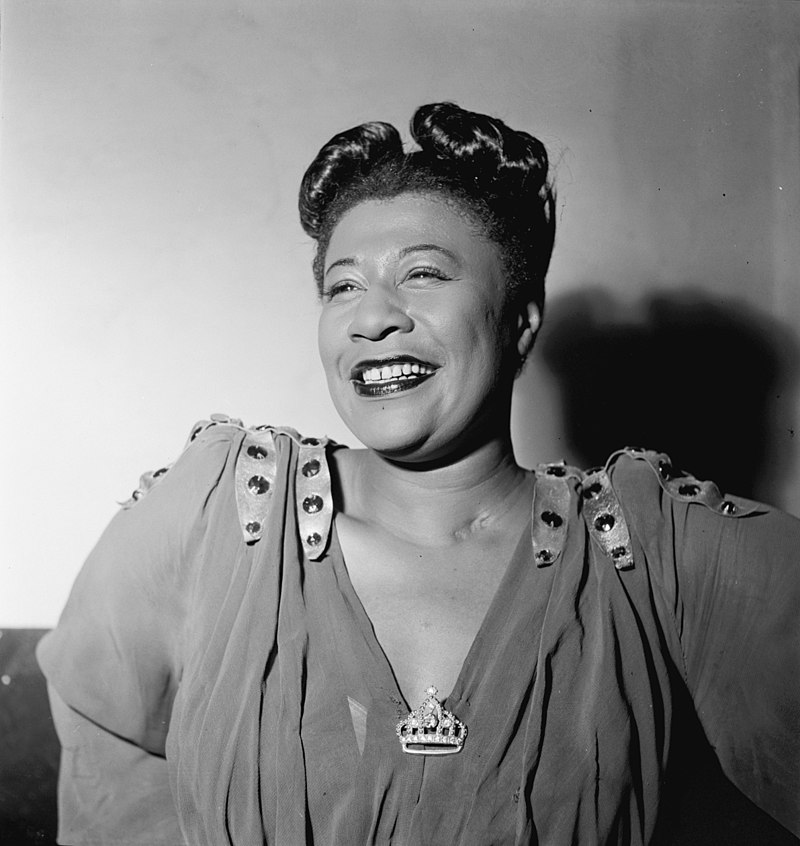
Her 1959 rendition of the Gershwins’ "I Got Rhythm ♫" (the form of which was described earlier in some detail) for example, begins with the slow, plaintive introduction that tugs at the listener’s heartstrings, but when the lively chorus begins, Fitzgerald switches into a lively, celebratory style that perfectly captures the tone of the lyrics. Fitzgerald could move effortlessly between a dark and sultry delivery in one song to an evocation of childlike whimsy and glee in the next.
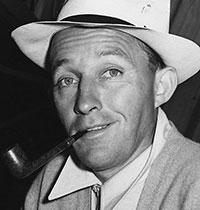
Another great performer of jazz and pop standards during this period was Bing Crosby. Crosby had no interest in the boisterous, over-the-top style of vaudeville singing and instead sang to his audiences in a personal way. His style of singing was called crooninga style of singing that focuses on creating an intimate, tender, and conversational tone. Bing Crosby used the microphone as part of his professional technique, and he reduced the volume of his voice to an intimate, conversational tone. He also shaped the phrases of the lyrics to heighten the meaning of the individual words. Crosby’s rendition of Cole Porter’s "Anything Goes ♫" is a classic performance of a standard. The song is in AABA 32-bar song form, but the final BA unit is sung a second time at the end of the recording.



