
Learning Objectives
- Outline the social, cultural, and political impact of WWI and WWII.
- Discuss the growth of the United States as a world power.
- Describe the impact of technological advancements on the development of music in the twentieth century.
- Describe, compare and contrast the main stylistic differences of Contemporary music styles including impressionism, post-Romanticism, serialism, and expressionism.
- Summarize the changing nature and application of the concept of tonality throughout the century.
- Discuss the impact of Claude Debussy's "Prelude to the Afternoon of a Faun" in light of the Symbolist movement in literature.
- Illustrate how the Russian composer Igor Stravinsky experimented with rhythm, new instrumental combinations, and the percussive use of dissonance, and discuss the impactof these techniques on contemporary music.
- Describe the impact of Arnold Schoenberg and the Second Viennese School on 20th-century music.
- Distinguish the main stylistic differences of nineteenth- and twentieth-century composers and styles.
- Describe the musical and political impact of “national schools” of composition that developed across Europe during the 20th century.
- Explain the impact of composer Aaron Copland on American contemporary music.
- Describe the impact of Latin American composers on the larger "art music" scene and repertoire.
- Define and analyze the main differences between jazz, ragtime, and blues.
Nationalism, Neoclassicism, and the Folk Tradition
While Impressionism and the crisis of tonality marked the transition out of the Romantic period, early 20th century music was also shaped by nationalism, Neoclassicism, and folk music. Composers who exemplified these trends include Igor Stravinsky, Béla Bartók, and Carl Orff.
Igor Stravinsky
Regarded by many as one of the towering figures of 20th-century music, Stravinsky enjoyed a long career with three main stylistic phases: “Russian”, “Neoclassical", and “serial” (or “12-tone”). He may not have invented any brand-new compositional techniques as Schoenberg had done, but the startling originality of his works, coupled with a fresh emphasis on an irregular but powerful rhythmic drive, made his music far more accepted by the public and arguably much more influential to other musicians.
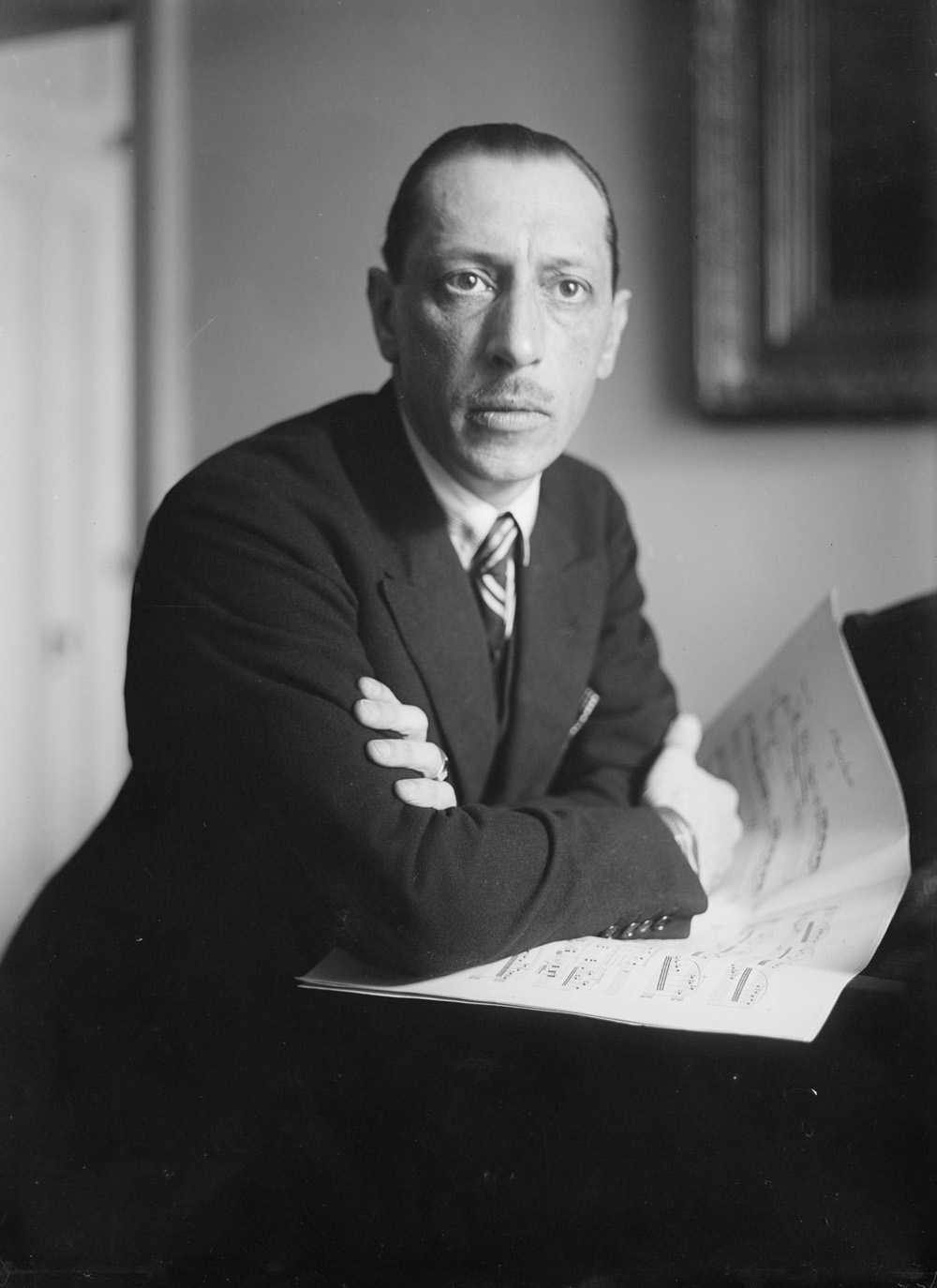
Stravinsky was born in Oranienbaum (near St. Petersburg) but spent most of his creative life in Paris and the United States. The third of four sons of Fyodor Stravinsky, a famous bassist with the Russian Imperial Opera at the Mariinsky Theater, his first musical experiences were the opera house and his father's scores, which he became adept at reading at a very young age. He recalls, however, that the beginning of his conscious life as an artist and musician coincided with a performance of Tchaikovsky's Pathétique Symphony.
Composer: Igor Stravinsky
-
"Le Sacre Du Printemps (The Rite Of Spring): Part I: The Adoration of the Earth"
In 1909, two of Stravinsky's early works, Feu d'artifice (Fireworks) and the Scherzo Fantastique, were presented in a concert in St. Petersburg. As fate would have it, sitting in the audience was the ballet impresario Sergei Diaghilev (1872-1929), founder of the Paris-based Ballets Russes and one of the greatest talent-spotters in music history. Based on the strength of those two short works, Diaghilev decided to commission his first modern ballet from Stravinsky.
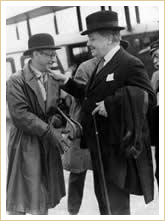
Firebird (1910), Petrushka (1911), and Le Sacre du Printemps (The Rite of Spring) (1913), three ballets commissioned by Diaghilev for the Ballets Russes, established Stravinsky as one of the most recognized composers in the world and the leader of the 20th-century music avant-garde. These works were innovative blends of Russian nationalism and Impressionism. It would be fair to say that they also constituted the foundation for the popular appeal of his music.
Composer: Igor Stravinsky
-
"Firebird"
Composer: Igor Stravinsky
-
"Petrushka: First Tableau: The Shrovetide Fair"
Composer: Igor Stravinsky
-
"Le Sacre Du Printemps (The Rite Of Spring): Part I: The Adoration of the Earth"
Around 1920, Stravinsky began composing in the Neoclassical style. Neoclassicism was a 20th-century trend that sought to restore Classical period characteristics such as order, balance, and emotional restraint to music.Pulcinella, with its pleasing melody and consonant harmony, marked the beginning of this phase of Stravinky's career.
Composer: Igor Stravinsky
-
"Pulcinella: I. Overture"
Béla Bartók
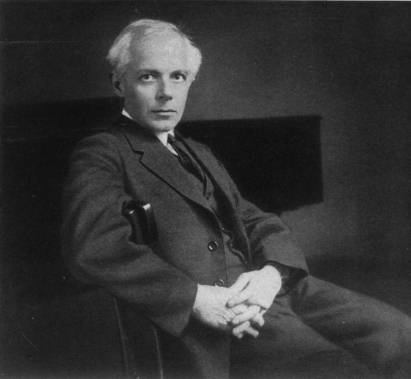
Bartók is considered the foremost nationalistic composer of the 20th century. Together with his compatriot Zoltán Kodály (1882-1967), he recorded the music of Hungarian peasants with the gramophone and became convinced that there was much to learn from the melodies and rhythm of Hungarian folk music.
As a result of this interest in folk music, Bartók’s rhythmic style incorporated mixed and additive meters. His style, more angular and organic than that of Stravinsky's, always contained a kernel of Hungarian folk music, as may be heard in a collection of piano studies called the Mikrokosmos and in large-scale works, such as Music for Strings, Percussion, and Celesta. Bartók was also influenced by Neoclassicism as demonstrated in works such as the Concerto for Orchestra and his six string quartets, which rank among the finest in 20th-century musical literature. He also developed new compositional techniques such as the Bartók pizzicato, a percussive technique in which the violinist plucks a string away from the violin and then allows it to snap back against the fingerboard.
Composer: Béla Bartók
-
"Music for Strings, Percussion and Celesta, Sz. 106: IV. Allegro molto"
Carl Orff
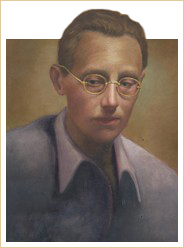
A tremendously multifaceted composer, Orff displayed a talent for playing different types of music and composing at an early age. The folk music of his native Bavaria influenced his work, as did medieval literature and Greek tragedies. Although his earlier works demonstrate the influence of Debussy, his later pieces display traits of the work of Stravinsky, Schoenberg, and Richard Strauss.
He was also interested in music education. In 1924, together with Dorothee Günther, Orff founded the Günther School for gymnastics, dance, and music.
Orff's main artistic goal was to develop what he called total theater, a combination of music, words, and movement meant to produce an overpowering, exhilarating, and thought-provoking reaction. His models were classic Greek tragedy and Italian Baroque musical theater. He fully realized this goal in his best-known work, Carmina Burana (1937), a “scenic cantata” that was the first of a trilogy. Catulli Carmina (Songs of Catullus - 1943) and Trionfo di Afrodite (The Triumph of Aphrodite - 1953), works based on medieval German and Latin poems celebrating pagan love and hedonism, completed the trilogy.
The pedagogical ideas of Carl Orff have had a profound influence on elementary music education throughout the world. In this area, his Schulwerk (Music for Children) for elementary music and movement instruction concentrated on the crucial relationship between movement and sound. His basic assumption was that all children are musical, and with proper training anyone can develop a reasonable perception of rhythm, pitch, and musical form.
Composer: Carl Orff
-
"Carmina Burana: Carmina Burana: O Fortuna"
Later Trends
Over the course of the 20th century and into the 21st, art music has become more diverse than ever before. A wide variety of trends, movements, and new genres made their mark, including serialism, aleatory music, electronic music, world music, and jazz. At the same time, political upheaval throughout the world curtailed musical development in certain countries. On the following pages, we will examine developments in 20th and 21st century music by focusing on individual nations.