
Overview
Objectives
- Examine the relationship between music and the American civil rights movement during the 1960s
- Identify characteristics of Brown’s musical style from this period
- Identify some of the defining features and characteristics of funk music
- Recall the significance of Sly and the Family Stone in the development of funk music
- Examine the role George Clinton played in funk music during the 1970s with P-funk genre
- Examine how popular media such as Blaxploitation films and television programs helped promote African American music and musicians
The Musical Language of Funk
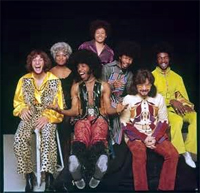
The messages of funk music were diverse. Some songs celebrated love, peace, and togetherness, while others were assertive messages of empowerment. Other songs suggested a complete disinterest in white mainstream culture. As we will see, many artists interpreted funk music differently, and each offered their unique approach to the genre.
Funk is, first and foremost, a dance music. It was intended for people to dance to, and both the music and the lyrics encouraged people to "Dance to the Music ♫" (a song by Sly and the Family Stone). Despite its driving rhythms and high energy, funk music is not always about just having fun.
Many funk groups tackled issues of racism, poverty, and social injustice in their music. Some artists such as George Clinton advocated for black separatism. In general, the lyrics and message of funk music encouraged African Americans to unite, whether for dancing or creating social change.
Funk promoted a sense of togetherness and community. Funk music typically featured group singing rather than singing by a soloist, which emphasized the power of the group rather than of the individual. Names of ensembles also suggested solidarity and power in numbers, such as Kool and the Gang and Sly and the Family Stone. Funk bands were large and often included guitars, bass, drums, horns, keyboards, and synthesizers.

“Blues and soul and jazz music has so much pain, so much beauty of raw emotion and passion.”

“James Brown was a funk minimalist. All of those parts create a sum that's larger than than the individual parts.”

"Throughout the 1940s and early 1950s, [Sam Cooke] gained acclaim as a member of gospel harmony groups, including the Highway Q.C.s and the Soul Stirrers. At the time, the Soul Stirrers were considered the most respected gospel singing group in the US."
