
Learning Objectives
- Examine the two most widespread musical genres of Native North America: traditional music associated with specific tribes, and intertribal music, which can be performed by Native people regardless of their tribal affiliation.
- Analyze how the creation and performance of music and dance has played an essential part in the lives of North America's indigenous peoples since their beginnings on the continent. examine the instruments used in Native North American music, such as drums, rattles, and flutes.
- Extrapolate how Native peoples in the Americas continued to perpetuate their music and dance traditions through old ceremonies and new songs, despite the devastating impact of European settlement.
- Examine the role of contemporary Native Americans in participating in age-old religious rituals, dancing in intertribal celebrations, singing native-language hymns in church, and listening to the latest in Indian country, rock, and hip-hop music.
- Identify Native American music broadly, including "classical" music by Native composers (such as symphonies and ballets), Christian hymns, and popular music.
- Examine intertribal music (sometimes known as "Pan-Indian" music), such as pow-wow and flute music styles, that came from the sharing of tribal-specific traditions with others.
The Southwest: The Diné, or Navajo, People
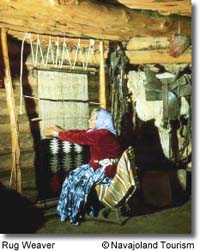
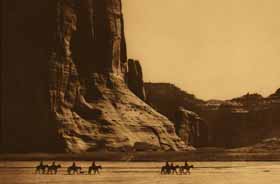
Southwestern peoples live in a harsh, desert environment, crossed by mountain ranges, mesas, great rivers. In a place of such extremes, a variety of lifeways can be found, from farming in the many Pueblos to sheep-ranching on the Navajo reservation. Historically the Pueblo people have inhabited the region for thousands of years, while the Navajo (Diné) and Apache (Tiné) arrived only about a thousand years ago. At one time the Navajo and Apache were a single people, but after 1690, when the ancestors of the Navajo gave shelter to Pueblo Indian refugees fleeing from the Spanish, the host families to the Pueblos people learned farming, weaving, and other aspects of culture such as ceremonies from their guests.
The resulting cultural shift was great enough that the Navajo gradually developed a separate identity and culture, although the Navajo and Apache languages are still somewhat mutually intelligible.
Traditional Apache social singing employs a wide melodic range and a vocal quality known as naldehé, meaning to hold the voice up in the throat. Songs are strophic, with an AB form of alternating sections. Section "A" is the chorus, with the text most often made up of vocables sung to a wide-ranging melody, while section "B" contains the verse in Apache words sung to just one or two repeating notes. Navajo singing styles and musical forms are very similar, with two major differences: Women do not sing in Navajo ceremonial contexts, and in order to have the female deities represented, men will sing in falsetto (light, high-pitched) voices in order to impersonate women.
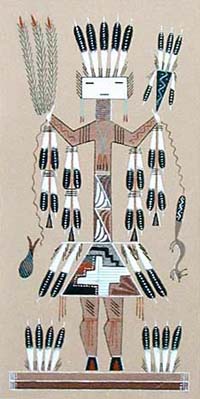
One of the most interesting aspects of Navajo musical culture is how song types have broken-off from ceremonies and become the basis for separate musical events in the social and even competitive realm. One of these song types are the Yei-bi-chai chants from the "Nightway" ceremony. The Yei are the grandmothers and grandfathers of the Navajo gods, and originally, the chants were sung by masked dancers in ceremonies that occurred only in fall or winter, as part of a healing ritual. The purpose of the Nightway is to restore balance and harmony to the individual in need of healing. Masked Yei dancers perform in teams, and each team is expected to perform twelve times during the ceremony. Although women dance, they do not sing, and the female parts are sung by men.
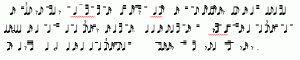
The following listening example is a Yei-bi-chai chant. In recent years, Yei team dancing (and singing) has turned into a competitive event completely separate from the Nightway, and Yei competitions may be found on the reservation in tourist venues in the fall and winter months.
Note: Google Chrome users: Click the Play button when the audio box opens.
Composer: 0
-
"(from the Nightway ceremony) - Yei-bi-chai chant"
0:00-0:11
Male Part

00:11-00:26
Female Part
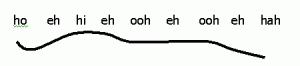
The next piece is a contemporary Navajo social dance song known as a "two-step" song. It also has an A/B binary structure, and as a social song may be sung by women as well as men. This type of song was picked up from the Apaches in during the 1930s, and like most Apache music, features sections alternating between a "chorus" sung in vocables with a wide-ranging melody, and a "verse" sung to just one or two notes that can include text in Navajo or English. These songs, along with a similar style known as "sway-dance" songs, are very popular at Navajo social events, and include couples dancing, which was not common in native cultures until it was picked up from American settlers after 1900.
Composer: 0
-
"Navajo Two-Step Dance Song"



Competition singing, known as Inuit throat singing, was done by both men and women in the Northwest Coast and among Inuit and other Arctic peoples.
