
Overview:
Although music is abstract in nature, its concepts can be made concrete for young students. This class will focus on ways in which elementary students can gain skills and understanding of the elements of music by taking part in guided experiences.
Objectives:
Students will be able to:
- Identify the ways in which the elements of music can be introduced to younger students.
- Identify the age- and grade-appropriate music activities.
- Discover ways in which elementary students can respond (verbally and non-verbally) to music.
- Guide elementary students to move from percepts to concepts.
- Identify issues common to teaching music.
Timbre
Timbre (pronounced ”TAM-ber”) refers to the quality, type, sound, or tone color of music. In this sense, quality does not refer to the “good” or “bad” features of the pitch, but its characteristics. A man may also sing a concert C sung by a woman; however, the qualities of the voice are different. This is also true for the differences in women’s voices. In this example, note how the woman’s voice in the excerpt from Carmen has a different tone color than that in the "Aria of the Queen of the Night," from Magic Flute.
 Carmen
This aspect can also be less obvious. An opera singer, a country western singer, or a jazz singer can sing the same concert C. All would sing the same pitch, but the characteristics or tone color of their individual voices is different due to the natural qualities of the individual voices as well as their training and vocal style.
The teaching of timbre begins with the development of students’ perception of tone color. Students should experience timbre in its most obvious forms through lessons created to help students to discover:

- Musical and non-musical sounds
- Solo and multiple sounds
- Voice types
- Instrument types
- Styles and ensemble types
Young students can begin to recognize differences in tone color through their everyday experiences. Sounds in the environment have individual characteristics that can be discovered and categorized through exploration. The sound qualities of objects found in the home or school are readily identified and these initial experiences lead to distinguishing between musical and non-musical sounds.
Vocal Timbre
In its early stages, the development of percepts and concepts of timbre is similar to that of harmony. Students should begin to develop an awareness of solo or multiple sounds. Students between the ages of four to seven are capable of distinguishing between accompanied and unaccompanied music. Guided listening activities featuring examples of single and multiple sounds, solo voice or instrument, ensembles of various sizes, and composition can help to refine their perception.
The categorizations of the singing voices are determined by the range and the quality of sound produced. Female voices are classified into:
- High — soprano
- Medium — mezzo-soprano
- Low — alto
Within each of these categories are divisions that are more subtle such as coloratura soprano, lyric soprano, contralto.
Male voices are classified into:
- High — tenor
- Medium — baritone
- Low — bass
Like the female voice, male voices also experience changes in vocal quality that make them distinct; however, it is important for the teacher to focus primarily on the most distinct differences between the vocal qualities.
Instrumental Timbre
Instruments are categorized according to the four major families: strings, brass, woodwinds, and percussion. The instruments in each family are grouped together because they share physical characteristics and have similarities in the way they produce tones.
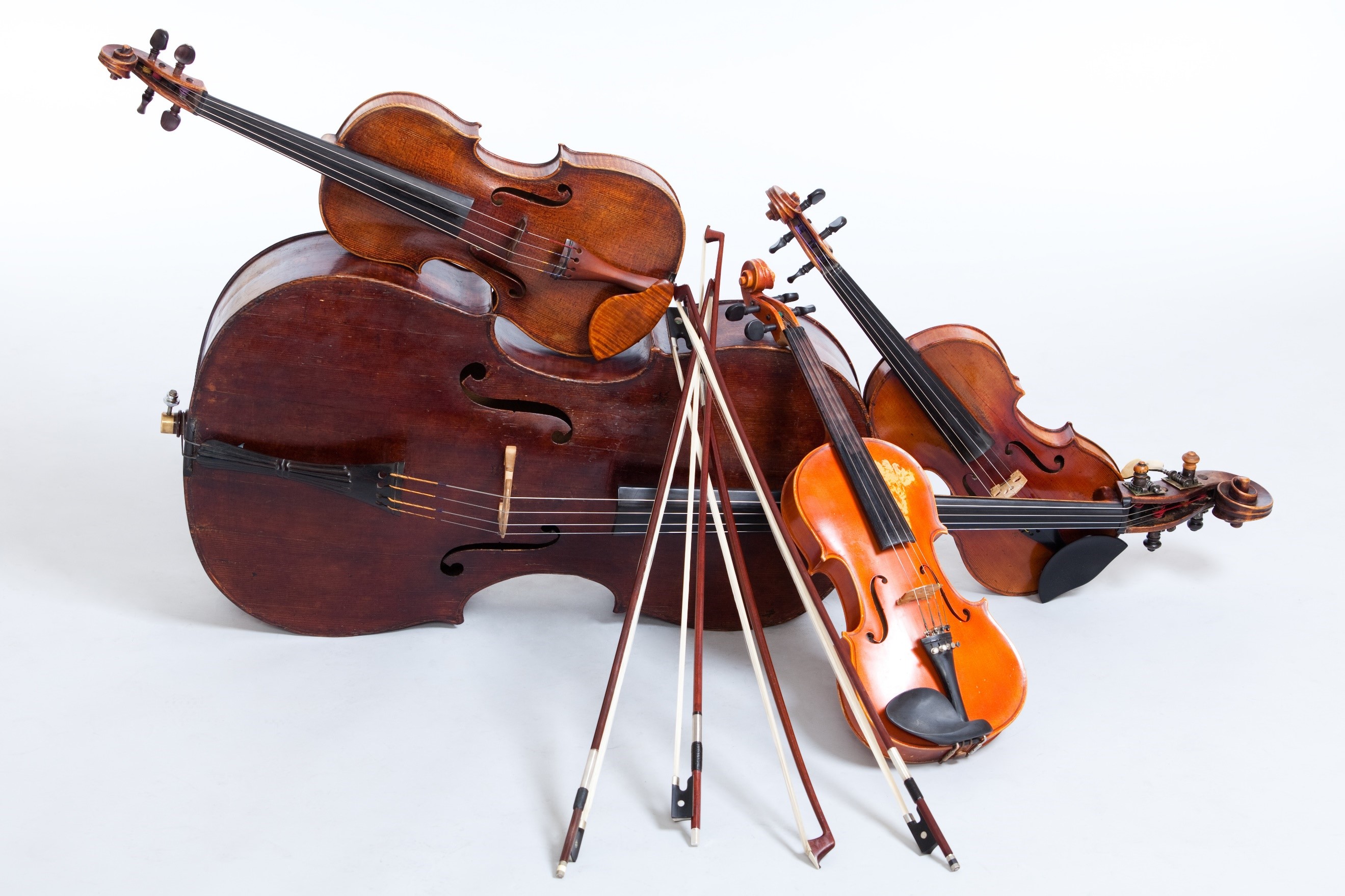
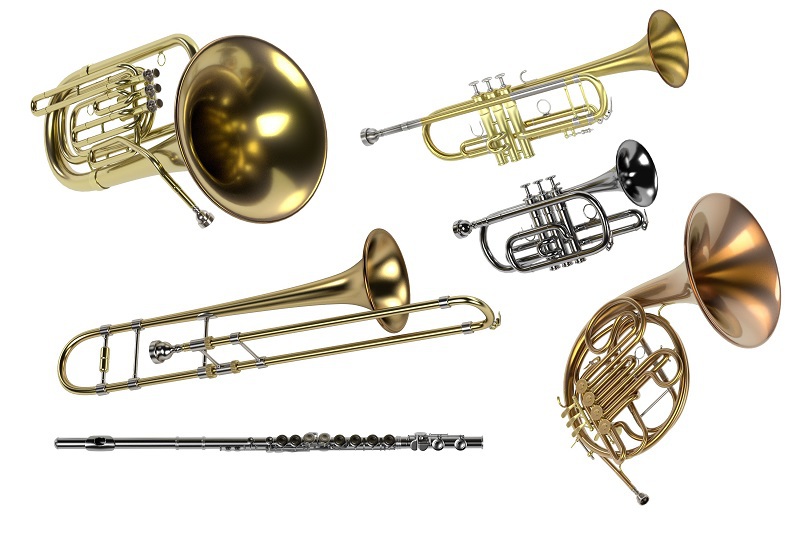
Different voices are present within the instrument families that produce distinctive timbres. For example, the trumpet, French horn, trombone, and tuba could be considered the soprano, alto, tenor and bass of the brass family. This passage from Til Eulenspiegel by Richard Strauss illustrates the brass family.
Tone color can also be distinguished by the way the same or similar instruments are played. In the percussion family, instruments are hit or struck, shaken, scraped, and rubbed. The material of which they are created—skins, rattles, metals, and woods—also contributes to the distinctive sound qualities of each instrument.
Electronic sounds are also found in many contemporary and popular pieces. While these may be more difficult to distinguish because they often synthesize acoustic sounds, it is important for students to experience the most common electronic sounds available in our culture.