
Overview:
Timbre, harmony, and expression give music depth and provide a rich vocabulary for the expression of musical ideas. Timbre helps students distinguish between sound sources, harmony gives music more varied tonal complexities, and the emotive aspects of music (expression) quickly elicit responses from young students. Teaching strategies using visualizations through color associations or free form shapes (dots, lines, waves, or shapes) help to teach these concepts because students need to detect more subtle nuances.
Objectives:
Students will be able to:
- Identify the characteristics in the elements of timbre, harmony, and expression,
- Describe the distinctive components of timbre, harmony, and expression,
- Select music experiences that are age-appropriate,
- Create lessons focused on timbre, harmony, and expression, and
- Analyze lesson plans for effective sequence and delivery.
What are the Concepts of Harmony?
The teaching of harmony begins with developing students’ perception of pitch structures. Lessons should be directed to assist students to discover the concepts of:
- Multiple sounds
- Rest and unrest
- Texture
In its early stages, the development of percepts and concepts of harmony begins with the awareness of multiple sounds. Students between the ages of four to seven are capable of distinguishing between accompanied and unaccompanied music. Once the students are able to discriminate between monody and homophony, more examples of single and multiple sounds can help to refine their perception.
The students’ capacity can be extended to determining “harmonic fit.” As students listen to the performance of an accompanied song, students should begin to discern and identify when chords need to change to fit with the melody.
Older students can begin to identify specific changes in music that are limited to two or three chord changes (I, IV, or V).
The feeling of rest and unrest in relationship to chord cadences is a percept that begins with students between the ages of eight to ten.
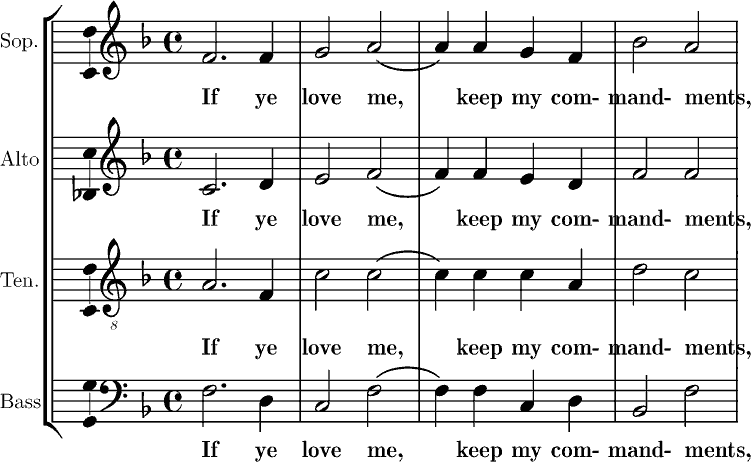
Listening to music with well-defined phrases, students can begin to distinguish closed or strong and open or weak cadences. The teacher can guide students to discern the feelings caused by chords and chord progressions that convey a sense of completion and those that stimulate the edgy, tense feeling of unrest.
Change in texture, such as music with two, three, and four parts, is a more complex concept. The addition or subtraction of ostinati, melodic lines, bourdons, or descants is the first step in refining student perception. Students between the ages of seven and nine are capable of creating an improvised accompaniment with Orff barred instruments, while more mature students may be capable of composing different melodies layered over an ostinatoaccompaniment.