





The Woodwinds
The Bassoon
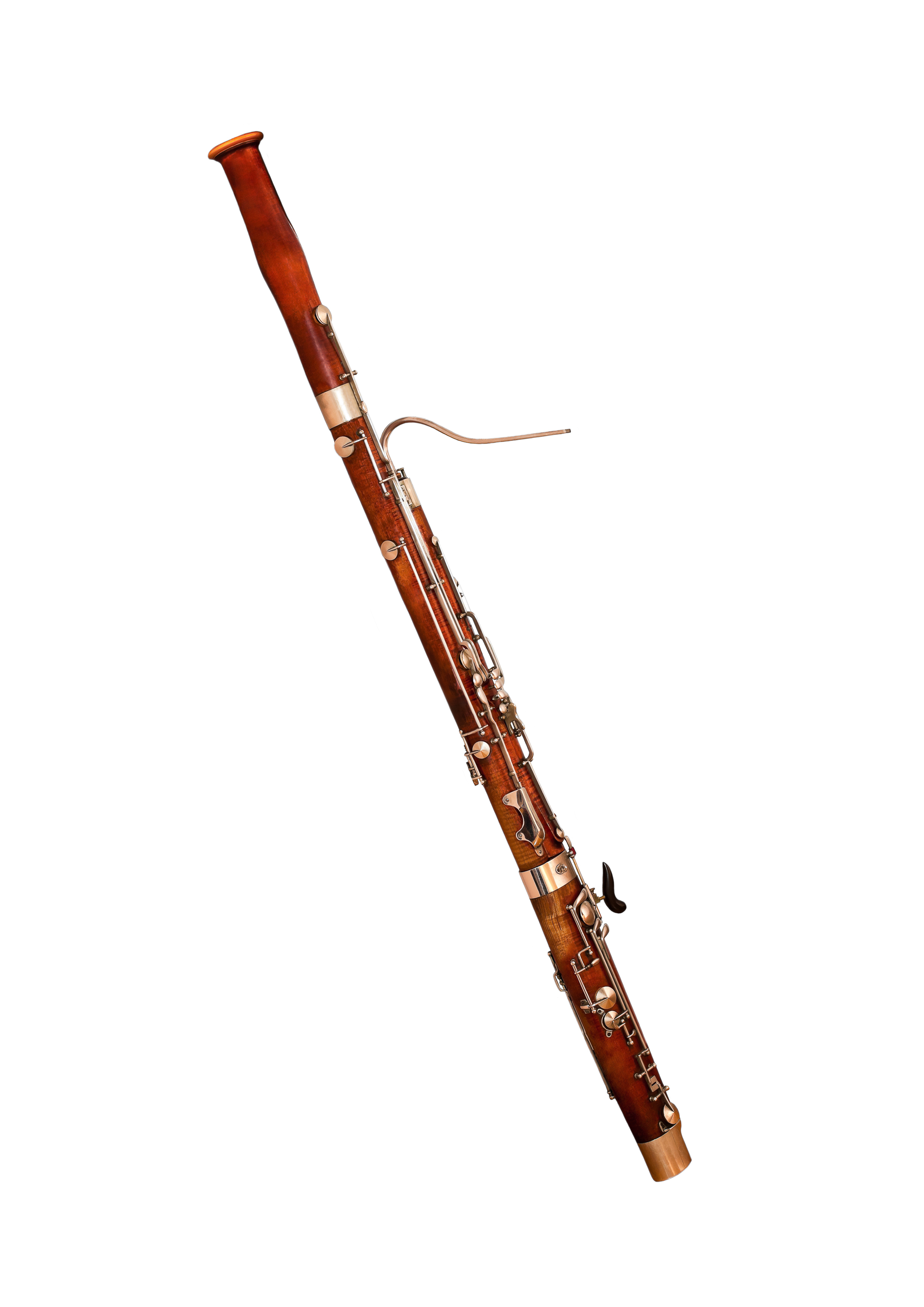
The bassoon is another member of the double reed category of woodwind instruments. Developed in the 17th century, its body consists of four sections. The modern version of this instrument was developed in France around 1636 and later perfected in Germany. Like its other woodwind relatives, the bassoon quickly gained recognition as a solo instrument. It also has a place as a significant member of the traditional symphony orchestra and figures prominently in orchestral, concert band, and chamber music literature. It is known for its distinctive tone color, wide range, variety of character, and agility. The modern bassoon exists in two forms; Buffet (or French) and Heckel (or German) systems. A bassoon player of either system is called a bassoonist.
The bassoon is the principal tenor and bass instrument voice of the woodwind family—and also its biggest member. Notice from the picture that the instrument is folded upon itself. If it were stretched out, the bassoon would measure over eight feet in length.
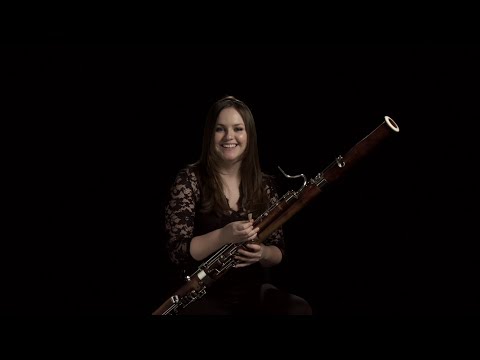
The Bassoon
Philharmonia Orchestra
Listening Examples
Composer: Igor Stravinsky
-
"Le Sacre Du Printemps (The Rite Of Spring): Part I: The Adoration of the Earth"
Composer: Marco Enrico Bossi
-
"Improvisation for Bassoon and Piano"
Composer: Wolfgang Amadeus Mozart
-
"Bassoon Concerto in B-Flat Major, K. 191: II. Andante ma adagio"