Learning Objectives
- List the characteristics of the Baroque era (1600-1750) in context of social change including religious wars (Protestants vs. Catholics), the exploration and colonization of the New World, and the rise of middle-class culture.
- Identify a new style—monody—that featured solo song with instrumental accompaniment in the Baroque period through listening examples.
- Define figured bass, a shorthand that allowed the performer to supply chords through improvisation.
- Compare and contrast the major-minor tonality system and the equal temperament tuning system.
- Explain the significance of the union of text and music as expressed in the Baroque Doctrine of the Affections and reflected in genres such as opera, oratorio, and cantata.
- Define and compare the genres of opera, oratorio, and cantata.
- Compare and contrast the development of two types of concertos: the solo concerto and the concerto grosso.
- Correctly identify visually and aurally the main keyboard instruments of the Baroque era: organ, harpsichord, and clavichord.
- Describe the main characteristics of J. S. Bach's keyboard music, in particular his Well-Tempered Clavier.
Baroque Period (1600–1750)
Opera in France
France was slow to embrace opera. Parisians didn’t much like Italian opera, but they also didn’t produce their own. During the 1670s, under King Louis XIV, opera at last came to France with the help of Italian-;born composer Jean-Baptiste Lully, who became one of the most powerful musical figures of the late 17th century.
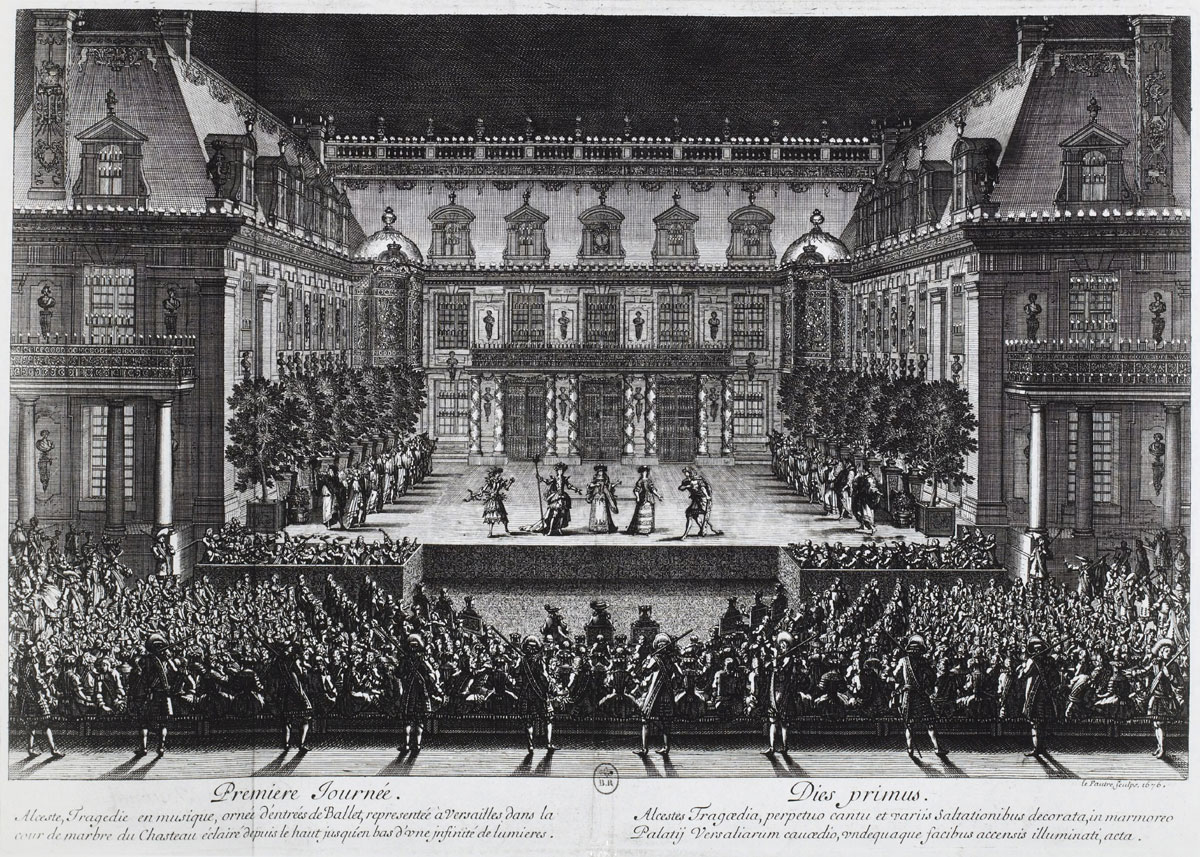
Lully succeeded in transforming the Italian opera into a distinctly French form called tragédie en musique (later called tragédie lyrique). Much to the French audience's delight, he added ballet to the opera and was also able to successfully adapt the recitative to the intricacies of the French language
Lully popularized the French overture. This independent instrumental composition opened the opera, and it was later also used as the first movement of some multi-movement instrumental works. As you listen to his overture for the opera Armide, notice the dotted rhythms that lend the feel of a stately procession. In fact, the overture was often intended for the entrance of the king. Faster sections help to create a festive atmosphere. Lully can be considered the founder of French opera, having forsaken the Italian method of dividing musical numbers into separate recitatives andarias, choosing instead to combine the two for dramatic effect. Lully also opted for quicker story development, a practice more to the taste of the French public.
Composer: 0
-
"Armide: Overture"
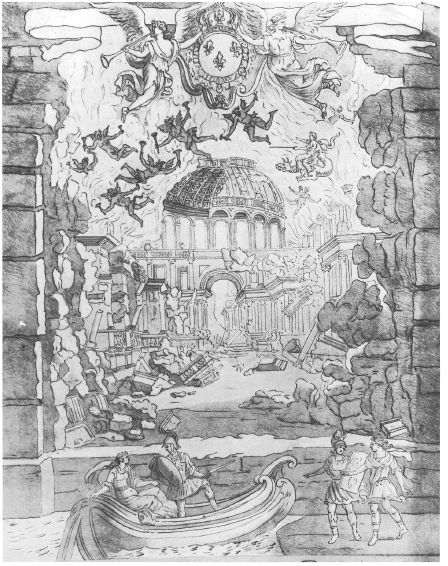
The story of Armide comes from Torquato Tasso’s Gerusalemme liberata (Jerusalem delivered), just as Monteverdi’sCombattimento di Tancredi e Clorinda did. This part of the poem deals with another female warrior, Armide, who is also a sorceress. Throughout the opera, she struggles with her passion for the Christian crusader Renaud. Duty and glory ultimately call Renaud away, and Armide is devastated. In true Baroque fashion, the production ends with the epic destruction of the set as Armide calls on demons to destroy her magical palace.
Critics in the 18th century regarded Armide as Lully's masterpiece. It continues to be well-regarded, featuring some of the best-known music in French baroque opera and being arguably ahead of its time in its psychological interest. Early productions included a prologue flattering Louis XIV, who had in fact chosen the subject of the opera himself. This prologue, and the subject of the opera, was likely related to the recent expulsion of the French Protestants, the Huguenots, when the Edict of France was revoked in 1685. The Crusaders in the opera were a way of representing the heroic Catholics fighting against all heresy, including Protestantism.
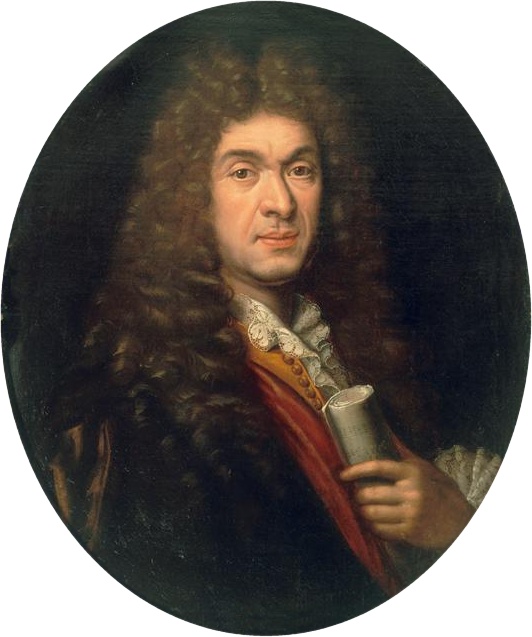
Jean-Baptiste Lully was born Giovanni Battista Lulli, the son of a miller in Florence. At the age of 14, partly because of his talent as a singer, he was taken to France to work for a cousin of the future King Louis XIV. Besides working in the kitchen and as a page, one of his duties was helping her practice Italian conversation. Educated in guitar, violin, keyboard, and ballet, he soon caught the eye of King Louis XIV (a huge fan of ballet and a dancer himself), who appointed him superintendent of music and composition at the French court in 1661. The very next year he was appointed music master for the French royal family. Throughout his life, he remained very close to the king, who attended Lully’s wedding and became godfather to his oldest son. Lully managed to survive political intrigue and claim substantial power in the musical world, including special patents and privileges for the publication of his operas and influence over the choice of musicians hired for the royal chapel. In addition to his operas and ballets, Lully wrote sacred music for the chapel.
Lully particularly liked working with the playwrights Pierre Corneille (1606–1684), Molière (Jean-Baptiste Poquelin; 1622–1673)—with whom he created a new music form, the comédie-ballet, which combined theater, comedy, and ballet—and above all Philippe Quinault (1635–1688), who wrote the libretto for Armide. Lully’s new genre of tragédie en musique usually treated subjects drawn from classical mythology. Quinault was his close partner in establishing this genre.
In January of 1687, Lully was conducting a performance of his own Te Deum, a religious work celebrating Louis XIV’s recovery from a serious illness, when he struck his foot with the large stick he used to mark time while conducting. The wound became infected and he died as a result.