
Overview
Around the turn of the twentieth century, several styles and genres of music came together, and the city of New Orleans provided the catalyst for the formation of jazz. The earliest style of jazz, and one that remained popular for decades after its inception, was called Dixieland. Dixieland, like other types of jazz, allows us the chance to look at many issues of musical, racial, and commercial issues in the first quarter of the twentieth century.
Objectives
- Examine the predecessors of jazz and the diversity of styles and genres that combine in order to create the earliest jazz
- Identify the instruments, musical form, and performance style of Dixieland jazz
- Examine how the issues of race affected the earliest commercial distributions of jazz
- Identify the key figures and songs in Dixieland jazz
Dixieland on the Move
With the closing of the Storyville in New Orleans in 1917 and the passage of the Volstead Act to enforce prohibition in 1919, the great heyday of New Orleans’s nightlife came to a close. Then, a boll weevil infestation destroyed much of the cotton crop in the early 1920s, and large numbers of blacks and whites were thrown out of work. The big cities of the North promised full employment to those who were willing to leave the South. By the middle of the 1920s, Chicago had replaced New Orleans as one of the entertainment centers of the nation—and that called for jazz.
The Chicago musicians, many of them from elsewhere, opened up the New Orleans style.
They prepared specific introductions and endings to their tunes and took longer internal solos, occasionally separated by intricate harmonic modulations and melodic interludes. They lightened up the rhythmic-metrical density by playing much of the time with a backbeata strong accent on beats 2 and 4 of a four-beat meter, which are traditionally the unaccented beats of the bar delivery—that is, with strong emphasis on beats two and four of every measure. Then the tenor saxophone replaced the clarinet. The trombone began to take on a more melodic and less strictly "tailgate" duties. A new style had materialized.
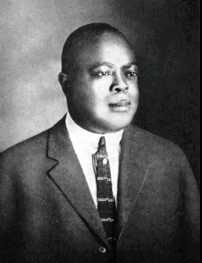
The dominant voice in Chicago jazz for a while was that of Joe "King" Oliver. A well-known New Orleans giant, Oliver was summoned to Chicago to play in the band at the Royal Gardens Cafe. At the same time, another entrepreneur invited Oliver to play at the Dreamland Cafe. Since the clubs were within walking distance, Oliver signed on with both bands, and for a time, he played alternating sets in each club. Oliver then sent to New Orleans for Louis Armstrong to join him, and the two men made the illustrious two-cornet ensemble the talk of the Midwest. Musicians drove hundreds of miles to Chicago to hear Oliver and Armstrong trade jazz licks and challenge each other in lively musical dialogue.



