
Objectives
- Outline the social, cultural, and political impact of WWI and WWII.
- Discuss the growth of the United States as a world power.
- Describe the impact of technological advancements on the development of music in the twentieth century.
- Describe, compare and contrast the main stylistic differences of Contemporary music styles including impressionism, post-Romanticism, serialism, and expressionism.
- Summarize the changing nature and application of the concept of tonality throughout the century.
- Discuss the impact of Claude Debussy's "Prelude to the Afternoon of a Faun" in light of the Symbolist movement in literature.
- Illustrate how the Russian composer Igor Stravinsky experimented with rhythm, new instrumental combinations, and the percussive use of dissonance, and discuss the impactof these techniques on contemporary music.
- Describe the impact of Arnold Schoenberg and the Second Viennese School on 20th-century music.
- Distinguish the main stylistic differences of nineteenth- and twentieth-century composers and styles.
- Describe the musical and political impact of “national schools” of composition that developed across Europe during the 20th century.
- Explain the impact of composer Aaron Copland on American contemporary music.
- Describe the impact of Latin American composers on the larger "art music" scene and repertoire.
- Define and analyze the main differences between jazz, ragtime, and blues.
Contemporary Period (1910-present): Bartók and the Neo-nationalists in England, France, and Germany
Bela Bartók (1881-1945)
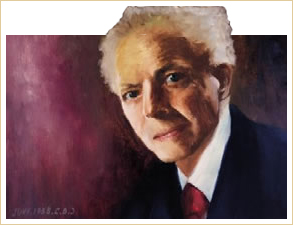
Hungarian by birth, Béla Bartók (1881-1945) is the foremost nationalistic composer of the 20th century. Together with his compatriot Zoltán Kodály (1882-1967), he used a gramophone to record the music of Hungarian peasants, and became convinced that there was much to learn from the melodies and rhythm of Hungarian folk music.

Bartók used a gramophone to record the music of Hungarian peasants, and became convinced that there was much to learn from the melodies and rhythm of Hungarian folk music...

As a result of this influence, Bartók's rhythmic style incorporated mixed and additive meters. His style, more angular and organic than Stravinsky's, always contains a kernel of Hungarian music, as may be found in a collection of piano studies called the Mikrokosmos and in large-scale works such asMusic for Strings, Percussion & Celesta. Bartók was also influenced by Neo-Classicism as evidenced in works such as the Concerto for Orchestra and his six String Quartets, which rank among the finest in 20th-century literature. He also developed new compositional techniques like the "Bartók pizzicato", a percussive technique in which the violinist pulls the string away from the violin and allows it to snap back against the fingerboard.
Composer: Béla Bartók
-
"Music for Strings, Percussion and Celesta, Sz. 106: IV. Allegro molto"
England
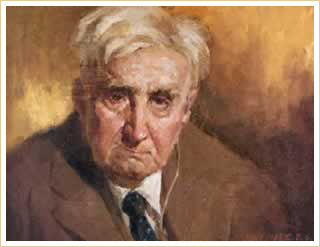
The Romantic music of Elgar and Holst ushered in a great renaissance of English music. Ralph Vaughan Williams (1872-1958) and Benjamin Britten (1913-1976) would continue this trend.
Vaughan Williams, born in Wales, spent a great deal of time compiling and collecting British folk songs. As a result, his hymn arrangements of English songs, such asCome Down O Love Divine, exhibit a great understanding of English hymns and song tradition. Large-scale works such as the Symphony #3, "Pastoral" (3rd movement) mix post-Romantic harmonies and modal sensibilities within a 20th-century Neo-Classic rhythmic and timbral framework.
Composer: Ralph Vaughan Williams
-
"Come Down, O Love Divine"
Britten's music is even more firmly rooted in the 20th century. He is generally accepted as the most outstanding English composer working in the mid-20th century, winning a significant international reputation, while remaining thoroughly English in inspiration, a feat his immediate predecessors had been unable fully to achieve. By layering melodies, as he does inThis Little Babe from Ceremony of Carols (for harp and boy's chorus), he achieves a texture that echoes Bartók and Stravinsky while remaining thoroughly original. His operas,Peter Grimes (1945) and the Turn of the Screw (1954) are considered two of the 20th-century's masterpieces in the genre.
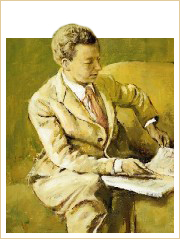
Composer: Benjamin Britten
-
"A Ceremony of Carols, Op.28: This Little Babe"
Britten is generally accepted as the most outstanding English composer working in the mid-20th century, winning a significant international reputation, while remaining thoroughly English in inspiration...
France
After Satie, Debussy, and Ravel, nationalistic pride continued to dominate France. Until World War I, Paris was one of two main centers of composition in Europe (along with Vienna) and the home of Stravinsky.
Nadia Boulanger established herself as the foremost composition teacher in the world, listing Aaron Copland and Philip Glass among her students...
This fertile ground produced a school of composers known as Les Six, including Arthur Honegger, Louis Duray, Georges Auric, Germaine Tailleferre, Darius Milhaud, and Francis Poulenc. Led by Honegger (1892-1955), Milhaud (1894-1974), and Poulenc (1899-1963), the group sought to continue the understated style of Erik Satie. Honegger's oratorio Le Roi David (King David) is a centerpiece for Les Six. Laudate Dominum is a beautiful short choral work in the style of a motet.
Composer:
-
"Laudate Dominum"
Darius Milhaud emerged as one of France's leading musical figures. His suite of short piano pieces, Saudades do Brazil, which includes Ipanema, reveal his interest in the music of Latin America. His La Création du monde (The Creation of the World) is one of the first works to combine elements of American jazz with art music.
Poulenc is probably best known for his smaller works. The characteristic delicacy of his chamber music may be heard in the 3rd movement of his Violin Sonata.
A prominent French composer, Olivier Messiaen (1908-1992), created another distinctive style. His Neumes rythmiquesfor piano adapts idioms from medieval music as well as from Stravinsky and Debussy. His influence spread through the work of his two greatest students, Pierre Boulez (b. 1925) and Karlheinz Stockhausen (b. 1928).
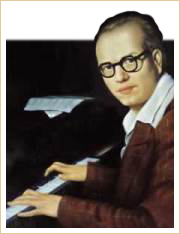
Composer: Darius Milhaud
-
"Saudades do Brasil, Op. 67: Ipanema"
Composer: Francis Poulenc
-
"Violin Sonata: III. Presto tragico"
Germany
Two innovative German composers emerged from the Fascist inter-war era. Carl Orff (1895-1982) and Paul Hindemith (1895-1963).
Paul Hindemith developed a thorough, if not widely imitated compositional ideology. Although his thickly homophonic compositions are among the most complex of the century he never totally abandoned tonality; His works such as the Mathis der Maler Symphony (instrumental movements taken from the longer opera of the same name) recall the expressionistic paintings of German painters like Ernst Kirchner and Wassily Kandinsky.
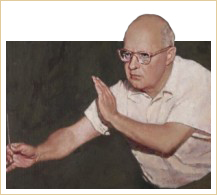
Orff is widely known for his work in music education, particularly in exploration of the connections between music and movement. In his compositions he found a similar connection between the dramatic and the musical, couched in his very personal style of writing, with its insistent, repeated patterns of notes and compelling rhythms. His best-known work is Carmina Burana, a large scale work for chorus, soloists, and orchestra, that makes use of medieval Latin and Old German lyrics found at the monastery of Benediktbeuern. The work has become even more familiar to audiences by its repeated use in advertising and in films. Carmina Burana is generally performed as a secular oratorio in the concert-hall, rather than on the stage, as is Catulli Carmina (Songs of Catullus), which is also intended for theatrical use.
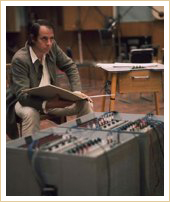
Stockhausen has been among the leading avant-garde figures in German music since the 1950s. In spite of material difficulties, he studied in Cologne with Frank Martin, and was subsequently strongly influenced by the summer sessions at Darmstadt, where significant developments in new music took place. Later on, he studied with Messiaen in Paris. Parallel to his work in electronic music, he explored the human element in performance, moving from total serialism, in which every aspect of a piece is controlled by a predetermined serial pattern, to a more flexible approach.



