
Learning Objectives
- Learn how pickups may create incomplete measures.
Meter V: Incomplete Measures
Incomplete Measures
In the examples we have seen so far, every measure has been complete, with no missing beats. It is possible for a measure to be incomplete, but the missing portion must be accounted for later, as we will see in this lesson.
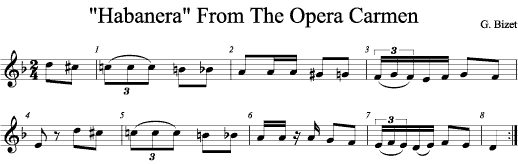
George Bizet's "Habanera" (from the opera Carmen), starts with an incomplete measure, containing only one beat (see the eighth notes D and C# in the example below). An incomplete measure at the beginning of a piece is called upbeat or a pickup, or sometimes an anacrusis. When a piece begins with a pickup, the last measure of the piece will also be an incomplete measure, completing the portion that is missing from the pickup measure. For example, notice that measure 8 below contains only a quarter note. This, added to the two eighth notes in the pickup measure, makes up the two full beats that a complete measure in two-four meter requires.

Composer: Georges Bizet
-
"Carmen: Habanera"
In pieces that contain an upbeat, the first measure is the first complete measure in the score, not the upbeat measure. That is why measure 1 occurs after the pickup. When Bizet wrote the opening of the "Habanera," he did not use a repeat sign in measure 8. The repeat sign is used here to illustrate that when the excerpt is repeated, the last measure is completed by the pickup that occurs at the beginning of the example.
| Remember |
|
Summary
You may also be wondering about the number "3" that is written below the eighth notes in measures 1 and 5 and above the sixteenth notes in measures 3 and 7 of the "Habanera." This rhythmic figure is called a triplet. But we will not be able to examine this topic now, since we have reached the end of our first rhythm and meter unit. We will discuss triplets when we return to a discussion of rhythm and meter later on in this course.
In the quiz that follows, you will be asked to demonstrate an understanding of meter, time signatures, beaming, ties, and dotted rhythms.