Learning Objectives
- Relate how Romantic poets and artists abandoned traditional subjects, turning instead to the passionate and the fanciful.
- Relate how the Industrial Revolution impacted the technological development and affordability of musical instruments.
- Analyze how the orchestra grew in size and sound as new instruments were introduced and composers demanded greater levels of expression.
- Illustrate how Romantic composers explored nationalistic folklore and exotic subjects.
- Identify the form of romantic period songs, including strophic, through-composed, and the modified strophic forms.
- Examine the German art song (or Lied) as a favored romantic period genre.
- Discuss how the music of Franz Schubert impacted romantic period music.
- Discuss how the music of Frédéric Chopin impacted romantic period music.
- Trace the ascendance of program music in relation to absolute music.
- Summarize how political unrest throughout Europe stimulated the formation of schools of musical nationalism in Russia, Scandinavia, Spain, England, and Bohemia among other countries.
- Differentiate between the distinct national styles of romantic opera in France, Germany, and Italy.
- Discuss how the Italian nationalist composer Giuseppe Verdi impacted romantic period music.
- Trace how choral music became a popular artistic outlet for the middle classes.
- Discuss how the Russian composer Pyotr Ilyich Tchaikovsky impacted romantic period music.
Romantic Period (1820–1910)
The Nationalists
During the nineteenth century, increasing numbers of composers began writing works that embodied a strong and distinctive national spirit. Nationalism in music meant using folk songs, folk melodies, and dances to evoke patriotic feelings in the listener and promote the cultural, and in some cases political, ideals of their country of origin.
Pyotr Ilyich Tchaikovsky
For the most part, Tchaikovsky is considered a conservative composer; a traditionalist. Younger than Brahms, Verdi, and Wagner, he continued to write four-movement symphonies and fairly traditional music long after many composers had moved on to other realms. Although his works contained Russian influences, he was not a true nationalist and at times seemed more intent on paying homage to the music of the German Classicists than incorporating Russian folk music into his works. This reprioritization placed him at odds with the goals of his fellow Russian composers in The Five. And yet, Tchaikovsky remains one of the significant composers of his era because of his brilliant orchestration, beautiful melodies, and eloquent harmonies.
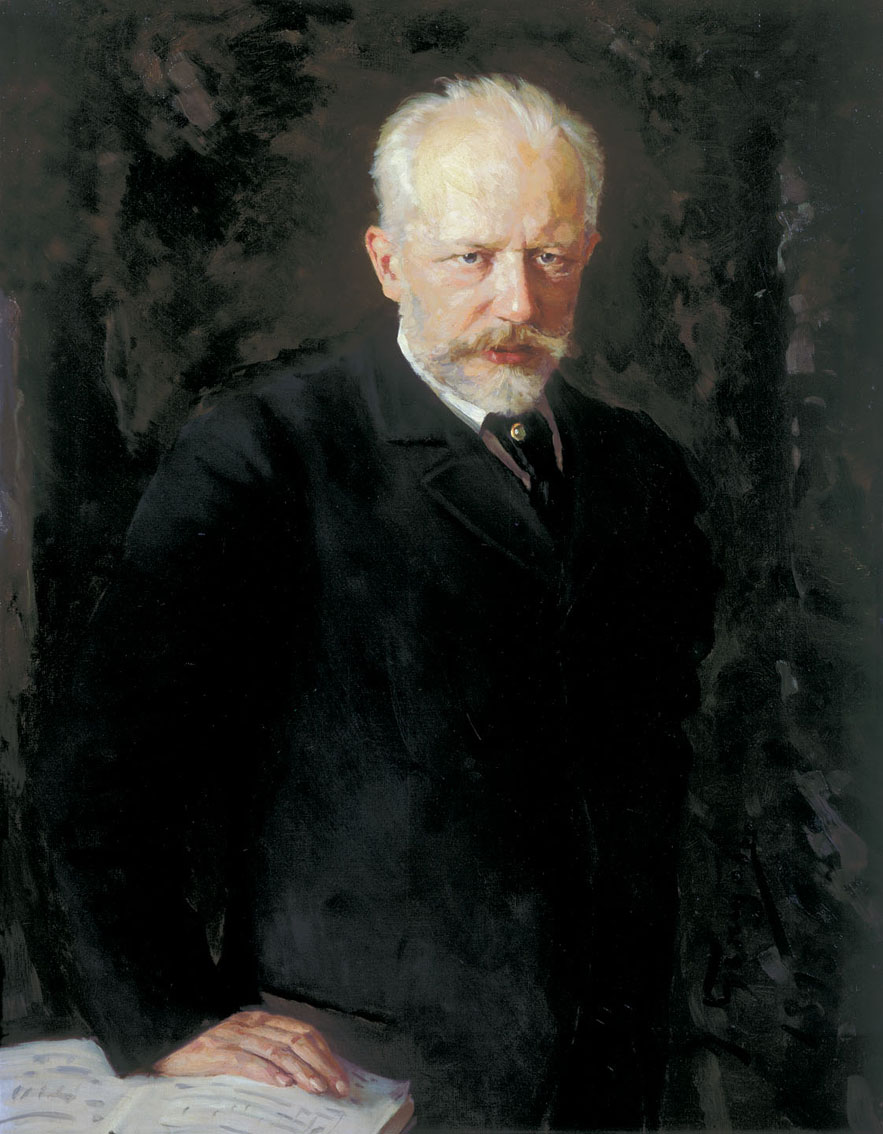
In many texts, Tchaikovsky appears as a tragic figure, wracked with guilt over his homosexuality, hampered by bouts of depression, and haunted by rumors of suicide and scandal. Indeed, to some, the highly emotional Symphony No. 6, known as the Pathétique—his final work—resembles a musical suicide note.
The Pathétique Symphony aside, Tchaikovsky’s music was not characterized by overt sadness or depression. On the whole, his music was full of joy and color. He felt a special affinity for ballet, a dance form that had been popular in Paris since the 18th century. Although ballet had clearly worked its way into the hearts of Russian audiences, until Tchaikovsky, no significant composer had written music for the ballet. His best known ballets were and continue to be Swan Lake (1876), Sleeping Beauty (1890), and The Nutcracker Suite (1892). In all three, Tchaikovsky employed popular dances such as the waltz, the march, and Russian folk dances.
Composer: Pyotr Ilyich Tchaikovsky
-
"Piano Concerto No. 1 in B flat minor, Op. 23: II. Andantino Semplice - Prestissimo"
Composer: Pyotr Ilyich Tchaikovsky
-
"The Sleeping Beauty, Op. 66: Waltz"
Composer: Pyotr Ilyich Tchaikovsky
-
"The Nutcracker Suite, Op. 71a: II. Marche"
Nicolai Rimsky-Korsakov and The Five
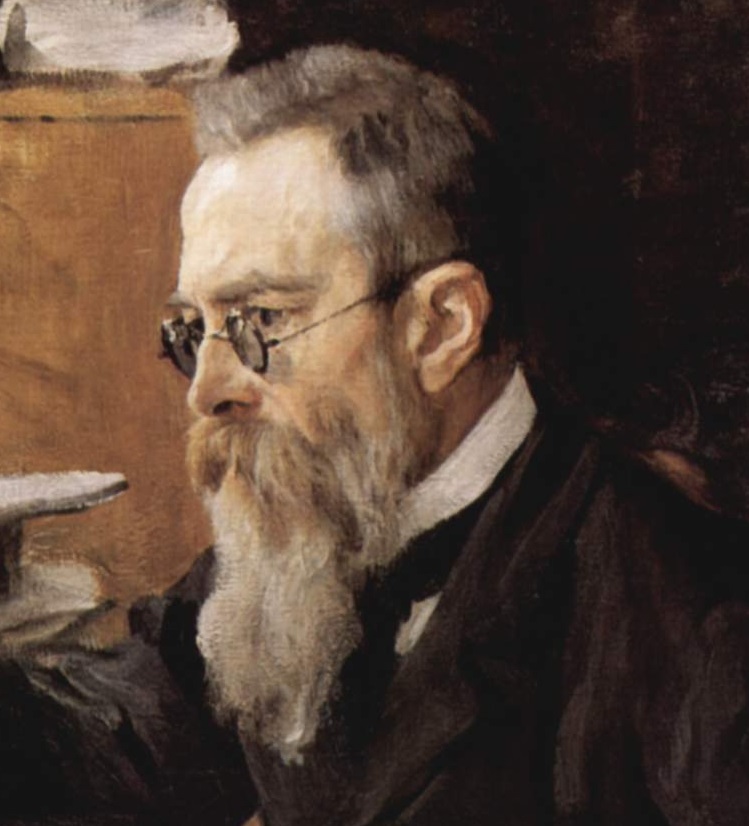
Rimsky-Korsakov embarked at first on a career as a naval officer, following his family tradition. Later, he resigned from the service to devote himself entirely to music. Greatly respected as a teacher, his pupils included Alexander Glazunov, Sergei Prokofiev, Igor Stravinsky, and Ottorino Respighi, among others.
Although best known for his orchestral compositions, Rimsky-Korsakov also wrote songs, choral works, chamber music, and works for the piano. His legacy also includes a volume of memoirs, Chronicle of My Musical Life, and two influential musical treatises: the Practical Manual of Harmony (1885) and Principles of Orchestration (begun in 1873 and published posthumously in 1922).
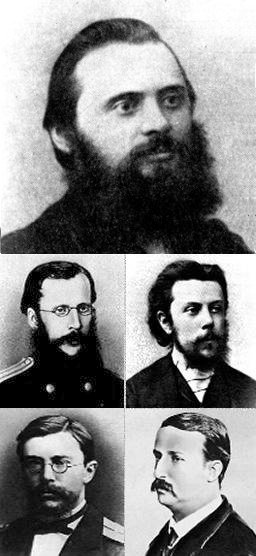
Rimsky-Korsakov was the youngest member of a group of Russian nationalists known as The Five or The Mighty Handful, which gathered around Mily Balakirev (1837-1910) and included Alexander Borodin (1833-1887), Cesar Cui (1835-1918), and Modest Mussorgsky (1839-1881). The Five stood for music that was closer to the authentic spirit of Russian music than the works of composers such as Tchaikovsky and Anton Rubinstein, who had a formal conservatory training and connections with the aristocracy of the period.
Strongly influenced by Mikhail Glinka (1804-1857), who was regarded as the father of Russian classical music and a producer of operas on Russian subjects, the group made a conscious effort to incorporate a wide variety of elements from everyday Russian musical life and heritage, including Cossack and Caucasian dances, village songs, and church chants.

The tastes of the circle leaned towards Glinka, Schumann, and Beethoven's last quartets ... they had little respect for Mendelssohn ... Mozart and Haydn were considered out of date and naive ... J. S. Bach was held to be petrified ... Chopin was likened by Balakirev to a nervous society lady ... Berlioz was highly esteemed ...Liszt was comparatively unknown ... Little was said of Wagner ... They respected Dargomyzhsky for the recitative portions of Rusalka ... [but] he was not credited with any considerable talent and was treated with a shade of derision. ...Rubinstein had a reputation as a pianist, but was thought to have neither talent nor taste as a composer...
Rimsky-Korsakov (Chronicle of My Musical Life, 1909)
Bedřich Smetana
A marked nationalistic current is also evident in the music of Bedřich Smetana.
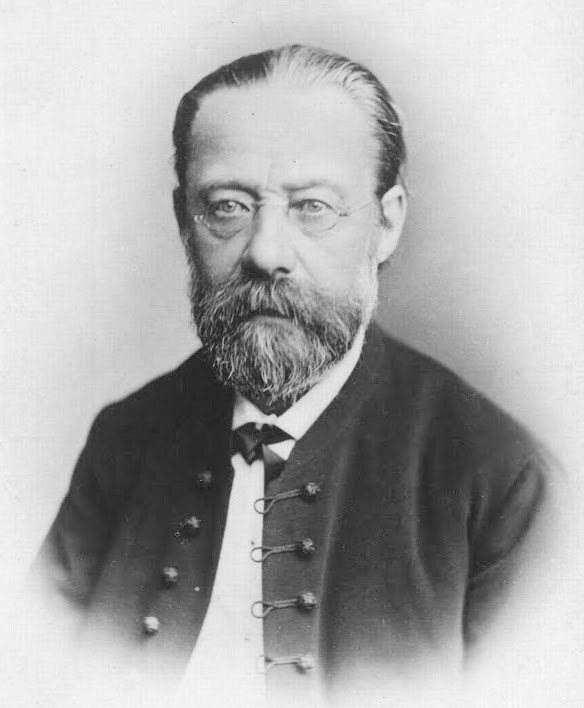
His most famous piece, the tone poem Ma Vlast (My Country) has a strong nationalist flavor. It includes the Moldau, a musical portrait of the Moldau River along with a depiction of Bohemia's landscape and the spirit of its people, the Czech. It is amazing to consider that Smetana composed this glorious piece of music when he was completely deaf.
Another brilliant example of the use of Czech folk music may be heard in the symphonic work Taras Bulba, by Leoš Janáček (1854-1928).
Composer: Leos Janecek
-
"Taras Bulba, II. The Death of Ostap"
Composer: Bedrich Smetana
-
"Ma Vlast (My Country): No. 2. Vltava (Moldau)"
Antonín Dvořák
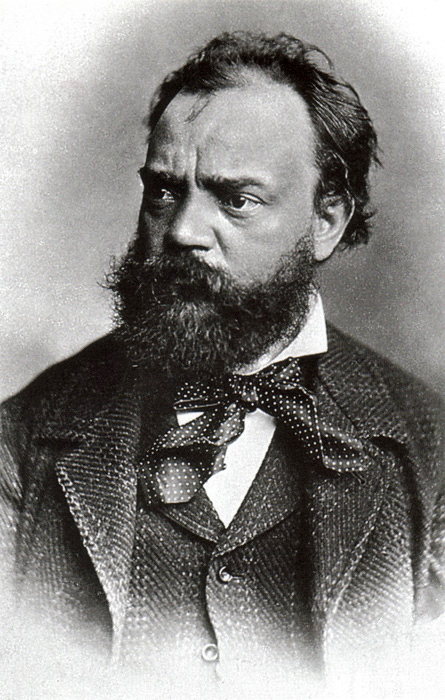
Antonín Dvořák was the most successful of the Czech nationalist composers. His symphonies were firmly rooted in Classical traditions, and, as such, he is also considered a traditionalist. However, his musical language was also influenced by visits to the United States, as may be heard in the slow movement of his Symphony No. 9, From The New World.
Composer: Antonín Dvorák
-
"Symphony No. 9 in E minor, Op. 95, From The New World: II. Largo"
Edvard Grieg
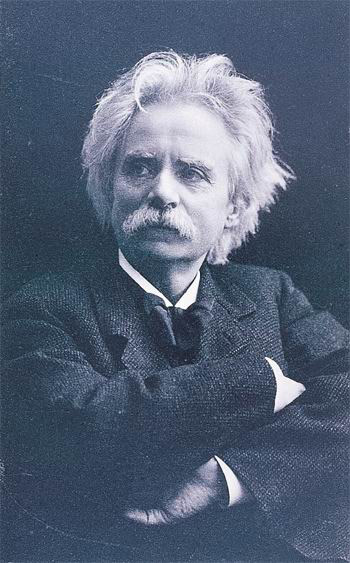
Despite being widely celebrated and respected not only in his homeland but also internationally, Edvard Grieg is generally recognized as Norway's most important nationalist composer of the 19th century. His lifelong objective was to bring the world's attention to Norwegian music.
Grieg was born in Bergen, Norway, the son of a merchant. The Norwegian violinist Ole Bull, a friend of his parents, noticed the young Grieg's talent and encouraged his parents to send him to the Leipzig Conservatory, where Grieg began studies at the age of 15.
Composer: Edvard Grieg
-
"Peer Gynt Suite No. 1, Op. 46: IV. In the Hall of the Mountain King"
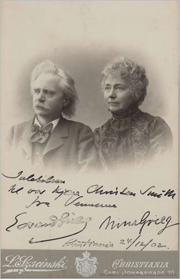
Grieg's own performances of Norwegian music, often with his wife, the singer Nina Hagerup, established him as a leading figure in the music of his own country. This success brought subsequent collaborations in the theater with the writer Bjørnstjerne Bjørnson and with Norway's greatest author, Henrik Ibsen. As well as promoting Norwegian music, Grieg conducted the Harmoniske Selskab, started plans for a Norwegian Academy of Music, and helped found the Christiania (Oslo) Musikforening. Despite chronic ill health, he continued to divide his time between composition and concert hall activities until his death in 1907.
Grieg was, above all, a lyrical composer. He produced one symphony; six different orchestral works, including the famous incidental music to Ibsen's Peer Gynt; chamber music; piano music, including the Lyric Pieces and the famous Concerto for Piano and Orchestra in A minor, Op.16; and over 150 songs.
Composer: Edvard Grieg
-
"Peer Gynt Suite No. 1, Op. 46: III. Anitra's Dance"