
Learning Objectives
- Outline the social, cultural, and political impact of WWI and WWII.
- Discuss the growth of the United States as a world power.
- Describe the impact of technological advancements on the development of music in the twentieth century.
- Describe, compare and contrast the main stylistic differences of Contemporary music styles including impressionism, post-Romanticism, serialism, and expressionism.
- Summarize the changing nature and application of the concept of tonality throughout the century.
- Discuss the impact of Claude Debussy's "Prelude to the Afternoon of a Faun" in light of the Symbolist movement in literature.
- Illustrate how the Russian composer Igor Stravinsky experimented with rhythm, new instrumental combinations, and the percussive use of dissonance, and discuss the impactof these techniques on contemporary music.
- Describe the impact of Arnold Schoenberg and the Second Viennese School on 20th-century music.
- Distinguish the main stylistic differences of nineteenth- and twentieth-century composers and styles.
- Describe the musical and political impact of “national schools” of composition that developed across Europe during the 20th century.
- Explain the impact of composer Aaron Copland on American contemporary music.
- Describe the impact of Latin American composers on the larger "art music" scene and repertoire.
- Define and analyze the main differences between jazz, ragtime, and blues.
The Twentieth Century
Social, Cultural, and Political Background

Political events, historical wars, and technological advancements greatly influenced 20th-century music.
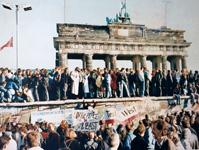
The two World Wars were significant turning points from individual, political, social, cultural, historical, and musical perspectives. The First World War (1914-1918) transformed the political map of Europe with the collapse of the Austro-Hungarian Empire and the rise of new, independent nations. It also planted the seeds of discontent that led to the rise of communism in Russia and fascist dictatorships in Germany, Spain, and Italy. German and Russian governments placed dramatic restrictions on artistic freedom, severely curtailing the musical output of both countries. Some German and Russian composers were forced to write patriotic music in an officially prescribed style. From the end of World War II in 1945 until the dissolution of the Soviet Union in 1991, territories were separated by the “Iron Curtain”—the symbolic and physical barrier representing the ideological conflict that divided Europe into two separate areas: Western Europe on one side, and the Eastern-block countries connected to or influenced by the former Soviet Union on the other. As miscommunication and distrust grew between sides, the world entered the tense and unstable age known as the Cold War.
Emigration to the United States increased due to persecution, restriction of individual freedoms, and the partial destruction of major European cities including London, Paris, Berlin, Warsaw, Dresden, Leipzig, and Rome during World War II. Once the focal points of musical production, these cities had to shift their collective energies toward fulfilling more immediate concerns—namely food, water, and shelter. Meanwhile, the influx of musical talent to the United States led to the establishment of major American symphony orchestras and centers for teaching music and composition.
In time, shifts in policy would allow for people to travel to other countries more easily, thereby sharing cultural and musical traditions. The founding of the United Nations in 1945 was a step toward promoting global awareness of the needs and struggles of third world countries; it also helped shine a light on the immense cultural richness of those same countries.
Soon, new musical influences from Africa, South America, and Asia were incorporated into Western music. This blend of ethnic-flavored music from all over the globe is now known as world music.

Crdit: Bundesarchiv, Bild 183-S55480 via CC BY SA 3.0
Advances in Technology
The 20th century witnessed an exponential increase in technological development. The invention of recording and broadcasting helped preserve valuable historical documents that would otherwise have been lost forever, and it increased the accessibility to music for people across all walks of life. The general public could enjoy music in the comfort of their own home, giving an enormous boost to the numbers of potential consumers of art music.
The media in which music was distributed continued to evolve. Radio, television, film, vinyl, 8-track, cassette tape, compact disc (CD), digital versatile disc (DVD), and the Internet were all developed during the 20th century. Performers were invited as guests to appear on TV shows such as The Ed Sullivan Show, which launched the American careers of many artists. In the late 1970s, the music video was created as a powerful visual means to introduce performers and their music. Often mixed with images and dance, they sometimes even told a short story.
The invention of film prompted the creation of film scores full of dramatic themes and sound effects that significantly enhanced the emotional content of the story. During the late 1990s, the Internet granted the general public affordable, easy access to global communication and a wealth of resources. This new medium connected people from all over the world, providing a means to share music and culture. Composers could quickly collaborate with colleagues in other parts of the world and be more readily influenced by them. Professional and amateur musicians alike could share their music almost instantly with a worldwide audience.
The 20th century also saw advances in medical and cognitive science that brought about a greater understanding of the physiological and psychological process of creating and perceiving works of art, including music.