
Learning Objectives
- Outline the social, cultural, and political impact of WWI and WWII.
- Discuss the growth of the United States as a world power.
- Describe the impact of technological advancements on the development of music in the twentieth century.
- Describe, compare and contrast the main stylistic differences of Contemporary music styles including impressionism, post-Romanticism, serialism, and expressionism.
- Summarize the changing nature and application of the concept of tonality throughout the century.
- Discuss the impact of Claude Debussy's "Prelude to the Afternoon of a Faun" in light of the Symbolist movement in literature.
- Illustrate how the Russian composer Igor Stravinsky experimented with rhythm, new instrumental combinations, and the percussive use of dissonance, and discuss the impactof these techniques on contemporary music.
- Describe the impact of Arnold Schoenberg and the Second Viennese School on 20th-century music.
- Distinguish the main stylistic differences of nineteenth- and twentieth-century composers and styles.
- Describe the musical and political impact of “national schools” of composition that developed across Europe during the 20th century.
- Explain the impact of composer Aaron Copland on American contemporary music.
- Describe the impact of Latin American composers on the larger "art music" scene and repertoire.
- Define and analyze the main differences between jazz, ragtime, and blues.
The United States
In the early 20th century, jazz swept the nation, and American composers were establishing themselves as premiere world figures for the first time in history. Composers such as Walter Piston (1894-1976), William Grant Still (1895-1978), and Aaron Copland (1900-1990) began a tradition of compositional excellence with just a touch of American nationalism.
Aaron Copland
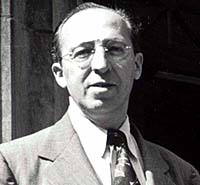
Aaron Copland remains one of the most influential composers in the history of American music. His ability to capture the feeling of the American “Old West” provides inspiration and evokes nostalgia. Copland was born in New York and studied composition in Paris with Nadia Boulanger. His first works, including Piano Concerto (1926) and Short Symphony (1933), combine jazz and elements of Neoclassicism, but it was in orchestral works such as A Lincoln Portrait (1942), Fanfare for the Common Man (1942), and ballet scores for Billy the Kid (1938), Rodeo (1942), and Appalachian Spring (1944) that Copland emerged as the composer most adept at capturing the “American Spirit.” His use of chords with open fifths, American folk melodies, and countless fiddle tunes evoke the open spaces of the American frontier. In later works such as the Twelve Poems of Emily Dickinson (1950) and Inscape (1967), he adapted serial techniques to his own compositional style.
Composer: Aaron Copland
-
"Fanfare for the Common Man"
Composer: Aaron Copland
-
"Rodeo: Hoe-Down"
Composer: Aaron Copland
-
"Rodeo: Hoe-Down" [ 00:04-00:15 ]00:11
Composer: Aaron Copland
-
"Appalachian Spring" [ 16:41-21:39 ]04:58
Composer: Aaron Copland
-
"Rodeo: Hoe-Down" [ 00:45-01:32 ]00:47
Leonard Bernstein
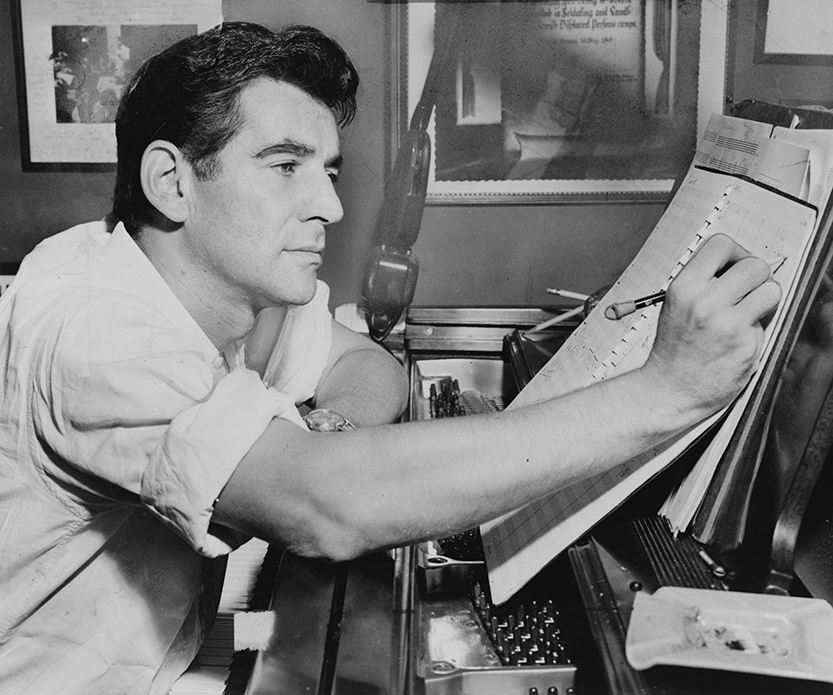
Leonard Bernstein, a truly multi-talented artist, was a pianist, conductor, composer, writer, and educator. Perhaps the first internationally respected and recognized American conductor of the 20th century, he was launched to fame in Nov. 13, 1944 when he replaced Bruno Walter in a widely publicized concert with the New York Philharmonic Orchestra.
After that, Bernstein was invited to appear as guest conductor with orchestras throughout the world, and he made numerous national television appearances. His educational series The Young People's Concerts had a deep impact on a whole generation of American children, and it made him enormously popular. As an author, he published The Joy of Music and The Infinite Variety Of Music. The Charles Eliot Norton lectures he delivered at Harvard University were published in 1976 under the title The Unanswered Question.
As a composer, Bernstein has both loyal followers and sharp critics. He has written concert pieces and works for musical theater and screen, as well as large scale concert works. West Side Story, one of his most popular compositions, mixed elements of Latin American dance rhythms, big-band jazz, cool jive, and love songs.
Composer: Leonard Bernstein
-
"West Side Story: Act I: Maria"
Post-Romanticism
At the beginning of the century, a number of composers resisted the intellectual experiments of their contemporaries. Instead, they chose to take stock of the variety of 20th-century techniques available to them and use only the ones they felt were effective in expressing emotional content. Much of the music prior to World War II by Vaughan Williams and Benjamin Britten falls into this category, but their approach became increasingly rare in the second half of the century as serialism and avant-garde music gained favor.
Other exceptions to the trend away from tonality include the Americans Samuel Barber, Ned Rorem (b. 1923), John Corigliano (b. 1938) and the Scot Thea Musgrave (b. 1928). Barber’s Adagio for Strings (1936) is an excellent example of the resurgence of Romanticism. Rorem was known for his compositions in all genres, but he excelled at vocal writing. Corigliano and Musgrave were also admired for their operas and vocal works. Certain members of the art music intelligentsia deemed this style of music outdated and anachronistic and did not take it seriously. Fortunately, this attitude seems to be changing.
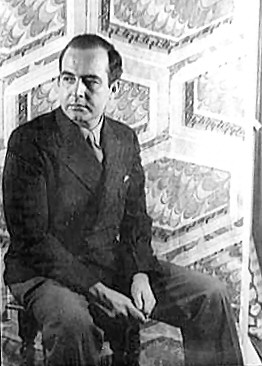
Composer: Samuel Barber
-
"Adagio for Strings, Op.11"
Aleatoric Music
Aleatoric music, also called aleatory or “chance” music, reflects the interest of some composers in Eastern religious or mystical thought. Also known as "indeterminacy," this type of music allows for the element of chance to enter into a musical performance, whether through a performer's improvisation or a composer's design. This philosophical construct accomplishes two things:
- Reverses Guido d’Arezzo's 11th-century trend of complete reliance on the written musical tradition
- Poses the question, “What is music?”
Among the first composers to adopt aleatoric music was the American John Cage.
John Cage was one of the most original composers in the history of Western music and perhaps the most recognizable figure of the 20th-century music avant-garde. His goal was to allow music to speak for itself by stripping from it the restrictions, technical or otherwise, that had traditionally been imposed upon it. For Cage, music could literally be any sound (or the absence of it). In this sense, he was a revolutionary—but also an anarchist.
Composer: John Cage
-
"Sonatas and Interludes for Prepared Piano: Second Interlude"
In his own words...
“Schoenberg said I would never be able to compose, because I had no ear for music; and it's true that I don't hear the relationships of tonality and harmony. He said: ‘You always come to a wall and you won't be able to go through.’ I said, well then, I'll beat my head against that wall; and I quite literally began hitting things, and developed a music of percussion that involves noises.”
John Cage, interview in Observer (magazine), 1982
Cage's earliest pieces were built almost exclusively on rhythm. They include a series of sonatas and interludes for a piano with various nails, bolts, pieces of wood, and leather inserted between the strings of the piano, for the purpose of bringing out the percussive nature of the instrument; this was what he called a prepared piano. Another piece by John Cage is 4’33”, a work that calls for the performer to look at a blank score for four minutes and thirty-three seconds, turning the pages at specified intervals. The resulting sounds in the room (shuffling feet, coughs, and murmurs of disbelief) became the composition, a work that the composer “created,” but over which he has no control.