
Learning Objectives
- Outline the social, cultural, and political impact of WWI and WWII.
- Discuss the growth of the United States as a world power.
- Describe the impact of technological advancements on the development of music in the twentieth century.
- Describe, compare and contrast the main stylistic differences of Contemporary music styles including impressionism, post-Romanticism, serialism, and expressionism.
- Summarize the changing nature and application of the concept of tonality throughout the century.
- Discuss the impact of Claude Debussy's "Prelude to the Afternoon of a Faun" in light of the Symbolist movement in literature.
- Illustrate how the Russian composer Igor Stravinsky experimented with rhythm, new instrumental combinations, and the percussive use of dissonance, and discuss the impactof these techniques on contemporary music.
- Describe the impact of Arnold Schoenberg and the Second Viennese School on 20th-century music.
- Distinguish the main stylistic differences of nineteenth- and twentieth-century composers and styles.
- Describe the musical and political impact of “national schools” of composition that developed across Europe during the 20th century.
- Explain the impact of composer Aaron Copland on American contemporary music.
- Describe the impact of Latin American composers on the larger "art music" scene and repertoire.
- Define and analyze the main differences between jazz, ragtime, and blues.
Russia
In 1917, the Russian Revolution destroyed the Russian Empire and gave birth to the Soviet Union. By this time, Stravinsky and Rachmaninov had already established their reputations as preeminent composers. Both were able to travel freely between the new state and Europe. For younger Russian composers, a restrictive period commenced that would last until the fall of the Soviet Union in 1989.
The two principal composers in the Soviet Union after the Russian Revolution were Sergei Prokofiev and Dmitri Shostakovich. We will discuss them here along with the influential composer Sofia Gubaidulina.
Sergei Prokofiev
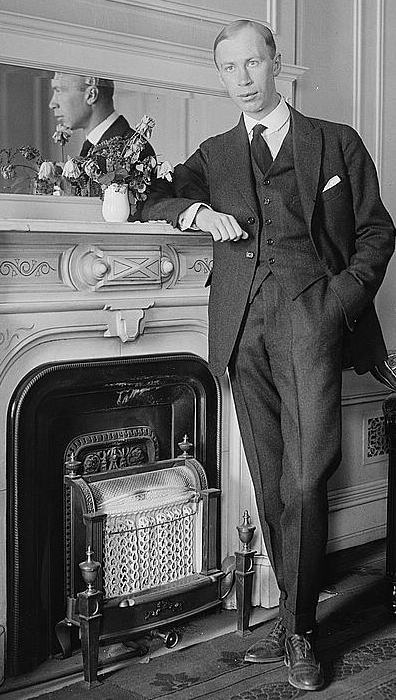
Prokofiev was a child prodigy who composed his first opera at the age of 12. He was educated under the direction of Nikolai Rimsky-Korsakov at the St. Petersburg Conservatory and eventually became a virtuoso pianist and composer. After the Revolution of 1917, Prokofiev left the Soviet Union for almost 15 years to pursue a career in Paris and, later, the United States.
A master of multiple styles, including Neoclassicism, Prokofiev had an incomparable gift for musical wit and catchy melodies, which made it easy for even the less-informed members of the audience to appreciate his compositions. He is, without doubt, one of the most significant composers of the 20th century.
Prokofiev returned to the Soviet Union in 1934. While his early works such as the Classical Symphony (1918) and the opera The Love for Three Oranges (1921) were characterized by awareness of Neoclassicism (but also surrealism and abstraction), his later works demonstrate a concern for public approval, the result of the brutal iron hand of Soviet dictator Joseph Stalin.
Composer: Sergei Prokofiev
-
"The Love for Three Oranges, Op. 33bis: III. March"
Composer: Sergei Prokofiev
-
"Symphony No. 1 in D Major, Op. 25, "
Dmitri Shostakovich
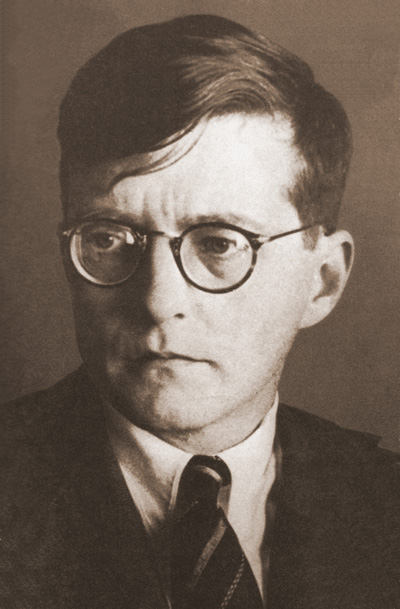
Stalin’s dictatorship had an even greater impact on Shostakovich. His volume of memoirs, Testament, tells stories of artists, composers, and writers who disappeared in the middle of the night, never to be seen again after writing something that displeased Stalin. As a result, Shostakovich’s larger works, like the brilliant Symphony No. 5 in D minor, are post-Romantic works reflecting the conservative bent of the authorities with only a touch of modern rhythmic or harmonic treatment. Only in his smaller works, such as the String Quartet No. 8 in C minor, did he dare to be more modern—these works were less likely to draw Stalin’s attention.
Composer: Dmitri Shostakovich
-
"Symphony No. 5 in D Minor, Op. 47: IV. Allegro non troppo"
Composer: Dmitri Shostakovich
-
"String Quartet No. 8 in C minor, Op. 110: V. Largo"
Sofia Gubaidulina
Sofia Gubaidulina was born in Chistopol in the Tatar Soviet Republic in 1931. She studied the piano at the Music Academy in Kazan after the war. In 1949, she entered the Kazan Conservatory where she studied composition with Nikolay Peyko, a former pupil of “the father of the Soviet symphony,” Nikolai Myaskovsky.
Gubaidulina received encouragement from Dmitry Shostakovich, who advised her to ignore hostile criticism from the official musical establishment. She earned a living in the Soviet Union principally by writing film music, though at the same time, her works were widely heard abroad. With the political changes in (and eventual collapse of) the Soviet Union in the late 1980s, she was able to travel outside the country. Since 1992, she has been living in a small town near Hamburg, Germany.
Composer: Sofia Gubaidulina
-
"Es ist vollbracht"