
Objectives
At the end of this section, students will be able to:
- Relate how Romantic poets and artists abandoned traditional subjects, turning instead to the passionate and the fanciful.
- Relate how the Industrial Revolution impacted the technological development and affordability of musical instruments.
- Analyze how the orchestra grew in size and sound as new instruments were introduced and composers demanded greater levels of expression.
- Illustrate how Romantic composers explored nationalistic folklore and exotic subjects.
- Identify the form of romantic period songs, including strophic, through-composed, and the modified strophic forms.
- Examine the German art song (or Lied) as a favored romantic period genre.
- Discuss how the music of Franz Schubert impacted romantic period music.
- Discuss how the music of Frederic Chopin impacted romantic period music.
- Trace the ascendance of program music in relation to absolute music.
- Summarize how political unrest throughout Europe stimulated the formation of schools of musical nationalism in Russia, Scandinavia, Spain, England, and Bohemia among other countries.
- Differentiate between the distinct national styles of romantic opera in France, Germany, and Italy.
- Discuss how the Italian nationalist composer Giuseppe Verdi impacted romantic period music.
- Trace how choral music became a popular artistic outlet for the middle classes.
- Discuss how the Russian composer Pyotr Ilyich Tchaikovsky impacted romantic period music.
Romantic Period
Debussy and Impressionism, Italian and German Post-Romantics, Post-Mortem on the Post-Romantics
Claude Debussy and Impressionism
If it were not for the music of Claude Debussy (1862-1918), the French line of composers from Gluck to Gounod to Fauré might be just a footnote to Romantic music, under the heading of “French Nationalism.” In many important ways, Debussy is the progenitor of 20th century music. He combined French sensitivity with experiments using different scales, to result in a style of music called Impressionism.
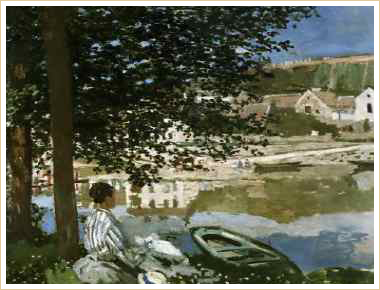
The term Impressionism is taken from the art world, where it is applied to a group of French painters—Claude Monet (1840-1926), Pierre Renoir (1841-1919), and Edgar Degas (1834-1917)—who began re-thinking painting - how light illuminated a subject and how this should be represented on canvas. Paralleling these concerns, Debussy’s music is rich in color and shading and is suffused with a beautiful melodic style that masks its revolutionary character.
Debussy’s music is based on his assumption that the major and minor scales (the basis for all common-era music) and their tonal systems had become anachronistic in the new musical age.
Debussy began to experiment with building music on scales from other cultures (Japan, China), the old church modes, or scales built on unusual intervals (chromatic scale, whole-tone scale). At times, the resulting sounds are not too different from 19th-century Romanticism. Take, for instance, the orchestral fantasy Prelude à l'après-midi d'un faune (Prelude to the Afternoon of a Faun). Here, Debussy’s use of orchestral color is certainly more subdued than what we have heard from other Romantic composers, but the harmonic language sounds very ‘major.’ Perhaps the clue that something is different here is the use of parallel chords, a trait that appeared earlier in the music of Fauré and Mussorgsky. At other times, however, Debussy transforms a piece of music into something completely novel. Piano works like Dans le mouvement d’une Sarabande or Cloches á travers les feuilles use whole-tone scales, parallel 9th chords, and pentatonic scales without affectation.
At other times, however, Debussy transforms a piece of music into something completely new. Piano works like Dans le mouvement d'une Sarabande or Cloches á travers les feuilles use whole-tone scales, parallel 9th chords, and pentatonic scales without affectation.
The influence of Impressionism as a full-fledged compositional school is especially evident on the music of Maurice Ravel (1875-1937), a composer whose style is infused with more rhythmic urgency than Debussy’s. This resolve is partly a result of Ravel’s fascination with Spanish rhythms, as evidenced in this excerpt from Bolero. The suite Gaspard de la Nuit breaks new ground in dramatic writing. The Impressionism of Ravel and Debussy had a profound influence on the coming generation of composers, including Igor Stravinsky.
Composer: Claude Debussy
-
"Prélude à l'après-midi d'un faune"
Composer: Claude Debussy
-
"Images oubliees, No. 2: Dans le mouvement d'une Sarabande"
Composer: Claude Debussy
-
"Images oubliees, No. 2: Dans le mouvement d'une Sarabande" [ 03:39-04:28 ]00:49
Composer: Maurice Ravel
-
"Boléro, M. 81: Bolero"
Composer: Maurice Ravel
-
"Gaspard de la nuit, M. 55: I. Ondine"
Composer: Claude Debussy
-
"Cloches á travers les feuilles"
Post-Romantic Music in Italy
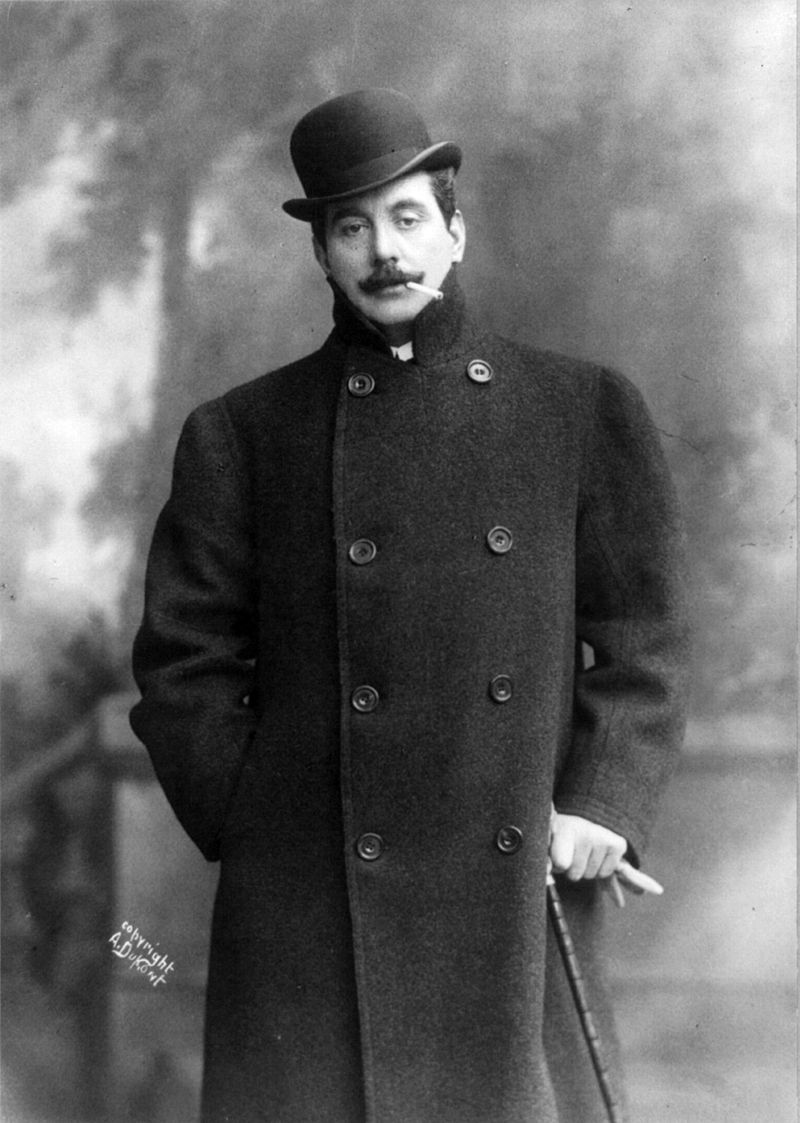
A new form of opera appeared in Post-Romantic Italy that depicted everyday people in ordinary situations suddenly thrust into violent action. Known as verismo, an Italian term that may be roughly translated into "realism," this type of opera was created by Pietro Mascagni (1863-1945), Ruggiero Leoncavallo (1858-1919), and Giacomo Puccini (1858-1924).
Mascagni’s masterpiece of verismo is Cavalleria rusticana (1890), while Leoncavallo is best known for I Pagliacci (1892). Pagliacci is the story of a circus clown whose unrequited love for the beautiful Columbina eventually leads him to murder his romantic rival. In Pagliacci’s famous recitative and aria, Vesti la giubba, he decries the fact that he must now wear “a clown’s fake smile” while, inside, he is in agony. This new awareness of the subconscious workings of the inner mind is also exhibited in the work of psychologists of the time like Sigmund Freud.
Composer:
-
"Pagliacci: Vesti la giubba (Put on the costume)"

The greatest (and most eclectic) of the Italian post-romantic composers is Puccini...

The greatest (and most eclectic) of the Italian post-romantic composers is Puccini. If the history of Western music through the 20th century is envisioned as a steady march from a simple chant to an expressive, lush, and beautiful form of emotional expression, then Puccini and Mahler are the masters of that transformation. Puccini was a sensitive composer with a genius for melody and a flair for drama. In the aria O mio babbino caro from Gianni Schicchi, the soprano sounds as though she is singing about the heavens unfolding. In reality, she is singing to her father, threatening to throw herself off a bridge in an impetuous fit if he does not let her marry. Vissi d'arte from Tosca may be the composer’s greatest moment in verismo opera.
Composer: Giacomo Puccini
-
"Gianni Schicchi: Gianni Schicchi: O mio babbino caro"
Composer: Giacomo Puccini
-
"Tosca: Act II: Vissi D'arte"
The German Post-Romantics
Mozart, Beethoven, Schubert, Liszt, and Wagner each unlocked doors that gave succeeding composers the freedom to further stretch the bounds of harmony. Despite the best efforts of Brahms to turn back the tide, the principal German Post-Romantic composers—Hugo Wolf (1860-1903), Gustav Mahler (1860-1911), and Richard Strauss (1864-1949)—effectively mark the end of a long tradition. Extremes of musical material (emotional expression, harmonic changes, dynamics, size of orchestra) characterize the style of these composers. They also shared a desire to continue the style of German Romanticism found predominantly in the music of Wagner.
Gustav Mahler (1860-1911)
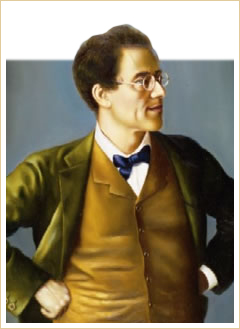
During his lifetime, Gustav Mahler (1860-1911) was known as a conductor as well as a composer, serving as Director of the Vienna Opera from 1897 to 1907 and as conductor of the New York Philharmonic Orchestra from 1909 to 1911. Throughout his life he was tormented by his decision as a young adult to convert from Judaism to Catholicism. This duality is expressed through sudden and dramatic changes of dynamics and moods in his music.
Mahler was subject to bouts of depression and prone to superstition. His superstition about Beethoven’s nine symphonies led him to believe that he would die after writing his Ninth Symphony, a belief which so terrified him that he called his Ninth Symphony a song cycle, Das Lied von der Erde. Ironically, he immediately began a tenth symphony, but died before completing it.
Mahler’s symphonic works are massive in scope. All are at least an hour in length and require huge orchestral forces. Symphony No. 8 is nicknamed the Symphony of 1000 because of the number of performers required to perform it. Symphony No. 2 calls for a huge chorus, two soloists, 17 wind players, 25 brass players, numerous percussion players, 4 harps, an organ, and strings. His scores are enormously detailed and display a precise sense of orchestration.
And yet, a level of intimacy may be found in all of the symphonies. Amidst the gargantuan scoring for anvil and percussion are passages of exquisite beauty for solo mandolin (Symphonies 7 and 8) and delicate ländler (an Austrian folk dance). Mahler can also be classified as a traditionalist, for he worked in a standard symphonic form with occasional forays into lieder and song cycle.
Two excerpts from his Symphony No. 9 display the extremes of Mahler's expressive capabilities. The third movement is a grotesque scherzo with violent harmonic changes that blur the A-minor tonality to near extinction. The fourth movement finale begins (and ends) with a heartfelt string exposition that is both slow and dramatic.
After his death, Mahler’s compositions were rarely performed during the first decades of the 20th century, except under the baton of his good friend Bruno Walter. As composers in the 20th century turned to smaller and more abstract musical gestures, Mahler’s grand emotions fell out of favor. After World War II, however, due largely to another composer who conducted the New York Philharmonic, Leonard Bernstein, his music regained popularity. Bernstein programmed and recorded Mahler’s music as often as he could and admitted a special affinity for the master’s life and music.
Composer: Gustav Mahler
-
"Symphony No. 9: III. Rondo-Burleske: Allegro Assai. Sehr Trotzig"
Richard Strauss (1864-1949)
The last great German Post-Romanticist was Richard Strauss. Unlike Mahler, Strauss excelled at opera. Salome (1905), Elektra (1909) and Der Rosenkavalier rank as some of the finest in the German Romantic opera repertoire.
Dissonant harmonies that often lie on the outer boundaries of tonality, characterize Strauss’ style, particularly in Elektra. He often uses dissonance to create comic effects, most successfully in his tone poems. In one memorable moment from Don Quixote, he uses dissonance to portray the bleating of a flock of sheep, mistakenly identified by Don Quixote as an advancing army.
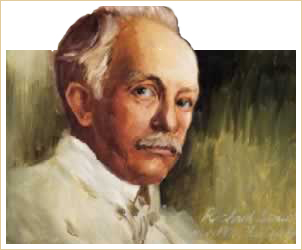
Between 1886 and the end of the century, Strauss composed the era’s most significant tone poems: Aus Italien, Macbeth, Don Juan, Tod und Verklärung, Till Eulenspiegel, Also Sprach Zarathustra, Don Quixote and Ein Heldenleben. Tod und Verklärung (Death and Transfiguration) portrays an emotional deathbed scene. This excerpt exemplifies his extreme emotional and harmonic style.
Strauss never succumbed to the lure of 20th century compositional styles. All the way through to his last major work, Metamorphoses (1945), he remained true to his own style of Romanticism. Unfortunately, he is also remembered for his association with Germany’s National Socialist Government. However, it is unfair to dismiss Strauss as a Nazi; it is more accurate to say that he was a man forced into an unimaginable situation by the social and political climate of the time, who made an unfortunate choice.
Composer: Richard Strauss
-
"Tod und Verklarung (Death and Transfiguration), Op. 24"
Post-Mortem on the Post-Romantics
Romanticism did not completely disappear at the turn of the century. Despite the alteration of the musical landscape by 1920, some more traditional composers continued to write in well-established harmonic idioms. We have already mentioned Strauss, but there are others.
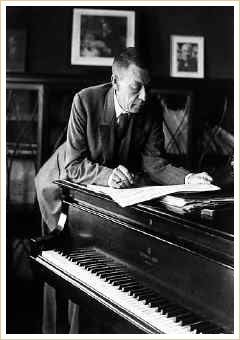
Rachmaninov's compositions employ a personal brand of Romanticism that, like that of Tchaikovsky, contains just a hint of Russian nationalism...
Sergei Rachmaninov was a Russian pianist who, at the turn of the century, conquered the musical world as a virtuoso in the mold of Liszt. His compositions employ a personal brand of Romanticism that, like that of Tchaikovsky, contains a hint of Russian nationalism. His four piano concertos are among the most demanding in the repertoire, as evidenced by the 1st movement from his Piano Concerto No. 2 in C minor. (Rachmaninov’s Concerto No. 3 was featured in the motion picture Shine).
Composer: Sergei Rachmaninoff
-
"Piano Concerto No. 2 in C minor, Op. 18: I. Moderato"
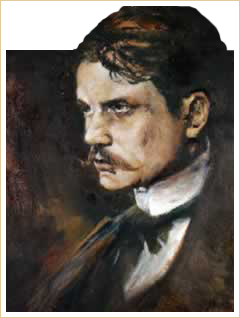
Finland’s greatest Romantic composer is Jean Sibelius, a nationalistic composer who worked in the Romantic idiom well into the 20th century. In fact, the main theme from the tone poem Finlandia (1899) became the de facto Finnish national anthem.
An English composer whose music exists somewhere between Romanticism and impressionism is Gustav Holst (1874-1934). From the orchestral suite The Planets, the movement entitled Jupiter is at times reminiscent of Elgar’s work in its nobility, yet the size of the orchestra owes more to the influence of Mahler.
Composer: Gustav Holst
-
"The Planets, Op. 32: IV. Jupiter, the Bringer of Jollity"
Two more composers who resist classification are Scriabin and Ives. The Russian Alexander Scriabin (1872-1915) experimented with tonality (Sonata No. 2 in G-sharp minor) and the relationship of music to the arts in a way that anticipated 20th century techniques. He was not, however, a major influence on younger composers. On the other hand, Charles Ives (1874-1954) was arguably the first great original American composer. In an effort to re-create a youthful impression gained from listening to several marching bands coming into town from separate directions, his music juxtaposed two halves of the orchestra playing different tunes in various keys and rhythms, thus anticipating Stravinsky’s polytonality. Both Scriabin and Ives are originals whose music defies categorization.
Examples for Romantic Period Listening Test
- Berlioz: Symphonie Fantastique, 4th movement
- Chopin: Mazurka No. 23 in D major
- Mussorgsky: Pictures at an Exhibition, Promenade
- Wagner: Tristan und Isolde overture
- Satie: Gymnopedie No. 1
- Debussy: Prelude à l’après d’un faune (Prelude to the Afternoon of a Faun)
- Debussy: Cloches travers les feuilles
- Ravel: Gaspard de la Nuit
- Puccini: Vissi d'arte from Tosca
- Mahler: Symphony No. 9, third movement (excerpt)
- R. Strauss: excerpt from Tod und Verklärung (Death and Transfiguration)
- Rachmaninov: Piano Concerto No. 2, 1st movement
- Sibelius: Finlandia
- Scriabin: Sonata No. 2 in G-sharp minor
Composer: Hector Berlioz
-
"Symphonie Fantastique, Op. 14: IV. March To The Scaffold"
Composer: Frédéric Chopin
-
"Mazurka No. 23 in D major, Op. 33, No. 2"
Composer: Erik Satie
-
"Gymnopédie No. 1 (arranged by Anders Miolin)"
Composer: Modest Mussorgsky
-
"Pictures at an Exhibition: Promenade"
Composer: Richard Wagner
-
"Tristan and Isolde: Overture"
Composer: Claude Debussy
-
"Prélude à l'après-midi d'un faune"
Composer: Giacomo Puccini
-
"Tosca: Act II: Vissi D'arte"
Composer: Richard Strauss
-
"Tod und Verklarung (Death and Transfiguration), Op. 24"
Composer: Sergei Rachmaninoff
-
"Piano Concerto No. 2 in C minor, Op. 18: I. Moderato"
Composer: Jean Sibelius
-
"Finlandia, Op. 26"



Each of Elgar's fourteen 'Enigma' Variations has a cryptic subtitle that relates to a particular person (or animal) in his life
