
Objectives
- Outline the social, cultural, and political impact of WWI and WWII.
- Discuss the growth of the United States as a world power.
- Describe the impact of technological advancements on the development of music in the twentieth century.
- Describe, compare and contrast the main stylistic differences of Contemporary music styles including impressionism, post-Romanticism, serialism, and expressionism.
- Summarize the changing nature and application of the concept of tonality throughout the century.
- Discuss the impact of Claude Debussy's "Prelude to the Afternoon of a Faun" in light of the Symbolist movement in literature.
- Illustrate how the Russian composer Igor Stravinsky experimented with rhythm, new instrumental combinations, and the percussive use of dissonance, and discuss the impactof these techniques on contemporary music.
- Describe the impact of Arnold Schoenberg and the Second Viennese School on 20th-century music.
- Distinguish the main stylistic differences of nineteenth- and twentieth-century composers and styles.
- Describe the musical and political impact of “national schools” of composition that developed across Europe during the 20th century.
- Explain the impact of composer Aaron Copland on American contemporary music.
- Describe the impact of Latin American composers on the larger "art music" scene and repertoire.
- Define and analyze the main differences between jazz, ragtime, and blues.
The Contemporary Period (1910-present)
Aspects of Society, Culture, and Arts
World Events
It may be argued that the defining events of the 20th century, significant turning points in individual, political, social, cultural, musical, and historical perspective, are the two World Wars. The First World War (1914-1918) marked the end of a period of cooperation between Europe’s governments and their artists. It also planted the seeds of discontent that led to the rise of dictatorships in Germany and Russia. German and Russian inter-war governments placed dramatic restrictions on artistic freedom, severely reducing the musical cultures in both countries.
While the World Wars transformed Europe internally, they also created dramatic changes in the international realm. One of these adjustments was a shift in the balance of power from Europe to the United States. In addition, an increasing sense of internationalism, a greater awareness of a singular nation as part of a larger world, came to pervade European and American politics. Advances in technology produced by the First and Second World Wars also affected interactions on a more personal scale, between people in the 20th century. All of these changes greatly affected the arts and modernized existing notions about art music.
War and a New Balance of Power

In its aftermath, the First and Second World Wars left many of Europe’s cities including London, Paris, Berlin, Warsaw, Dresden, Leipzig, and Rome in ruins. Once the focal points of musical production, nations now exerted their collective energy towards fulfilling more immediate concerns—those of food, water, and shelter. During World War II, two hubs of art music, Germany and Russia, fell under the reign of new governments that placed restrictions on artistic freedom. As a result, the United States emerged as the new setting for cultural and musical development. Centers for music composition were founded in New York, Boston, and Los Angeles. In addition, several significant European composers and performers had emigrated from their native countries during the war to continue producing their art in the United States.

During World War II, two hubs of art music, Germany and Russia, fell under the reign of new governments that had placed restrictions on artistic freedom...

A New Internationalism
In the postwar era, as boundaries between countries began to disappear, international awareness increased. People found travel to other countries easier and began to explore new areas, thereby sharing cultural and musical traditions.
The founding of the United Nations in 1945 brought a new awareness to Europe and the United States of the political, cultural, and musical styles of other regions of the world (specifically those referred to as “third world” countries). The musical traditions of these regions are centuries older than those of Europe, and often (to the surprise of many Western observers) extremely complex in very different, novel ways. Soon, new musical influences from Africa, South America, and Asia were incorporated into Western music. This blend of ethnic flavored music from all over the globe is known as "world music."
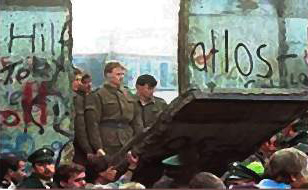
In this postwar era, international awareness increased as boundaries between countries began to disappear...
Advances in Technology
In contrast to previous eras in history, the 20th century is associated with an exponential increase in technological abilities. The ability to travel great distances in a short period of time via ship or airplane made the study of music from around the world feasible. Recording equipment enabled composers such as Bartók to record folk music and, then, to accurately notate the work.

Later, technological advances such as computers allowed musicians to experiment with and change the way that they create music. Following in the footsteps of radio, television, vinyl disc, and Compact Disc technologies, the Internet created vast new musical audiences and provided an open platform for musicians on which to create and perform their art.
Advances in medical science created a greater understanding of the importance of psychology and the subconscious mind as well as an increased fascination with the way that all of the arts are perceived.
Following in the footsteps of radio, television, vinyl disc, and Compact Disc technologies, the Internet created vast new musical audiences and provided an open platform for musicians on which to create and perform their art...
Social and Cultural Phenomena
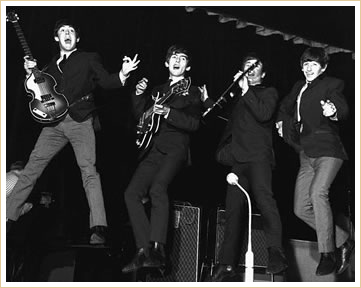
In the 20th century, art music suffered through the cultural swing towards popular music and very nearly did not survive. With an increase in experimentation by composers, large numbers of listeners turned away from art music towards jazz and, after 1950, rock. As jazz and rock began to assimilate some of the more intellectual aspects of art music, the gulf widened. Composers of art music predominantly retreated to universities, where, with little concern for the economic viability of their product, they could practice their art. Universities became the new patrons of the arts in the same way the European aristocracy had functioned in the 17th and 18th centuries. Symphonic organizations were accused of becoming ‘museums,’ places where the music of Beethoven and Mozart was played on a regular basis, but the latest compositions by Penderecki or Takemitsu were unheard.
Composer: Krysztof Penderecki
-
"Threnody for the Victims of Hiroshima"
Composer: Toru Takemitsu
-
"Moby Dick"
In the later half of the century, art music lost much of its audience to new genres such as jazz, country, and rock...
Later in the century, as greater numbers of composers embraced more "listenable" forms of art music, such as minimalism, this trend changed. While some composers embraced the traditions of their predecessors and incorporated past techniques and idioms into their works, others made deliberate attempts to disregard any musical prototypes in their compositions. Today it is not uncommon to find Adams or Tower on a program alongside Handel or Mendelssohn.
Painting
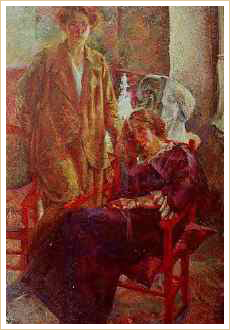
Art in the 20th century was divided into several different movements. Pablo Picasso, arguably the greatest artist of the 20th century, originated (and eventually moved away from) an artistic style known as cubism that attempts to depict a subject from a multitude of different directions simultaneously. Marcel Duchamp was the figurehead of dadaism, a movement developed during World War I that claimed found, everyday objects, such as a porcelain urinal, as art. Salvador Dali's paintings exemplify surrealism, a literary and artistic movement that explored imagination and true expression as shown through dreams and fantasy. Claes Oldenburg’s works are an example of minimalism, which emphasized simplicity in painting and sculpture. Other important artists of the 20th century included Andy Warhol and Roy Lichenstein both of whom brought art to the general public's awareness. As these artists embraced the postwar era, 20th century painting exhibited a tendency toward stylistic diversity.
As these artists embraced a postwar era, 20th century painting exhibited a tendency toward diversity in artistic styles...
Literature
Along with visual art and music, literature in the 20th century experienced a similar movement away from the literal and toward the abstract. Upton Sinclair's The Jungle and other social realistic works embraced the cynicism that accompanied the tragedies of war. Works by James Joyce, T.S. Eliot, e.e. cummings and Allen Ginsberg, explored the uncertainties of the human subconscious. In their widely read novels, American authors such as F. Scott Fitzgerald and Ernest Hemingway popularized postwar era attitudes of recklessness and detachment. The 20th century also saw an upsurge in literary diversity as the work of authors from all backgrounds and nationalities became available to a more expansive audience.
Dance
Dance also became more complex and abstract in the 20th century. The innovative work of Vaslav Nijinsky in the earlier part of the century and, later, of Agnes DeMille and Twyla Tharp demonstrates a shift towards new, multifaceted choreography in dance. Dance forms that originated as religious and cultural customs became tailored towards theater and were popularized as a form of entertainment.
Music Characteristics
In general terms, music of the 20th century exhibits the following characteristics:
- An acceptance of dissonance as a desired element of harmony. For some composers, this acceptance is so complete as to completely disregard the distinctions between consonance and dissonance.
- The utilization of atonality (music with no tonal center), polytonality (music with more than one tonal center at a time), or sound mass (a mass of sound with no concern about tonality in any form).
- Experimentation with new rhythmic techniques and with rhythmic elements within a composition.
- A rediscovery of timbre (the color of sound), particularly with new instruments (computer, electric instruments), new combinations of instruments, and new instrumental or vocal techniques.
- With the exception of the Neoclassicists, a partial rejection of Classical forms and styles, and, without exception, a complete rejection of the Romantic ideas of sound and program.
- Some degree of nationalism, particularly prior to World War II.



