




The Woodwinds
The Oboe
In his own words...
"Reed players are entirely dependent upon a short-lived vegetable matter of merciless capriciousness, with which, however, when it behaves, are wrought perhaps the most tender and expressive sounds in all wind music."
Baines, Woodwind Instruments and Their Histor
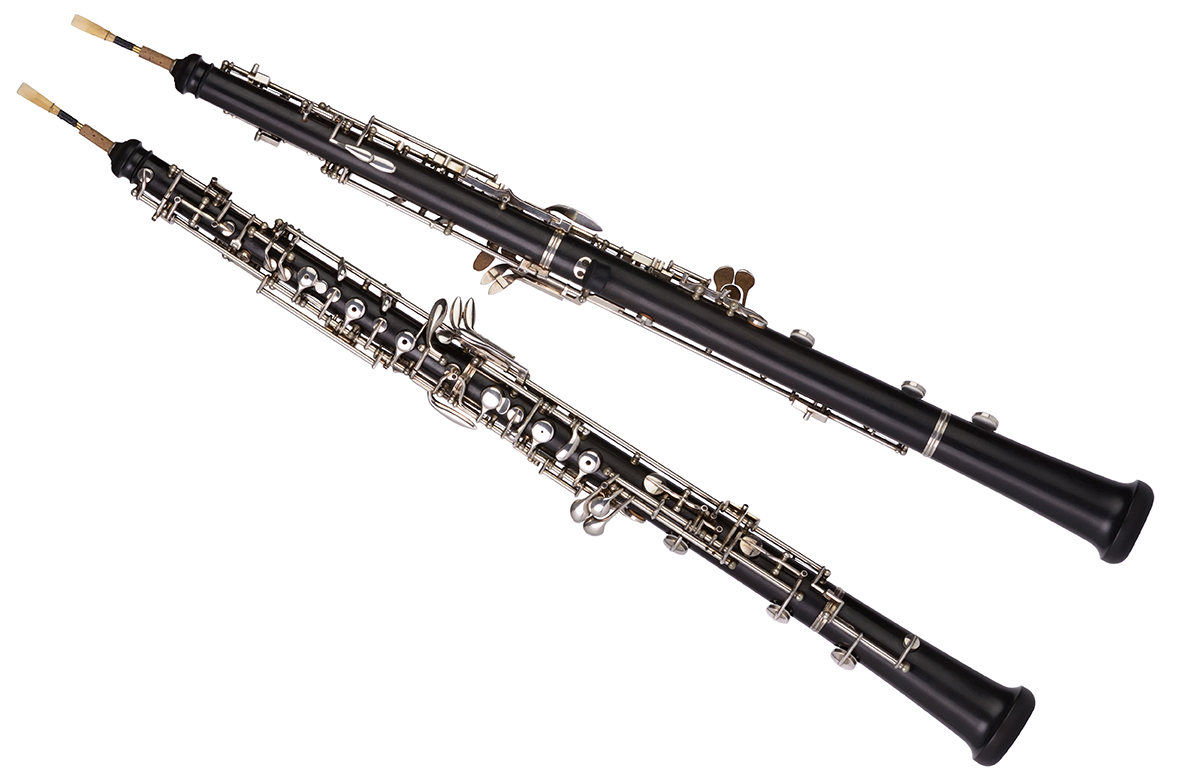
Some woodwind instruments are played using reeds. Reeds are blades of thin cane with the ends scraped down to a featheredge. Woodwind reed instruments may use a single reed or two reeds (a double reed) to produce sound.
The oboe is the main orchestral instrument that belongs to the double reed category. When the oboist places the two reeds between the lips and blows through, the reeds vibrate together, transmitting a burst of energy to the column of air inside the body of the instrument. Handling and working on reeds requires extreme skill. Oboists are forever shaving and adjusting them to achieve the right shape and thickness.
The English horn (which is neither English nor a horn) is simply a lower sounding oboe: a tenor oboe to be precise. During the 18th century, it was used mainly in music for military purposes. By contrast, the standard oboe (pictured at left) has a soprano register. Since the English horn is a member of the oboe family, many oboists also play it, and the instrument sits with the oboes in the symphony orchestra.
The predecessor of the oboe is the shawm, a very popular instrument in its time due to the loud, penetrating sound it was capable of producing. A French court musician, Jean Hotteterre, is credited with inventing the oboe around 1660. The oboe quickly gained popularity, and by 1700 most European orchestras included a pair.
Composer: Alessandro Marcello
-
"Oboe Concerto in D Minor: II. Adagio"
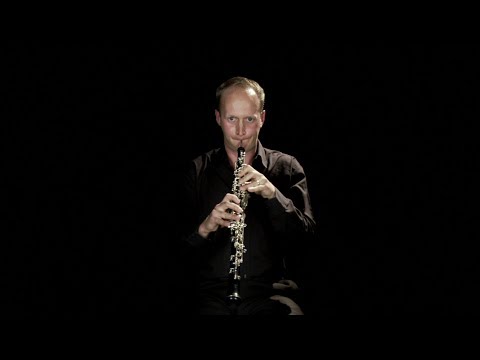
The Oboe
Philharmonia Orchestra
The Clarinet
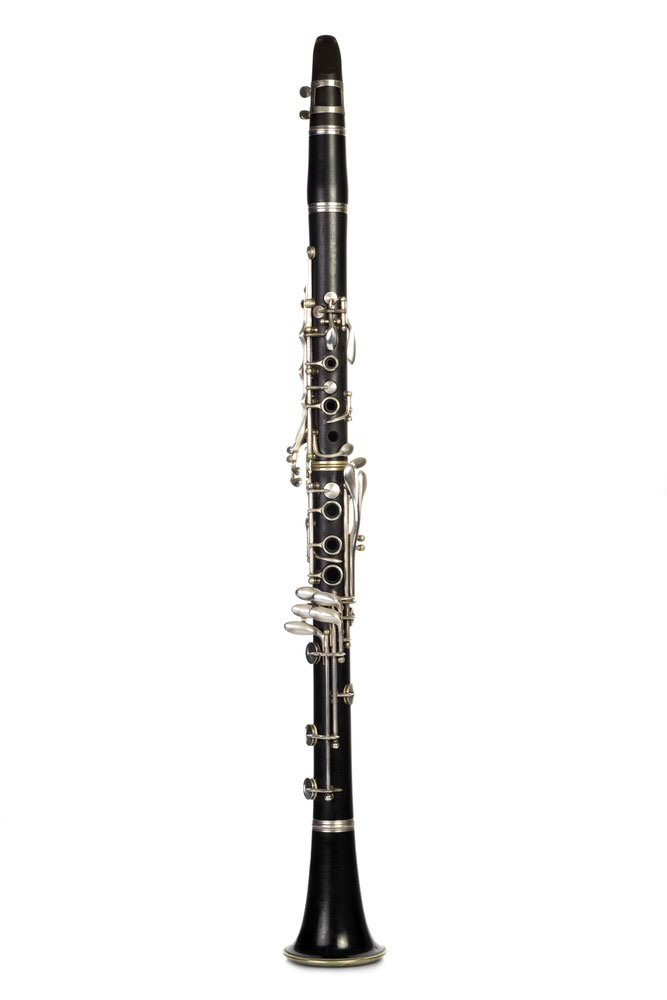
The clarinet is the most recently invented member of the woodwind family. Its shape and size are so similar to the oboe's that it is easy to confuse them. The clarinet, however, is very different from its relative in that a single reed sets in motion the column of air that produces the sound. Also, the clarinet is longer than the oboe—26 versus 23 inches—and its flared bell at the end is also wider than the oboe's. Its timbre, as you may hear from the examples, is also quite different.
Another interesting difference between the clarinet and the oboe is the way the performer uses his or her mouth and teeth to create an embouchure. A clarinetist plays his instrument by forming a tight grip on the mouthpiece with the reed at the bottom. The oboist forms a firm cushion of lips around the paired reeds.
The famous German flute maker Johann Christoph Denner invented the clarinet in Nürnberg in the early 1700s. He did so by adjusting a folk reed pipe to play in a higher register. Like the oboe, the clarinet was so quickly adopted that by about 1780, two clarinets were common in orchestras.
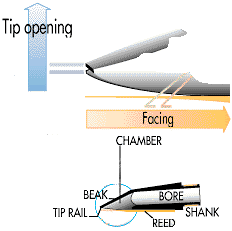
Different types of clarinets cover the usual registers from high to low. Out of about 13 that exist today, six are most commonly used. A symphony orchestra usually includes three clarinets in the keys of A, B-flat, and E-flat (when needed).
The lowest sounding clarinet, the contrabass clarinet, was perfected by Adolphe Sax (1814–1894).

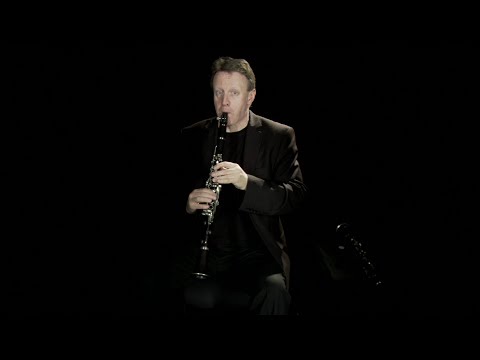
The Clarinet
Phiharmonia Orchestra
Composer: Wolfgang Amadeus Mozart
-
"Clarinet Quintet in A Major, Op. 108, K. 581: I. Allegro"
Composer: Wolfgang Amadeus Mozart
-
"Clarinet Concerto in A Major, K. 622: II. Adagio" [ 02:17-03:45 ]01:28
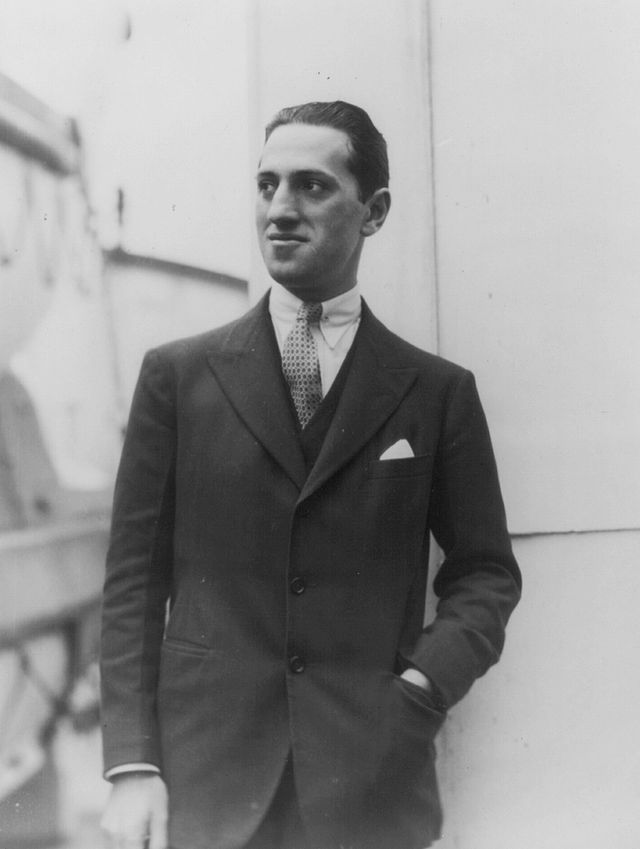
The Saxophone
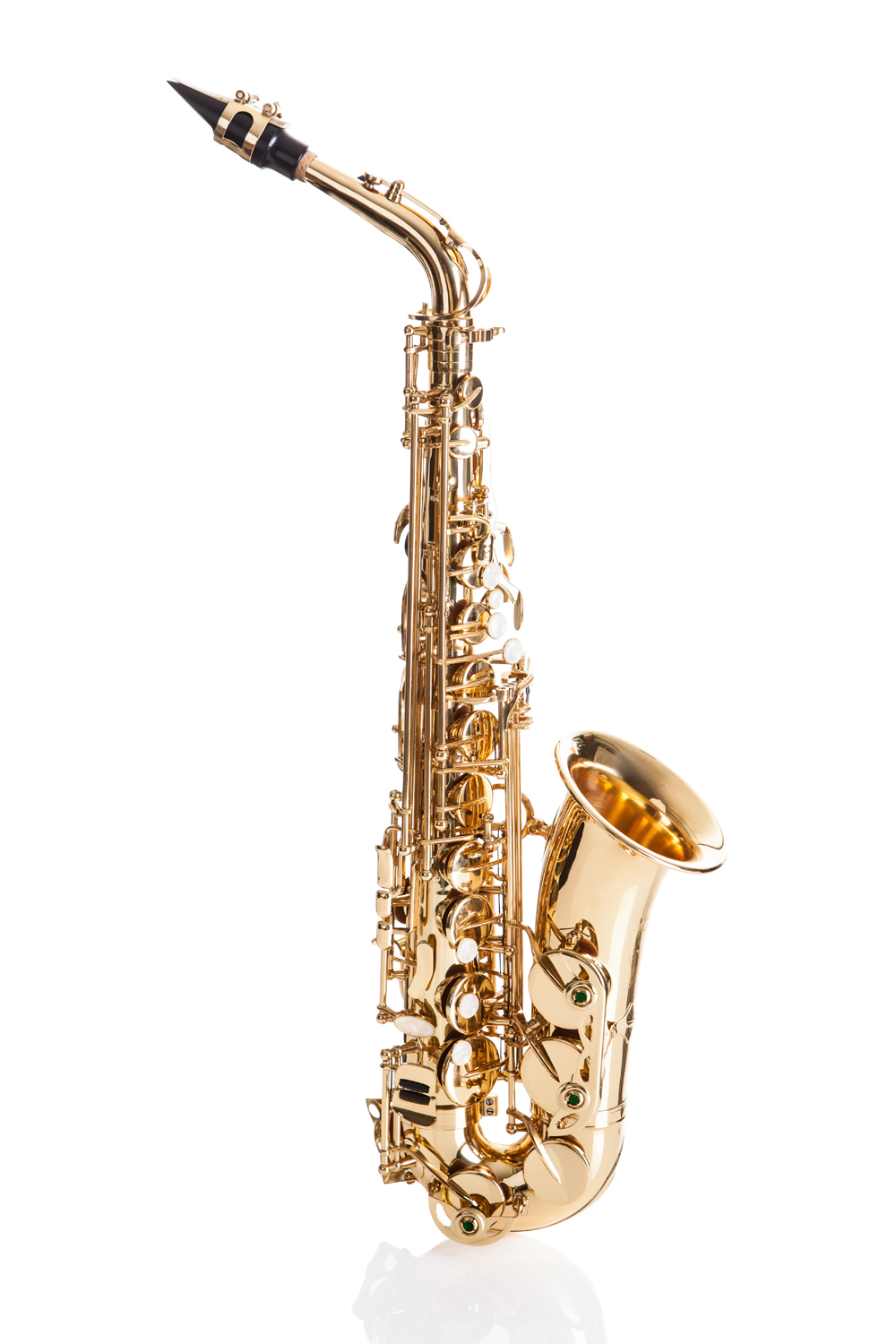
The saxophone (referred to colloquially as the sax) is a family of woodwind instruments usually made of brass and played with a single-reed mouthpiece. Although most saxophones are made from brass, they are categorized as woodwind instruments, because the sound is produced by an oscillating reed (traditionally made out of woody cane) rather than lips vibrating in a mouthpiece cup as with the brass instrument family. As with the other woodwind instruments, pitch is altered by covering holes in the body tube to control the resonant frequency of the air column by changing the effective length of the tube. The player covers or uncovers the holes by pressing keys.
The saxophone is used in classical music (such as concert bands, chamber music, solo repertoire, and, occasionally, orchestras), military bands, marching bands, jazz (such as big bands and jazz combos), and contemporary music. The saxophone is also used as a solo and melody instrument or as a member of a horn section in some styles of rock and roll and popular music. Saxophone players are called saxophonists.
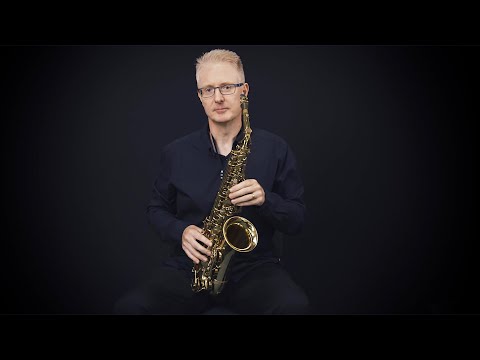
The Saxophone
The Philharmonia Orchestra
Composer: Darius Milhaud
-
"Scaramouche, Op. 165c: II. Modere"
Composer: Claude Debussy
-
"Rhapsodie pour saxophone et orchestre, L. 98: Rhapsody for Alto Saxophone and Orchestra"