
Overview
The publishing district of Tin Pan Alley was the leading producer of popular music in the United States at the turn of the twentieth century. A sheet music publishing district in New York, Tin Pan Alley produced sheet music at higher rates and employed more aggressive sales techniques than publishers in the nineteenth century had used. Tin Pan Alley songs had several specific features and styles, all of which will be addressed in this lesson. A popular genre of instrumental music called ragtime also influenced the composition of Tin Pan Alley songs.
Objectives
- Examine the aspects that made Tin Pan Alley songs successful, such as specific forms, sentimental lyrics, and inexpensive sheet music
- Examine how Tin Pan Alley rose in popularity at the turn of the twentieth century
- Identify Tin Pan Alley composers
- Define vaudeville
- Define ragtime
- Identify the features of ragtime music
Ragtime
Introduction (4 measures or 8 measures optional)
Section A
Repeat Section A
Section B
Repeat Section B
Section A
Section C
Repeat Section C
Section D
Repeat Section D
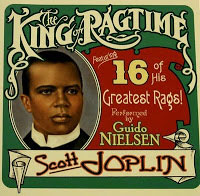
Ragtime pieces were typically written for the solo piano, although they were often arranged for instrumental ensembles as well. The most prolific composer of piano rags was Scott Joplin (see artist profile), who wrote over 40. His Maple Leaf Rag ♫ from 1899 is typical of the piano rag form. Listen to Joplin's own recording ♫ of this very popular piece. Musically, a piano rag had a steady left-hand rhythm (also called stride) and a syncopated right-hand melody. In syncopationa rhythm where the accents fall on weak beats or on weak parts of the beat, the accents fall on weak beats or on weak parts of the beat. Supposedly, the term "ragtime" is derived from this use of syncopation, because listeners heard syncopated melodies as "ragged time" or "ragging."
Syncopation is a key feature of many types of African American music, but it has become commonplace in many types of popular music that it is difficult the imagine how startling and exciting this type of rhythmic arrangement must have sounded to many white listeners in the early part of the twentieth century.
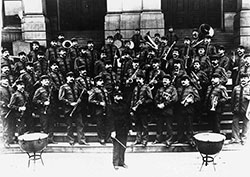
As ragtime grew in popularity, instrumental ensembles began "ragging" other existing compositions. It was not uncommon to hear a marching band, especially African American ensembles such as those conducted by bandleader James Reese Europe during the 1910s, take a standard John Philip Sousa march and syncopate the melody. This act of "ragging" march standards was one of the predecessors of jazz. In fact, during the first decades of jazz’s existence, listeners frequently used the term "ragtime" and "jazz" interchangeably.

"Before the turn of the century, only three American composers made an appreciable dent in the German consciousness: John Philip Sousa, James A. Bland, and Stephen Foster"


