
Objectives
- List the characteristics of the Baroque era (1600-1750) in context of social change including religious wars (Protestants vs. Catholics), the exploration and colonization of the New World, and the rise of middle-class culture.
- Identify a new style—monody—that featured solo song with instrumental accompaniment in the Baroque period through listening examples.
- Define figured bass, a shorthand that allowed the performer to supply chords through improvisation.
- Compare and contrast the major-minor tonality system and the equal temperament tuning system.
- Explain the significance of the union of text and music as expressed in the Baroque Doctrine of the Affections and reflected in genres such as opera, oratorio, and cantata.
- Define and compare the genres of opera, oratorio, and cantata.
- Compare and contrast the development of two types of concertos: the solo concerto and the concerto grosso.
- Correctly identify visually and aurally the main keyboard instruments of the Baroque era: organ, harpsichord, and clavichord.
- Describe the main characteristics of J. S. Bach's keyboard music, in particular his Well-Tempered Clavier.
The Baroque (1600-1750) Social and Cultural Aspects
Baroque is a word that eludes easy definition. Probably of Portuguese origin, it refers to the special approach to the arts that dominated the European continent in the 17th and 18th centuries. Baroque art consciously sought to move the emotions and arouse the feelings of an audience through spectacular displays of sight and sound.
Despite its origins as an Italian movement working against the Protestant Reformation in northern Europe, Baroque artistic ideals were influential in practically all of Europe, including parts of Germany and Austria.
Science, Religion, and War
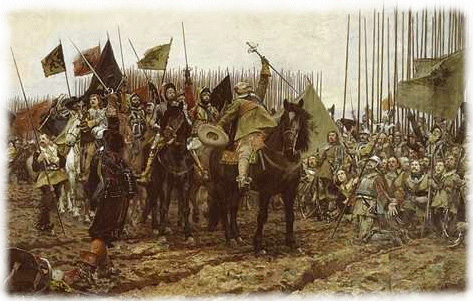
The Baroque was an era of contradiction. Although science and philosophy flourished with the discoveries of Galileo, Kepler, Descartes, Newton, and Copernicus, the Baroque was also an era of religious fervor, bordering on fanaticism. It experienced some of the bloodiest wars Europe had ever known, beginning with the struggle between Catholics and Protestants over religion, politics, and land ownership known as Thirty-Years' War (1618-1648) and culminating in the war of Austrian Succession (1748). These conflicts dominated the first fifty years of the 17th century, and pitted the Protestant northern countries (Belgium, Germany, England) against the Catholic kingdoms of the south (France, Spain, Austria). These struggles further accentuated the pre-existing cultural and musical differences between North and South.

“Conflicts between Catholics and Protestants dominated the first fifty years of the Baroque Period...”

Reformation, Counter-Reformation, and Absolutism
The Protestant Reformation and the Catholic Counter-Reformation split the northern and southern halves of the European continent into different religious paths. Protestantism began to splinter into different denominations including Lutherans, Anglicans, and Methodists. The Catholic Church underwent a period of soul-searching that culminated in the reforms of the Council of Trent. One of these reforms resulted in much tighter control over the Catholic liturgy during the Baroque period. Nonetheless, the era in which the Catholic Church was the main influence on the creative lives of Europe's artists and composers was over. That role was now inhabited by the Protestant church, most notably the Lutheran church, and by secular society.
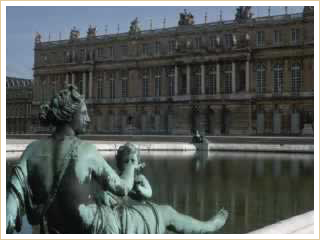
Still, the monarchies of Europe continued to hold absolute power throughout the continent. The courts of the Medici in Florence, King Louis XIII and XIV of France, King Philip IV of Spain, and later King George I and II of England, brought opulence to the palaces of Europe. Perhaps the most vivid example of this lavishness can be seen in the French palace at Versailles. In their often extravagant quest for personal gratification and prestige, European nobility consciously stimulated the arts.
“Perhaps the most vivid example of European courts lavishness may be seen in the French palace at Versailles...”
Settlements in the New World
During this era, some Protestants, seeking the freedom to practice their own form of Protestantism fled to North America. Thus, a group known as the Pilgrims settled the Plymouth Colony in Plymouth, Massachusetts in 1620. Later, the Quakers also found a home in New England in 1656. At the same time, Spanish, English, French, and Portuguese settlements flourished in different parts of the hemisphere. From the point of view of the native inhabitants of the Americas, the few advantages gained by contact with these European cultures was overshadowed by slavery, disease, and death.
Colonization brought great wealth to a rising European merchant class, which could soon afford better education and music patronage. This new prosperity supplied the basis for the flourishing of opera, the most Baroque of art forms. The European cities of Venice and Hamburg became internationally famous as artistic centers.
Religion, Arts, and Science
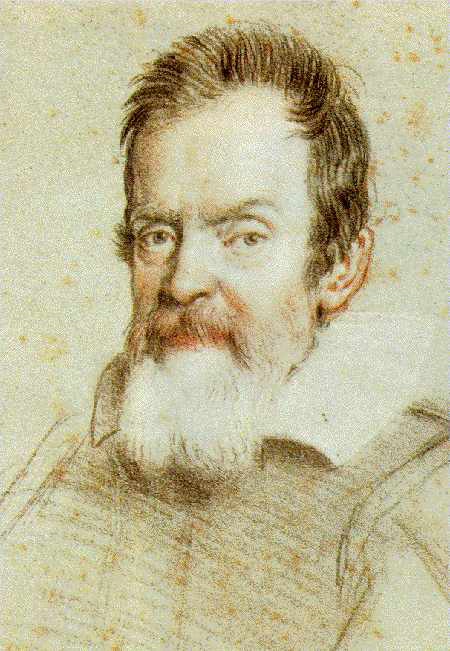
Religious fervor coexisted with ground-breaking scientific and philosophical accomplishments that constituted the practical foundation of modern civilization. At the dawn of the Baroque period, the Italian philosopher, priest, and cosmologist Giordano Bruno (1548–1600) was tried, condemned, and publicly executed by the Catholic Inquisition for embracing the Copernican heliocentric (sun-centered) theory of the universe and suggesting that the universe itself was infinite and without center. A little over 50 years later, the Italian Galileo Galilei (1564–1642) and the German Johannes Kepler (1571–1630) corroborated that the sun, not the earth, was the center of the universe. Furthermore, they also pioneered the use of experimentation to validate physical theories—the cornerstone of the scientific method.
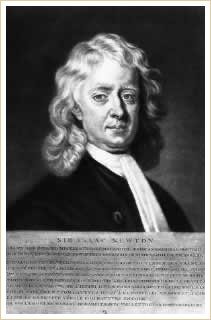
The separation of science and philosophy from religious dogma led to the establishment of a scientific method of inquiry. Francis Bacon (1561–1626), René Descartes (1596–1650), and Gottfried Wilhelm Leibniz (1646–1716) helped lay a foundation of logic and rational investigation of nature. Isaac Newton (1642–1727) articulated the theory of gravity, Antoni van Leeuwenhoek (1632–1723) examined microorganisms under a microscope, and William Harvey (1578–1657) discovered the circulation of blood. Monarchs began to establish scientific academies.
This new mode of searching and discovering also gained a foothold in the arts. Smaller groups of intellectuals and artists met to discuss how to accomplish new expressive goals.
One such early group, known as the Florentine Camerata, became particularly interested in re-creating the powerful music dramas they believed had been staged by the ancient Greeks. The group sought to rediscover the core dramatic element in music that had been obscured by the complex polyphony and fussy word painting of some late Renaissance music. One participant in this Camerata was none other than Vincenzo Galilei, father of Galileo Galilei. The result of the Florentine Camerata’s artistic experiments would have lasting significance: we know it as opera.



