
Objectives
- List the characteristics of the Baroque era (1600-1750) in context of social change including religious wars (Protestants vs. Catholics), the exploration and colonization of the New World, and the rise of middle-class culture.
- Identify a new style—monody—that featured solo song with instrumental accompaniment in the Baroque period through listening examples.
- Define figured bass, a shorthand that allowed the performer to supply chords through improvisation.
- Compare and contrast the major-minor tonality system and the equal temperament tuning system.
- Explain the significance of the union of text and music as expressed in the Baroque Doctrine of the Affections and reflected in genres such as opera, oratorio, and cantata.
- Define and compare the genres of opera, oratorio, and cantata.
- Compare and contrast the development of two types of concertos: the solo concerto and the concerto grosso.
- Correctly identify visually and aurally the main keyboard instruments of the Baroque era: organ, harpsichord, and clavichord.
- Describe the main characteristics of J. S. Bach's keyboard music, in particular his Well-Tempered Clavier.
Music Characteristics of the Baroque (1600-1750)
Like all of the arts of this period, Baroque music is florid, ornate, grand, sensuous, rich, and dramatic; it is full of vitality, movement, tension, and emotional exuberance. During this era, music began to make use of alternating large and small groups (concertato style), terraced dynamics, and monody. The period also witnessed the creation of some of the most innovative musical genres ever devised.
Baroque music is permeated by the fundamental belief in the power of music to have a direct impact on the listener's emotions. In an effort to codify the relationship between feeling, words, poetic images, and music, theorists and musicians alike gradually created a system that became known as the doctrine of the affections, according to which, each feeling had a corresponding musical equivalent. Music was propelled to a privileged position among the arts, partly because of the enthusiasm with which the nobility and the growing middle class embraced this new rational approach to understanding emotion in art.
Antiphonal Music
As the Renaissance began to dissolve into the Baroque, composers became increasingly enamoured with the madrigal and its ability to express emotions in a straightforward fashion. Some of them started to write antiphonal motets or madrigals, i.e., pieces where the music alternates between two choirs. This novel concept influenced everything from opera to dynamics.
Terraced Dynamics
In an effort to capture the variations in volume that occur naturally between larger and smaller groups, composers began to write specific dynamic changes in their scores, indicating for the first time the volume at which their music should be performed. The dynamics of the Baroque are often referred to as "terraced" because of the sudden changes from one volume level to the next, i.e., without a gradual change from one to the other.
Monody
Another by-product of the dominance of the madrigal was the inevitable focus on its largely homophonic texture. Although some madrigals still featured polyphony, it was not nearly as prevalent as it had been in Renaissance church music. As the 17th century approached, homophony became increasingly prevalent, eventually leading to the development of monody. Monody was a style that featured a single melodic line over an instrumental background or accompaniment usually played by the orchestra or the harpsichord. Monodic style was the chief element that made the development of opera possible.
Techniques and Genres
More techniques and genres originated in the Baroque period than in any other. The Baroque saw the birth of the opera, oratorio, cantata, and concerto, the beginnings of the symphony, and the refinement of the dance suite, the mass, and a multitude of instrumental forms. The basso continuo, the preponderance of regularly stressed rhythms, and the emergence of tonality centered on major and minor keys as opposed to Renaissance modality, made up the foundation for the Baroque musical style. A largely stable and homogeneous practice based on commonly accepted forms, functional harmony, and "bel canto" lyricism, was established in the years after 1675.
Theorists and critics divided the three main Baroque music styles into chamber, church, and theater music. In each of these, monody performed a specific function: opera in the theater, oratorio and church cantata in Church music, and secular cantata in the chamber or salon.
Interestingly, for a largely homophonic period, the Baroque also witnessed the development of the most complex forms of polyphony yet devised: the sinfonia, the canon, and, most importantly, the fugue.

“Many singers were so famous that they could force a composer to insert their own favorite aria in an opera, just to show off, even if it had nothing to do with the plot of the opera they were performing!...”

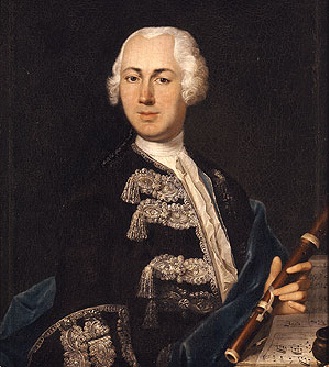
From Vivaldi on the violin, to Quantz on the flute, to Bach on the organ, the Baroque was an era of virtuoso performers who astounded audiences with their technical feats. Many singers were so famous that they could force a composer to insert their own favorite aria in an opera, just to show off, even if it had nothing to do with the plot of the opera they were performing!
Baroque music is full of ornamental flourishes of every variety; the trill and mordent are examples that may be found in the scores of almost every composer of the period.
Notwithstanding the above, one of most salient characteristics of Baroque music is its rhythmic energy. Through the combination of regularly stressed meter and specific rhythmic patterns, composers were able to create music that had a ferocious drive from the first note through the final note.
Tempered Tuning
Finally, and most importantly, the beginning of equal-tempered tuning happened during the Baroque period. In this system, the octave is divided into twelve perfectly equal half-steps, so that an instrument will sound equally in tune in any of the twelve keys major or minor keys. This increased the number of keys composers could use, and freed them to move between keys (modulate) within the same piece of music.
“Like all of the arts of this period, Baroque music is florid, ornate, grand, sensuous, rich, dramatic: it is full of vitality, movement, tension, and emotional exuberance...”



